
How Long Do Tires Last on a New Car? Miles, Years, EVs
How long do new car tires last? The tires your new car came on are rarely the tires it should die on — this guide gives honest life ranges for factory rubber, why EVs eat theirs faster, and what a set costs.
Key Takeaways
- The factory set is spec'd for ride, noise and efficiency, not tread life: expect about 30,000 to 50,000 miles on a gasoline car, and a longer-lived second set.
- EVs wear tires roughly 20 percent faster — weight and instant torque — putting typical replacement near 30,000 to 40,000 miles.
- The calendar overrides the odometer: inspect tires annually after five years of service and replace them by ten years regardless of remaining tread.
- Wet grip fades around 4/32 inch, well before the 2/32 legal minimum, so rotate every 5,000 to 8,000 miles and replace on the safety number, not the ticket number.
How long do tires last on a new car? This guide answers it in full, in plain English. Here is a surprise most new-car owners meet around year three: the tires the car arrived on are done. Not damaged, not defective — worn out, at mileages that feel far too low next to the 60,000-mile promises on replacement-tire brochures. The factory set was never chosen for longevity. It was chosen to make the car ride quietly on the test drive, post good efficiency numbers and meet a price the manufacturer negotiated by the million. This guide gives the honest ranges — by tire type, by vehicle and by powertrain — plus the calendar rule that overrides mileage entirely, and what the next set will cost.
How Long Do Tires Last on a New Car at a Glance
| Tire set | Typical life | Why |
|---|---|---|
| Factory set on a gasoline car | About 30,000–50,000 miles | Spec'd for ride, noise, efficiency and cost, not tread life |
| Quality replacement touring tires | About 50,000–70,000 miles | Sold on treadwear warranties in this band |
| Factory set on an EV | About 30,000–40,000 miles | Weight and instant torque wear tread roughly 20 percent faster |
| Performance and summer tires | About 20,000–30,000 miles | Soft, grippy compounds trade life for traction |
Ranges are drawn from manufacturer estimates and published treadwear-warranty bands, listed in this draft's header record; your roads, loads and right foot move you within them.
Why the Factory Set Wears Out First
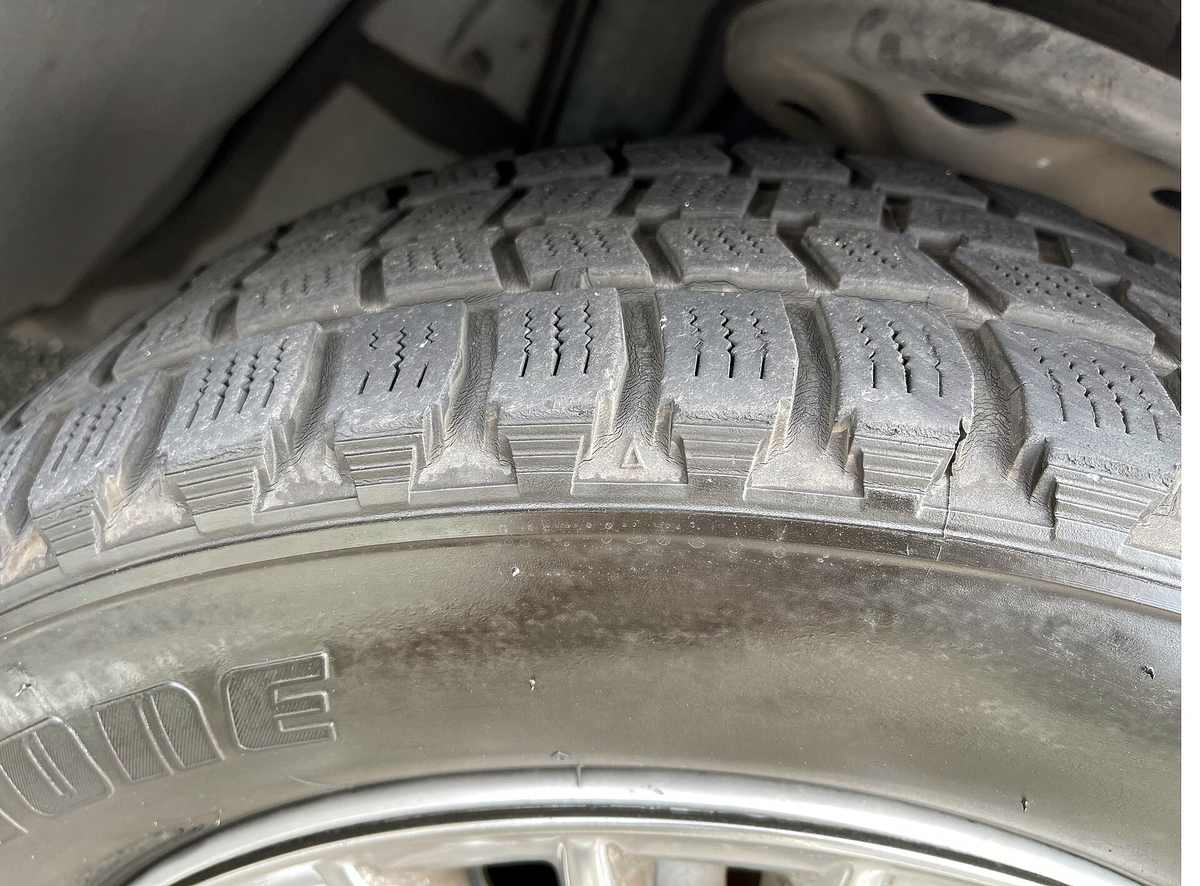
Original-equipment tires are a compromise signed by someone else. The automaker's priorities are a quiet cabin, compliant ride, strong efficiency figures and low unit cost — tread life is negotiated last, if at all. The fingerprint is the UTQG treadwear grade molded into the sidewall: factory fitments commonly carry noticeably lower grades than the replacement tires sold for the same car, and since the grade is comparative within a brand, the comparison to make is factory tire versus its own maker's touring line. Replacement tires face the opposite incentive — they are sold to you, with mileage warranties printed on the sidewall literature — which is why the second set on most cars outlasts the first by a wide margin. None of this makes the factory set bad. It makes it a consumable with a known, shorter clock.
Miles Are Only Half the Clock
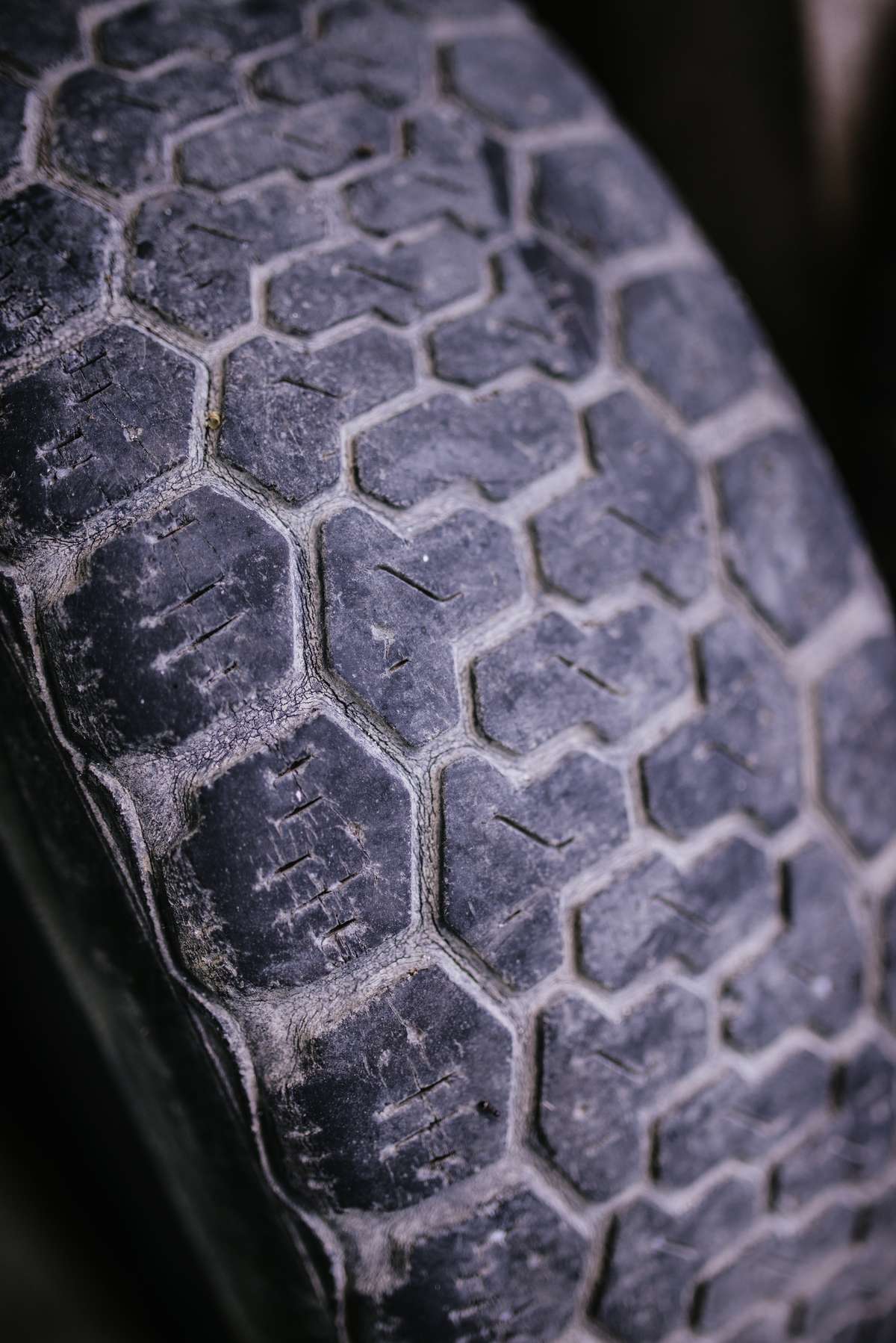
Tires also die of age. Rubber hardens and oxidizes whether it rolls or not, grip falls away, and fine cracking appears in the tread and sidewalls. Manufacturer and safety-body guidance is consistent: have tires inspected annually once they pass five years of service, and replace them at ten years regardless of remaining tread — a low-mileage car can wear out its tires in the driveway. Heat speeds everything: a car living outdoors in a hot climate ages its rubber faster than a garaged car in a mild one, and underinflation adds heat of its own while chewing the shoulders. The date that matters is molded into the sidewall as the DOT code, whose last four digits give the week and year of manufacture — worth checking on any new car, because the clock starts at the factory, not at your first drive.
The EV Difference
Electric cars wear tires faster, and the physics is not subtle. An EV is commonly 20 to 50 percent heavier than its gasoline counterpart, and weight is tread's worst enemy. Its motors deliver maximum torque from a standstill, scrubbing rubber at every launch in a way a gasoline engine's gradual build never does. And the low-rolling-resistance tires fitted to protect range use compounds that trade durability for efficiency. Michelin estimates EV tires wear about 20 percent faster on average, putting typical replacement windows near 30,000 to 40,000 miles against roughly 40,000 to 50,000 for gasoline cars. Owner data agrees: J.D. Power's 2024 study found 39 percent of EV owners had replaced tires within the previous 12 months, against 20 percent of gasoline owners. Performance EVs driven hard sit at the fast end of that range — as our EV maintenance costs vs gas cars comparison notes, tires are one of the few line items where the EV genuinely costs more. Cold weather compounds the wear story for drivers who also lose range, a pairing covered in EV range loss in winter.
Trucks, Towing and Staggered Fitments
The ranges above assume ordinary duty, and three common situations bend them downward. Trucks and SUVs that tow or haul near their ratings work their tires harder in every mile — heat is the mechanism, and a loaded tire on a summer highway ages faster than an unloaded one, which is why load-rated tires and strict pressure discipline matter more than brand choice for working vehicles. Heavy SUVs on large-diameter wheels wear quickly for a simpler reason: there is a lot of vehicle on not much sidewall, and the tires are priced accordingly. And cars with staggered fitments — wider tires at the rear than the front, common on performance models and some EVs — cannot rotate front to rear at all, so the driven axle's pair wears on its own schedule and often sets the replacement rhythm for the car. If your car has them, budget for pairs, not sets.
Replacement choice interacts with the powertrain, too. EV-specific tires add reinforced sidewalls for the weight, foam liners for quiet and compounds tuned for range; fitting cheaper general-purpose tires to an EV usually costs some range and adds noise, and the savings shrink against the faster wear. Whatever you fit, keep the load rating at or above the original specification — that number is not a suggestion.
Making a Set Last — and What the Next Set Costs
The levers are unglamorous and effective. Rotate on schedule — every 5,000 to 8,000 miles is the common published guidance, or whatever your owner's manual specifies; this matters doubly on EVs and front-wheel-drive cars, where one axle does most of the work. Check pressure monthly against the door-jamb sticker, not the sidewall maximum. Fix alignment at the first sign of one-sided wear, and remember that the cheapest tread-saver is a calmer right foot, especially in an EV. When replacement comes, budget honestly: a set of four in common sizes commonly runs about $500 to $1,200 fitted, with large-diameter EV and performance fitments above that — one more reason the dealer service vs independent mechanic question is worth asking at the tire counter too, since tire specialists routinely beat dealer pricing. And if winter is part of your life, a dedicated winter set — the case for which is made in best cars for snow — conveniently rests your main set for a third of the year, stretching both.
Frequently Asked Questions
How many miles should the tires on a new car last?
Expect roughly 30,000 to 50,000 miles from the factory set on a gasoline car, and nearer 30,000 to 40,000 on an EV. Quality replacement touring tires, bought with treadwear warranties, commonly run 50,000 to 70,000 miles. If your factory set is bald well inside 30,000 miles, have alignment and inflation checked before blaming the tires.
Do tires expire even if I barely drive?
Yes. Rubber ages with time and heat, not just mileage. The published guidance is annual inspections after five years of service and replacement by ten years at the latest, whatever the tread looks like. The four-digit DOT code on the sidewall tells you the week and year the tire was made.
Why did my EV wear out its tires so fast?
Physics, mostly: EVs are commonly 20 to 50 percent heavier than comparable gasoline cars, their motors deliver full torque instantly, and their efficiency-focused tires use softer compounds. Michelin estimates about 20 percent faster wear. Gentle launches, correct pressure and strict rotation intervals claw some of it back.
When is a tire legally worn out?
In most states the legal minimum is 2/32 inch of tread — the point where the wear bars sit flush and a penny inserted head-down shows all of Lincoln's head. Wet-weather grip fades well before the legal line, around 4/32 inch, so a tire can be legal and still be the wrong tire for a rainy highway. Replace on the safety number, not the ticket number.
The Bottom Line on How Long Do Tires Last on a New Car
How long do tires last on a new car? Plan on the factory set being the shortest-lived set your car will ever wear. How many miles do new car tires last? Roughly 30,000 to 50,000 miles on a gasoline car, less on an EV — and plan on the calendar ending tires that the odometer does not. Rotate, inflate, and buy the replacement set on its treadwear warranty rather than its launch offer, and tires stop being a surprise and become a schedule. How long do new car tires last? By now you have the full answer — use it to judge every offer on the same terms. Start at MyCarDiscount.com.


Get the number dealers start from.
Invoice, estimated true cost, out-the-door — before any dealer hears your name.