
MSRP vs Invoice Price: What Each Number Really Means
Read invoice vs msrp the right way round and the negotiation changes: one number is the manufacturer's suggestion, the other is the factory's bill to the dealer — and nearly every deal is won or lost in the space between them.
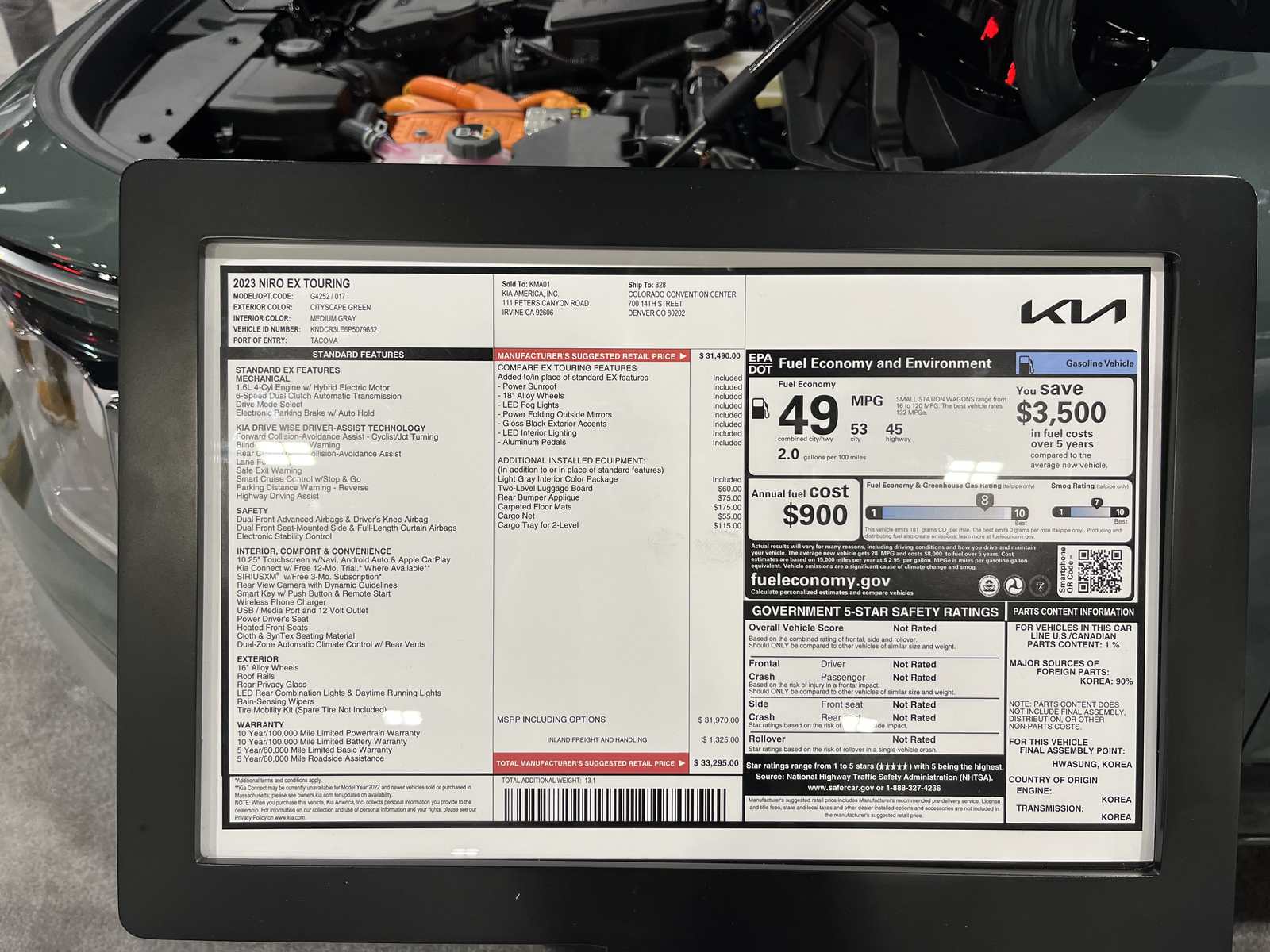
Understanding MSRP vs invoice price is the single fastest way to stop negotiating blind. MSRP is the number the manufacturer suggests a dealer charge you. Invoice price is the number on the factory's bill to the dealer for that same car. One is a retail asking price, the other is a wholesale starting point, and the distance between them is where almost every new-car negotiation actually happens.
MSRP vs Invoice Price: The Short Version
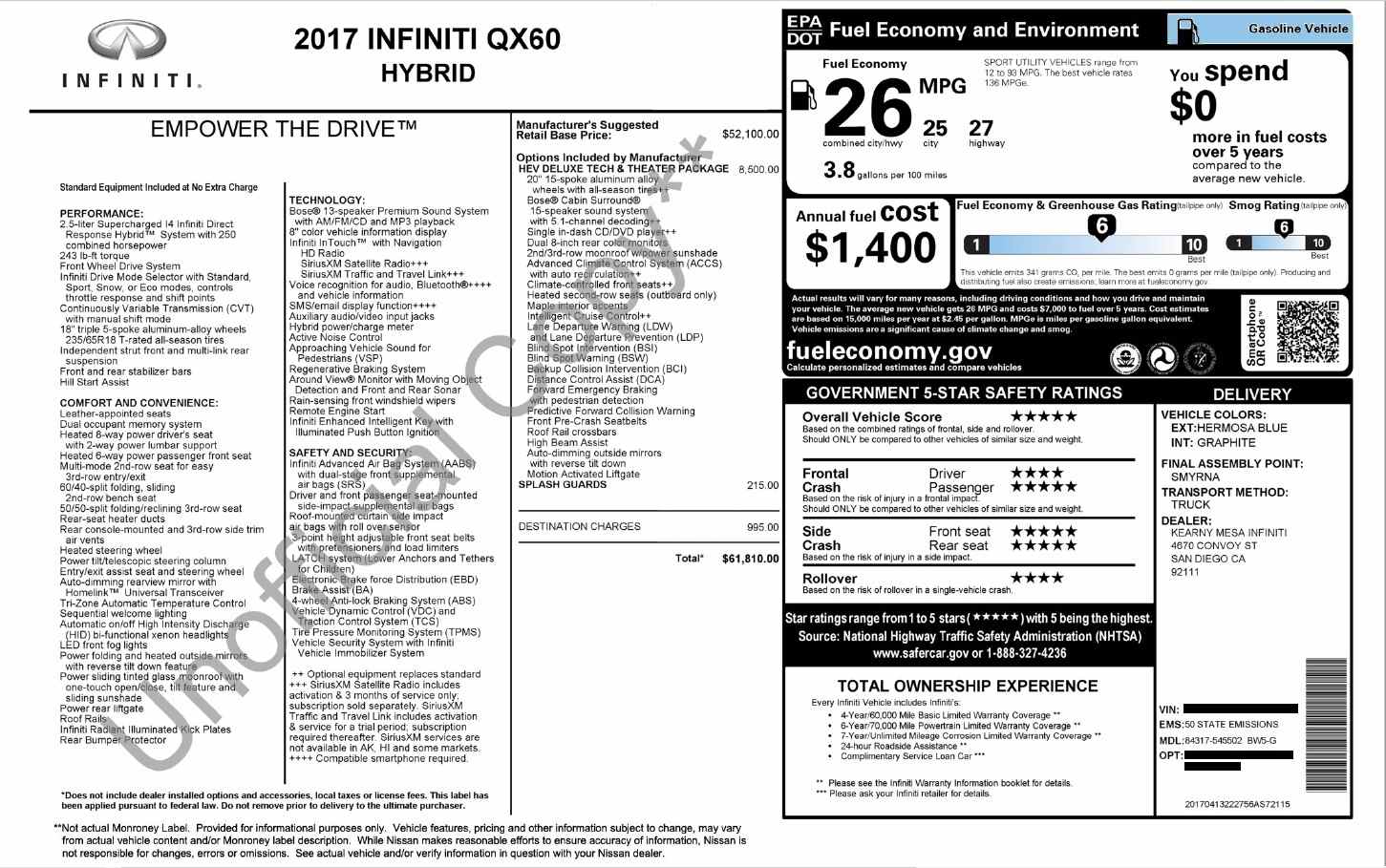
MSRP stands for manufacturer's suggested retail price. It is printed on the Monroney label — the window sticker federal law requires on every new passenger car — alongside the car's standard equipment, factory options, fuel-economy ratings and destination charge. The word "suggested" does real work in that sentence: the dealer is an independent business, and the final selling price is whatever you and the dealer agree on — and the space between the two numbers is the whole subject of invoice price vs msrp.
Invoice price is the amount shown on the factory invoice the manufacturer sends the dealership for that specific vehicle: base price, plus factory-installed options, plus the destination charge. It is always lower than MSRP on the same car, because the difference — the markup — is the dealer's headline gross margin on the metal itself. When an advertisement says a car is priced "at invoice," it is claiming to give up that whole markup, which is why the claim deserves the scepticism covered below.
What Each Number Actually Includes
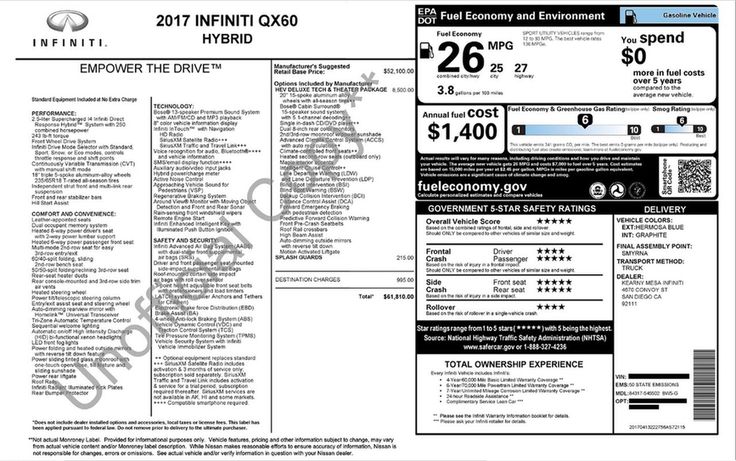
Both prices are built from the same ingredients, priced two ways. The base price covers the vehicle in its standard specification for that trim. Factory options and packages are then added line by line — each has both a retail price (which feeds the MSRP) and an invoice price (which feeds the invoice total), and the margin on options is part of why two cars with identical base prices can have very different gaps. Finally, the destination charge — the manufacturer's fee for transporting the car to the dealer — is added to both totals. It is set by the manufacturer, it is the same for that model wherever the dealer sits, and it is not a dealer add-on you can negotiate away.
What MSRP does not include: sales tax, title and registration, the dealer's documentation fee, and any dealer-installed accessories or addendum items such as paint protection or market adjustments. Those appear on top of the sticker, which is why the only fully comparable number between dealers is the out-the-door total from our out-the-door calculator — not the sticker, and not the invoice.
How the MSRP vs Invoice Price Gap Varies
There is no standard percentage, and any source that gives you one number for every car is oversimplifying. As a rough orientation, secondary pricing explainers commonly put invoice at about 5–10% below MSRP on mainstream models (The Daily Automotive, accessed 2026). In dollar terms the gap is thin on inexpensive cars and wide on expensive ones, because a similar percentage of a bigger price is a bigger number. Trucks, luxury models and heavily optioned vehicles usually carry larger dollar gaps than entry-level cars, and options widen the gap further because each option carries its own margin.
The gap also says nothing by itself about what a car should sell for this month. A slow-selling model with factory support behind it can transact below invoice; a scarce model can transact above MSRP. The invoice is a reference point for the negotiation, not a prediction of the outcome — which is exactly why Consumer Reports has long advised building a target price from the invoice price, dealer holdback, customer rebates and dealer incentives combined, rather than from any single figure.
A Worked Example (Illustrative Only)
The table below uses round, invented-for-illustration numbers — an imaginary car with a $40,000 total MSRP and an invoice 6% below it. It does not describe any real vehicle; exact figures for a real trim come from licensed manufacturer data, which is what powers our invoice pricing tool.
| Line item | MSRP side | Invoice side |
|---|---|---|
| Base vehicle | $36,900 | $34,700 |
| Factory options & packages | $1,900 | $1,700 |
| Destination charge | $1,200 | $1,200 |
| Total on paper | $40,000 | $37,600 |
| Built into the invoice total | — | Holdback of roughly 1–3% of MSRP, paid back to the dealer later |
Three things to notice. First, the destination charge is identical on both sides — nobody gets a discount on freight. Second, the $2,400 gap is the visible margin; the dealer also has holdback (covered in what is dealer holdback) coming back after the sale, which is why invoice is not the dealer's true cost. Third, neither column is what you would pay: taxes and fees still sit on top of whichever selling price you agree.
Try the same maths on your own car in the out-the-door calculator, starting from the msrp vs dealer invoice price gap.
Why Dealers Show You One Number and Not the Other
MSRP is public by law — it is on the window of every car on the lot. Invoice price is not displayed anywhere on the vehicle, and historically you had to ask, pay for a pricing report, or trust a salesperson's printout. That asymmetry is the whole negotiation game: the dealer knows both numbers, most buyers know one. A dealer who volunteers an "invoice" figure may be showing you the real factory invoice — or a number with advertising fees and other lines presented in a way that flatters the deal. Ask for the actual factory invoice document and compare its equipment line by line against the window sticker of the car you are buying; the VIN and options should match exactly.
As Car and Driver's reporting (via MotorBiscuit) points out, invoice is best treated as an informed estimate of the dealer's starting cost, not a certified floor — holdback and incentives mean the real cost sits lower, by an amount that changes with the brand, the model and the month.
Which Number Should You Negotiate From?
Start from the invoice side. Working down from MSRP means accepting the dealer's frame and haggling over a markup you cannot see; working up from invoice — invoice, minus any customer incentives you qualify for, plus a fair margin — means every dollar of the conversation is visible to you. The Consumer Financial Protection Bureau notes that the vehicle price, fees and add-ons are all negotiable, so keep the negotiation on the total: agree the selling price, then confirm the out-the-door figure in writing before financing or trade-in enters the discussion.
If you do not yet have the invoice figure for your exact trim, how to find invoice price on a car walks through every legitimate source, and the makes hub links to invoice pages by brand. Once you have it, our step-by-step method for the conversation itself is next in this series.
Before you pick a starting number, check the live invoice vs msrp position for the model you want.
MSRP vs Invoice Price FAQs
Is invoice price what the dealer actually paid?
It is what the manufacturer billed the dealer on the factory invoice, but it is not the dealer's final cost. Holdback — typically around 1–3% of MSRP, depending on the brand — is paid back to the dealer after the sale, and factory-to-dealer incentives can lower the effective cost further. Invoice is a starting point for the dealer's cost, not the end of it.
Can a dealer sell a car below invoice and still profit?
Yes. Between holdback, dealer cash incentives and volume bonuses, a deal priced at or even below the invoice figure can still be profitable — which is why "below invoice" is a marketing phrase, not proof of an exceptional deal. Judge any offer by the out-the-door total against competing quotes for the identical car.
Is MSRP negotiable on every new car?
The price is always negotiable in the sense that the dealer sets the final selling price; whether you will succeed depends on supply and demand for that model. On scarce vehicles dealers may hold at or above MSRP. On well-stocked models, offers between invoice and MSRP — and sometimes below invoice — are realistic.
Does the destination charge get discounted?
No. The destination charge is set by the manufacturer, identical for that model nationwide, and included in both the MSRP total and the invoice total. What you can challenge are dealer-added fees and accessories on top of it, not the factory freight line itself.
The Bottom Line on MSRP vs Invoice Price
The MSRP vs invoice price comparison turns a one-sided conversation into arithmetic you can check: MSRP is the manufacturer's suggestion, invoice is the dealer's billed starting point, and holdback and incentives sit beneath invoice where most buyers never look. Put msrp vs invoice pricing to work: learn the invoice figure for your exact car before you talk numbers — start with the invoice pricing tool, sanity-check the total on the calculator, and negotiate up from cost instead of down from sticker.
Get the number dealers start from.
Invoice, estimated true cost, out-the-door — before any dealer hears your name.