
Is Invoice Price the Dealer Cost? No — the Full Picture
Ask whether invoice price vs dealer cost is really the same number and the honest answer is no — the factory's bill looks like a floor, but holdback, dealer cash and volume bonuses push the real cost lower still.
Short answer first: no. Is invoice price the dealer cost? It is the price printed on the factory's bill to the dealer, but the dealer's true cost — what the car effectively costs the store once every factory payment is counted — sits below that number, sometimes by a little, sometimes by thousands. Knowing why, and by roughly how much, is what separates a buyer who negotiates from one who just haggles.
Is Invoice Price the Dealer Cost? What Sits Below Invoice
Think of dealer cost below invoice price as a stack, with the invoice total on top and money coming off as factory programmes pay out. The layers, in the order a buyer should learn them:
Holdback. Built into the invoice and repaid to the dealer after the sale, typically around 1–3% of MSRP depending on the brand. This is the most predictable layer, and it is covered in depth in what is dealer holdback.
Dealer cash. Factory-to-dealer incentives on specific models — extra money per car sold, offered to move slow sellers, clear outgoing model years or defend share against a rival. Unlike holdback it is neither automatic nor universal; on a hot model it may be zero.
Volume and stair-step bonuses. Many manufacturers pay bonuses that escalate with monthly or quarterly sales targets — sometimes retroactively across every car sold in the period once a threshold is hit. Near the end of a strong month, one more sale can be worth far more to the store than the margin on that car alone, which is why genuinely keen pricing sometimes appears at month-end and cannot be repeated on the first of the next month.
Floorplan and programme credits. Interest assistance and other factory credits can offset part of the cost of carrying the car. These are smaller and harder to generalise, but they belong in an honest picture of true cost.
Against those deductions, fairness requires the other side of the ledger: the dealer pays floorplan interest for every day before holdback arrives, funds preparation and advertising (some advertising fees are themselves lines on the invoice), and pays the people selling and delivering the car. True cost in this guide means the factory-net cost of the vehicle — the right benchmark for pricing a deal — not the store's all-in cost of doing business.
An Illustrative Cost Stack

The table below builds the stack for one imaginary car. Every number is illustrative — there is no real vehicle with exactly these figures, and your car's stack will differ by brand, model and month. Exact per-trim invoice figures come from licensed manufacturer data; that is the data behind our invoice pricing tool — the same data that answers is invoice price dealer cost for a specific car.
| Layer | Illustrative amount | Running total |
|---|---|---|
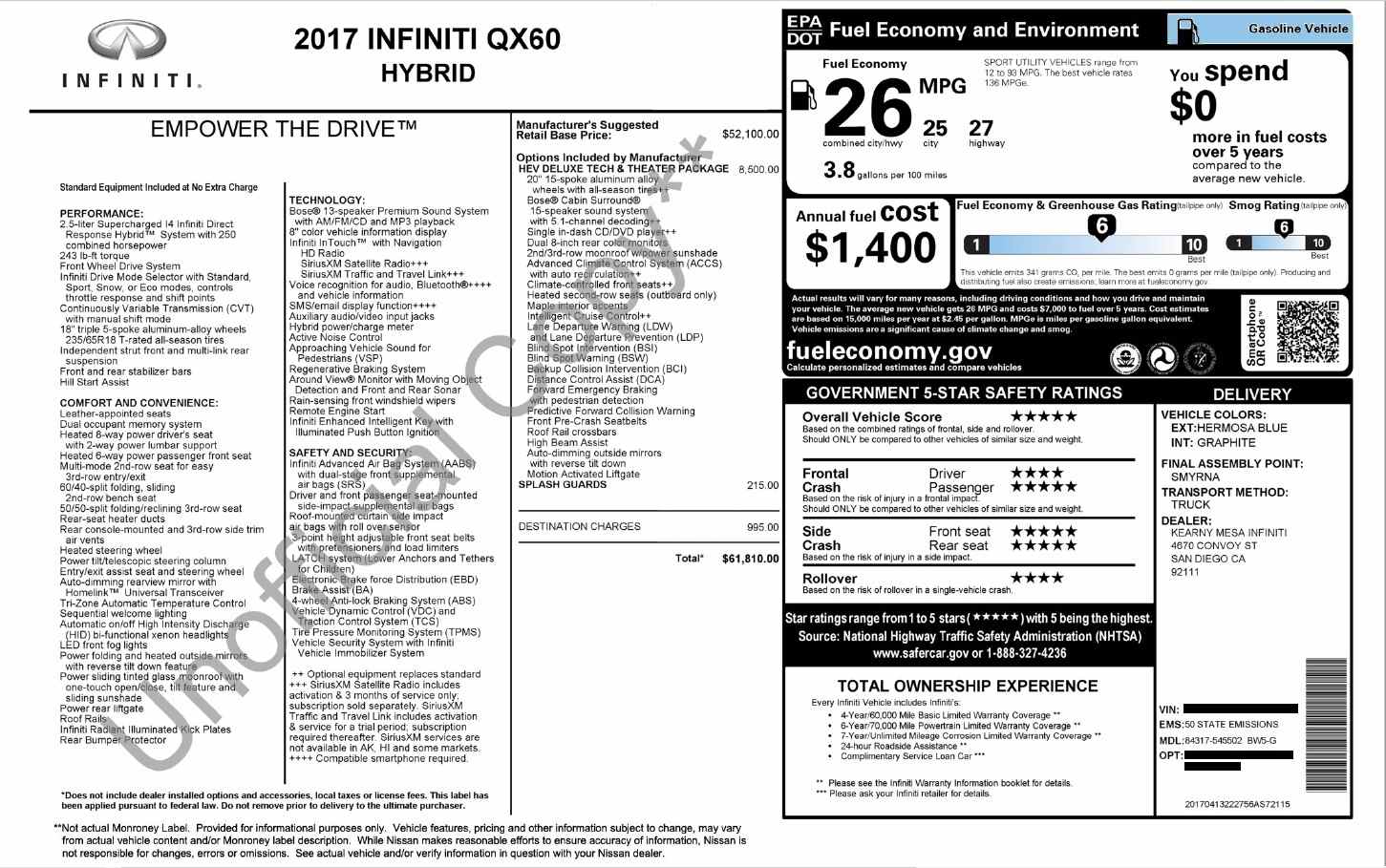
| Total MSRP (sticker) | $35,000 | $35,000 |
| Invoice price (factory bill to dealer) | — | $33,000 |
| Less: holdback at 2% of MSRP | −$700 | $32,300 |
| Less: dealer cash, if a programme applies | −$0 to −$1,500 | $30,800–$32,300 |
| Less: volume bonus value per car (varies, unknowable in advance) | varies | lower still |
| Estimated true cost of the vehicle | roughly $30,800–$32,300 |
Read the table as a method, not a quote. On a car with no dealer cash and modest holdback, true cost might sit only a few hundred dollars below invoice. On an outgoing model with stacked factory support, it can sit several thousand below. That spread is the whole reason blanket advice like "always offer 3% under invoice" fails in both directions.
Why "Below Invoice" Sales Are Not Charity
Once the invoice price vs dealer cost stack is visible, the classic showroom puzzle dissolves. A dealer advertising below invoice is usually spending factory money, not losing their own: the holdback is certain, dealer cash may be targeted at exactly that model, and a volume threshold may make the unit worth more than its standalone margin. As Car and Driver's reporting (via MotorBiscuit) puts it, the invoice figure is essentially an estimate of what the dealer paid, with holdback making the real figure lower — which is precisely why a price at invoice can still leave the dealer ahead.
The reverse also holds. On a scarce, fast-selling model with no dealer cash behind it, the dealer's true cost may be only the holdback below invoice, and a demand for thousands under invoice is a demand to lose money — it will be refused, and the refusal is not evidence of bad faith. Consumer Reports has long framed the buyer's job the same way: build your target from invoice, holdback, rebates and dealer incentives together, because no single number tells the story.
If True Cost Is an Estimate, How Should You Use It?
You use it the way negotiators use any good estimate: to set your walk-in target, your walk-away line, and your sense of which offers are serious. Estimate the stack for your car as best you can — invoice from a proper source, holdback at the typical range for the brand, customer incentives you actually qualify for applied on top — then frame your offer as estimated true cost plus a fair margin, and test it against competing out-the-door quotes. If three dealers converge near a figure, the market is telling you where true cost really sits this month. The Consumer Financial Protection Bureau advises keeping the same discipline on fees and add-ons, which are negotiable extras rather than part of the car's cost stack.
The full method, with scripts, is how to negotiate from invoice price. To start from the right invoice figure for your brand, see the makes hub, and sanity-check any final deal on the out-the-door calculator.
Is Invoice Price the Dealer Cost? FAQs
So what is the dealer's actual cost, in one sentence?
For most mainstream cars it is the invoice price minus holdback, minus any dealer cash and volume-bonus value that applies to that sale — a figure that is usually a few hundred to a few thousand dollars below invoice, and that only the dealer can know exactly on a given day.
Why won't a dealer just show me their true cost?
Because part of it does not exist yet when you are negotiating: volume bonuses depend on targets that settle at month-end, and holdback arrives after the sale. The factory invoice is a real document a dealer can show you; "true cost" is an accounting outcome, not a document — which is why your leverage comes from competing quotes, not from demanding their books.
Does a lower true cost mean I should always offer below invoice?
No. Your realistic offer depends on the model. On a supported, slow-selling car, an offer at or below estimated true cost plus a small margin is credible. On a scarce model, the achievable price may be at or above invoice even though true cost is technically below it — supply and demand outrank cost arithmetic.
Are customer rebates part of the dealer's cost?
No. Advertised customer incentives are factory money assigned to you, the buyer, subject to eligibility. They reduce your price without reducing the dealer's margin, so they come off your target after you have built it from the dealer's cost stack — never let a quote silently assume a rebate you do not qualify for.
The Bottom Line: Is Invoice Price the Dealer Cost?
No — and now the "no" has a structure. Is invoice price the dealer cost? It is the top of the cost stack: holdback, dealer cash and volume bonuses all sit underneath it, which is why dealers can sell at invoice, and occasionally below it, without selling at a loss. Build your estimate of the stack for the car you want, start from its real invoice figure in the invoice pricing tool, and negotiate the out-the-door total with the full dealer cost vs invoice price picture in front of you.
Get the number dealers start from.
Invoice, estimated true cost, out-the-door — before any dealer hears your name.