
Dealer Service vs Independent Mechanic and Your Warranty
Dealer service vs independent mechanic compared: federal law says the dealer cannot demand its own service bay to keep your warranty — this guide explains the Magnuson-Moss rule, the records to keep, and when the dealer is genuinely the right choice.
Key Takeaways
- Federal law is unambiguous: the Magnuson-Moss Warranty Act bars a manufacturer from denying coverage simply because an independent shop — or you — did the work.
- The protection runs on paperwork: keep dated receipts showing the mileage, the work done and the parts and fluids used, matched to the factory schedule.
- Warranty repairs and recalls are dealer-only and free — never pay an independent to fix something the factory should cover.
- Published labor runs about $150 to $200 an hour at dealerships against $90 to $140 at independents, with equivalent bills commonly 15 to 30 percent higher.
This dealer service vs independent mechanic comparison is decided on the numbers and the ownership costs, not the badge — here is how the two stack up. Somewhere in almost every new-car owner's first year, a service advisor says it: "You know, if you service it somewhere else, that can affect your warranty." It sounds like a rule. It is not one — it is a sales line that federal law has prohibited for fifty years. Your warranty does not require the dealer's service bay, full stop. What it requires is that the maintenance actually gets done, on schedule, with the right parts and fluids — and that you can prove it. This guide lays out the law, the records that make it work, the honest cost comparison, and the jobs where the dealer genuinely is the right choice.
Dealer Service vs Independent Mechanic at a Glance
| Factor | Dealership service | Independent mechanic |
|---|---|---|
| Effect on your warranty | None — coverage continues | None — coverage continues, with records |
| Typical labor rate (published ranges) | About $150–$200 per hour | About $90–$140 per hour |
| Parts | OEM only | OEM or quality aftermarket, your choice |
| Warranty repairs and recalls | Yes — free, dealer only | No — cannot perform them |
| Records | Automatic in the dealer system | You keep the receipts |
| Best for | Warranty work, recalls, software, first diagnosis | Routine maintenance and wear items |
Rates are published ranges for many US markets, not quotes; the full sourcing sits in this draft's header record.
What the Law Actually Says
The Magnuson-Moss Warranty Act, enforced by the Federal Trade Commission, makes it illegal for a manufacturer or dealer to claim your warranty is void, or to deny coverage, simply because someone other than the dealer performed maintenance or repairs. The rule covers an independent shop, a chain store, and you in your own driveway. The FTC's list of routine maintenance is the everyday stuff: oil changes, tire rotations, belt and brake pad replacement, fluid checks and flushes, and inspections. The Act also bans tie-in provisions — a manufacturer cannot condition your warranty on using its branded parts or its service network unless those parts or services are provided free.
There is one real limit, and it is fair: if a repair is done improperly and the improper work damages the car, the manufacturer can deny coverage for that damage. The belt example in the FTC's guidance is the classic case — a belt installed wrong that wrecks an engine can be charged to whoever installed it. But the burden sits with the manufacturer, who must be able to demonstrate the improper work caused the failure, and the rest of the warranty remains in force. Our companion guide on what voids a new car warranty walks the full myth list; the short version is that coverage is denied claim by claim, never canceled wholesale because you changed your own oil.
The Records That Protect You
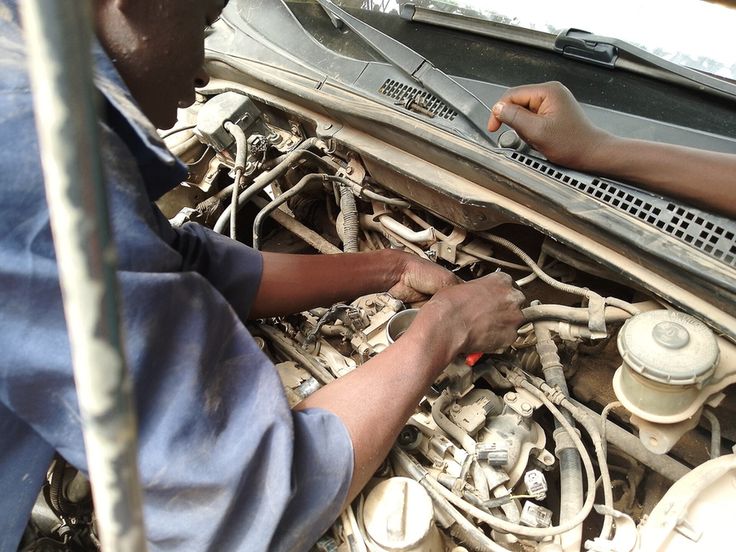
The law protects you; paperwork is how you collect. An independent shop will not feed your service history into the manufacturer's system, so the file is yours to keep. Save the invoice or receipt for every service, showing the date, the mileage, the work performed, and the parts and fluids used — including that the oil met the manufacturer's specified grade and viscosity. Follow the schedule in your owner's manual rather than the shop's upsell calendar; our maintenance schedule guide lays out what the factory actually calls for and when. A shoebox, a folder or a phone full of photos all work. What does not work is a memory and a verbal assurance three years later, when a claim is being decided. Owners who keep records essentially never lose these arguments; owners who cannot show the work was done sometimes do.
When the Dealer Is Genuinely the Right Choice
Independence has real boundaries. Warranty repairs themselves are dealer-only and free — never pay an independent to fix something the factory should cover. Recalls and safety campaigns are likewise performed by dealers at no charge. Software updates, module reprogramming and some hybrid and EV high-voltage diagnostics require factory tools and subscriptions that many independents have not bought. And when a problem might become a warranty claim, a dealer's documented first diagnosis starts the paper trail in the manufacturer's own system. There is also a softer benefit: a full dealer history can help resale with some buyers, and a good dealer will catch open recalls automatically at check-in. None of that requires doing your oil changes there.
Where the Independent Wins
On price, it is not close. Published comparisons put dealership labor commonly around $150 to $200 per hour in many markets against roughly $90 to $140 at independent shops, with total bills for equivalent work commonly running 15 to 30 percent higher at the dealer — before the parts difference, since dealers fit OEM parts only while an independent can fit the same OEM part or a quality aftermarket equivalent for less. The gap is widest on exactly the work new cars need most: oil services, brakes, filters, and tires — our guide to how long new car tires last shows why the tire bill alone rewards shopping around. The ownership math in EV maintenance costs vs gas cars makes the same point over a longer horizon. Add the practical virtues — you often speak to the technician, the car is ready the same day, the shop is across town rather than across the county — and the independent is the rational default for everything outside the warranty boundary.
A Word on Prepaid Maintenance Plans
One product blurs this comparison and deserves its own paragraph: the prepaid maintenance plan sold in the finance office. It is a convenience product, not a warranty requirement. Declining it cannot affect your coverage, and buying it does not extend your warranty by a day — it simply prepays a list of scheduled services, usually redeemable in dealer service departments, at a price you should compare line by line against the independent's rates for the same work. If you already own one, its contract — not the warranty law — decides where its included services happen. Read it the way you would read any of the questions to ask when buying a car: the paper governs, the pitch does not.
Choosing an Independent You Can Trust
The independent advantage assumes a competent independent. Look for ASE-certified technicians, a written estimate before work begins, and a shop that will put the parts and fluid specifications it used on your invoice without being asked — that line on the receipt is your warranty shield, and a good shop knows it. For hybrids and EVs, ask directly about high-voltage training and tooling; the best independents have invested in both, and the honest ones will tell you which jobs they send to the dealer themselves. A shop that services your make all week, documents everything and declines the work it cannot do properly is worth more than a low quote from one that does none of those things.
Frequently Asked Questions
Will servicing my car at an independent mechanic void the warranty?
No. The Magnuson-Moss Warranty Act makes it illegal for a manufacturer or dealer to void your warranty or deny coverage simply because someone other than the dealer did the work. Keep dated receipts showing the work, the mileage and the parts and fluids used, and follow the factory schedule.
What records do I need to keep if I service the car myself?
The same records a shop would give you: date, mileage, what was done, and receipts for the oil, filters and parts — showing they meet the manufacturer's specifications. A logbook entry with parts receipts stapled to it is enough. The goal is to be able to prove the maintenance happened, on time, with the right materials.
Can an independent shop perform recall or warranty repairs?
No. Recalls are performed free by franchised dealers, and warranty repairs are paid by the manufacturer through its dealer network. An independent can diagnose a problem, but if it is covered, take the diagnosis to the dealer and have the repair done under warranty.
Do I have to use OEM parts to keep my warranty?
No. The FTC is explicit that simply using an aftermarket or recycled part does not void your warranty. If an aftermarket part is defective or installed wrong and damages something else, the manufacturer can deny coverage for that damage — and must be able to show the part caused it.
The Bottom Line on Dealer Service vs Independent Mechanic
On dealer service vs independent mechanic, your warranty requires maintenance, not a venue. Federal law guarantees your right to use an independent mechanic — or your own garage — for everything on the factory schedule, and the dealer keeps its exclusive role only where it is genuinely exclusive: free warranty repairs, recalls and factory software. Keep receipts, follow the manual, and let each shop do what it does best and cheapest. With dealer service compared to independent mechanic on those terms, the choice stops being tribal. That settles the dealer service or independent mechanic question on the evidence: pick the one that fits your life, then negotiate as if the other one were still on the table. Start at MyCarDiscount.com.
Get the number dealers start from.
Invoice, estimated true cost, out-the-door — before any dealer hears your name.