
How to Prepare Car for Trade-In: Cleaning, Fixes, Records
Prepare car for trade in, in short: an appraisal is partly an inspection and partly an impression — the cleaning, cheap fixes, records and photos that genuinely move an offer, and the expensive repairs that do not.
Knowing how to prepare car for trade-in appraisal is worth real effort in the week before you visit a dealer, because an appraisal is partly an inspection and partly an impression. The appraiser prices your car's mechanical state, but they also price what it will cost to make it saleable — and a car that arrives clean, complete and documented gives them less to deduct and less to assume the worst about. This guide covers the cleaning, cheap fixes, records and photos that genuinely move an offer, and the expensive repairs that do not.
The Preparation Checklist at a Glance
| Task | Cost character | Why it matters to the appraiser |
|---|---|---|
| Full clean inside and out, including trunk and engine bay wipe-down | Your time, or a modest valet fee | Signals careful ownership; removes the reflexive "neglected car" deduction |
| Remove personal items, child seats and roof boxes not included in the sale | Free | The car is appraised as it will be sold |
| Both keys, manuals, service book and accessories present | Free if you have them; a missing second key is a real deduction | Completeness is priced — dealers pay to replace missing items |
| Cheap fixes: bulbs, wiper blades, washer fluid, tire pressures, fob battery | Small change each | Every visible fault is a line on the recon estimate |
| Service records gathered and organized | Free | Documented history supports top-of-band condition grading |
| Honest list of known faults | Free | Builds credibility and avoids a re-appraisal fight later |
How to prepare car for trade-in: the week before appraisal
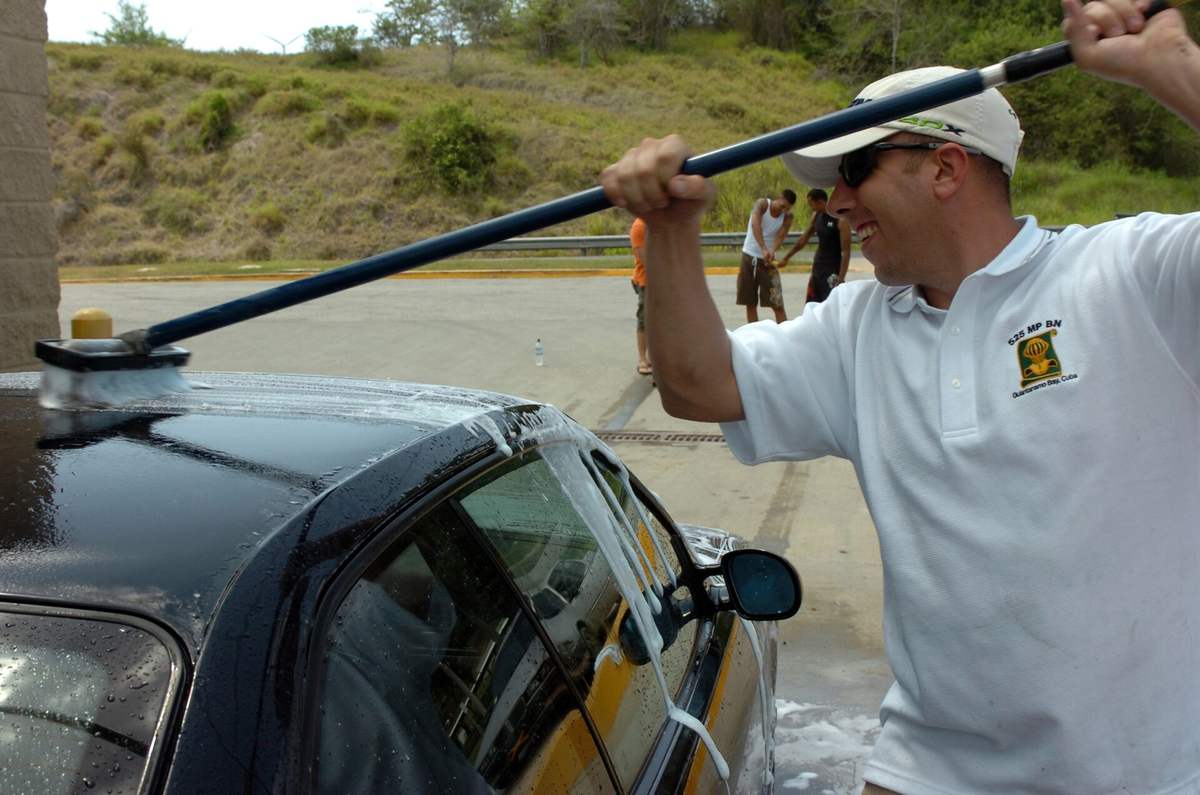
Start with the clean. Wash and wax the exterior, vacuum and wipe every interior surface, clean the glass inside and out, and empty the trunk and glovebox of everything that is not part of the car. Pay attention to smells: an appraiser who opens the door to a stale interior prices in a full odor treatment. If the car smells of smoke or pets, a professional detail with odor treatment is one of the few paid services that routinely earns its fee back in a stronger condition grade.
Then gather completeness. Both keys or fobs, the owner's manuals, the locking wheel-nut key, the parcel shelf, the spare wheel or inflator kit, charging cables on an EV — everything the car came with. A missing second key is not a triviality; dealers genuinely pay to supply one, and it comes off your offer. Present the items with the car rather than mentioning them later.
Finally, the records. A folder — or a tidy digital file — of service invoices, inspection reports and repair receipts tells the appraiser the car has been maintained on schedule. Documented history is one of the inputs that separates the top of the value range from the middle, as our guide to how much is my trade-in worth explains in its breakdown of the appraisal.
Cheap fixes that remove deductions
So how do you prepare car for trade-in cheaply? Clear the visible list first: appraisers deduct for what they can see. Replace blown bulbs and tired wiper blades. Top up washer fluid and coolant to their marks. Set tire pressures correctly. Replace the key fob battery if it is weak. Touch in small stone chips if you can do it neatly. Each item costs very little; each one left undone becomes an estimated line on the reconditioning sheet, and estimates are never in your favor.
Warning lights are different. A lit engine or airbag light will be investigated, not estimated away. If the cause is cheap and known — a loose fuel cap is the famous one — fix it. If it is a genuine fault, price the repair honestly against the likely deduction and read the next section before spending anything. Do not clear codes to hide a fault for appraisal day: the fault will be found in the dealer's workshop, the deal can unravel, and deliberately concealing a known defect can create legal exposure. Honesty is both the ethical and the cheaper strategy.
How to prepare car for trade-in: what not to fix
The rule is simple: dealers deduct reconditioning at their internal cost, which is lower than the retail price you would pay to fix the same item. So a repair only pays if your cost is clearly below the deduction it removes — true for the small items above, rarely true for big ones.
New tires are the classic trap. A worn set will be deducted, but at the dealer's trade cost for mid-range tires, not at the retail price of the premium set you would buy. Brake overhauls, air-conditioning repairs, windshield replacement and bodywork follow the same pattern: you spend retail money to remove a wholesale deduction. Cosmetic damage is similar — a professional respray costs far more than the deduction for the scuff it removes. The exception is damage you can improve cheaply and neatly yourself: a careful wash-and-polish of scuffed trim, a dent you can genuinely improve with a DIY kit. If a fix needs a workshop and a four-figure quote, leave it, disclose it, and let the deduction happen.
Appraisal day: photos, offers and leverage
Photograph the car thoroughly before you go — every panel, the interior, the odometer, the tires, the engine bay. Your photos are your record if condition is later disputed, and they double as your listing photos if you decide a private sale beats the offers, which our comparison of trade-in vs selling privately helps you judge.
Then get more than one appraisal. The CFPB's advice to research your trade's value and negotiate it separately from the new car only works if you hold an alternative. Two or three appraisals, ideally including one firm buy-out offer from a dealer or buying service that does not require you to purchase, turn preparation into leverage. If an appraiser's deductions include work you have receipts for, show the receipts — documented repairs are removed from recon estimates more often than any other challenge succeeds.
Frequently asked questions
How clean does the car need to be for a trade-in appraisal?
Clean enough that the appraiser grades condition on the car, not on its dirt. A thorough wash, vacuum, glass clean and empty interior is the standard; a professional detail is worth it for higher-value cars or strong odors. You are removing deductions and assumptions, not entering a show competition.
Should I get the car serviced right before trading it in?
Only if a service is due or overdue. A fresh service stamp supports the service-history story, but paying for a major service the next owner benefits from rarely returns its cost in the offer. A recently serviced car with receipts is ideal; a car serviced last year, documented, is fine.
Do I need to fill the fuel tank or charge the battery?
No. Fuel level does not enter the appraisal. On an EV or hybrid, arriving with a reasonable charge is courteous and lets the appraiser test everything, but it does not change the number. Do bring the charging cables — those are completeness items and their absence is deducted.
Is it worth fixing a dented panel before appraisal?
Almost never at professional prices. The deduction for cosmetic damage is set at the dealer's trade repair cost, below what a body shop charges you. Cheap, neat DIY improvements are fine; a respray bought at retail to remove a wholesale deduction loses money. Disclose the damage and move on.
Conclusion: how to prepare car for trade-in the right way
How to prepare car for trade-in appraisal comes down to a division of labor: you handle the cheap, visible and documentary work — cleaning, completeness, records, small fixes — and you refuse the expensive mechanical and cosmetic work whose deduction is smaller than its retail cost. Arrive with a clean, complete, honestly presented car and more than one offer in hand, and the appraisal becomes a number you can negotiate rather than a verdict you accept — price the replacement car with our how to prepare car for trade in invoice pricing guide, then run the numbers in our prepare car for trade in calculator. Start at MyCarDiscount.com.




Get the number dealers start from.
Invoice, estimated true cost, out-the-door — before any dealer hears your name.