
Buy a New Car Below MSRP: The Route Below the Sticker
You can buy a new car below MSRP — MSRP is a suggestion with three numbers underneath it — invoice, holdback and incentives — and the route below sticker runs through all three.
For most mainstream models, learning how to buy a new car below MSRPis not about luck or aggression — it is about knowing the three numbers underneath the sticker and making dealers bid against them. MSRP is the manufacturer's suggestion, and between that suggestion and the dealer's true cost sit the invoice price, holdback and factory incentives. This guide walks the exact route from sticker price to a defensible offer below it.
What "Below MSRP" Actually Means (and What It Doesn't)
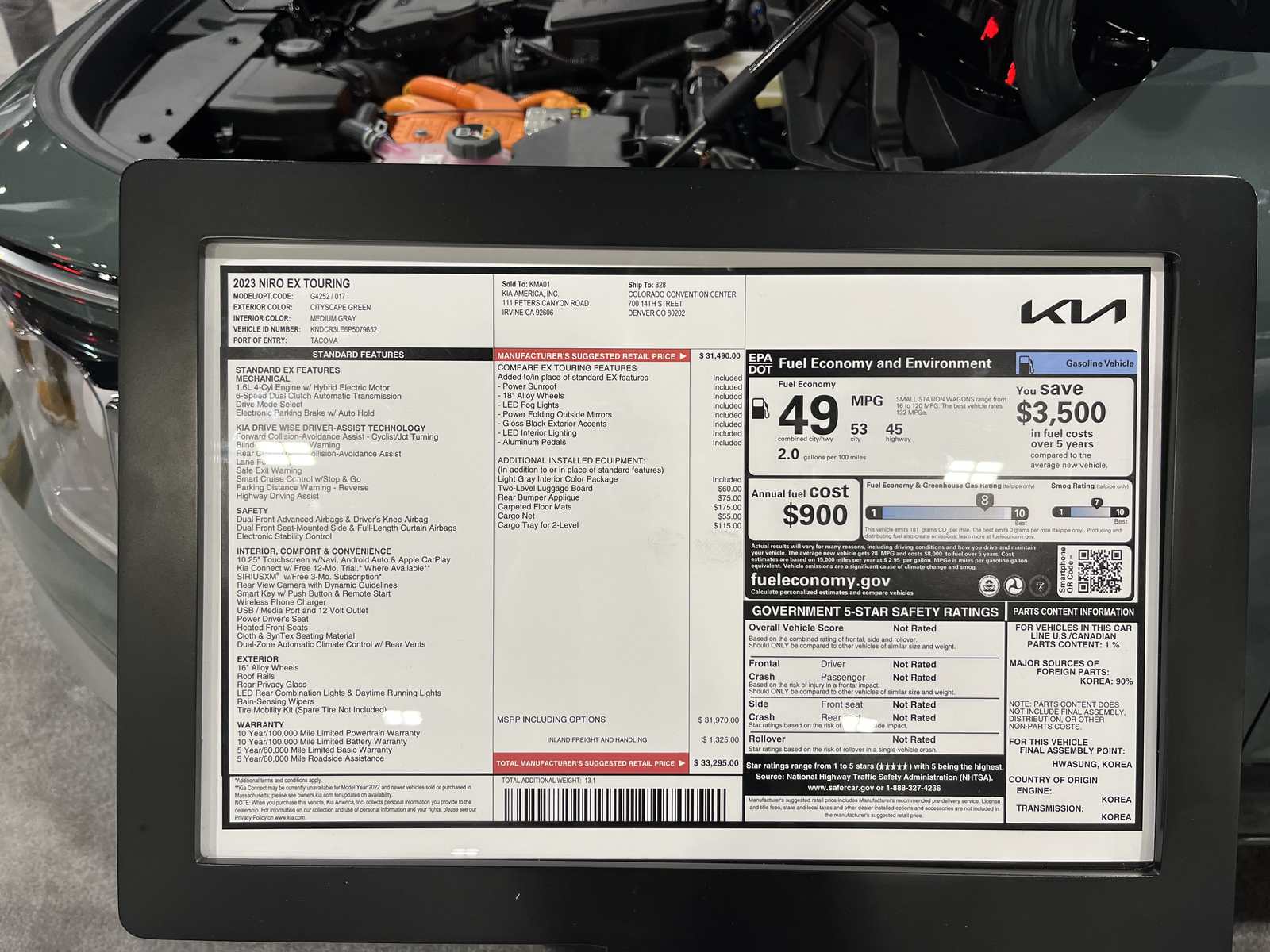
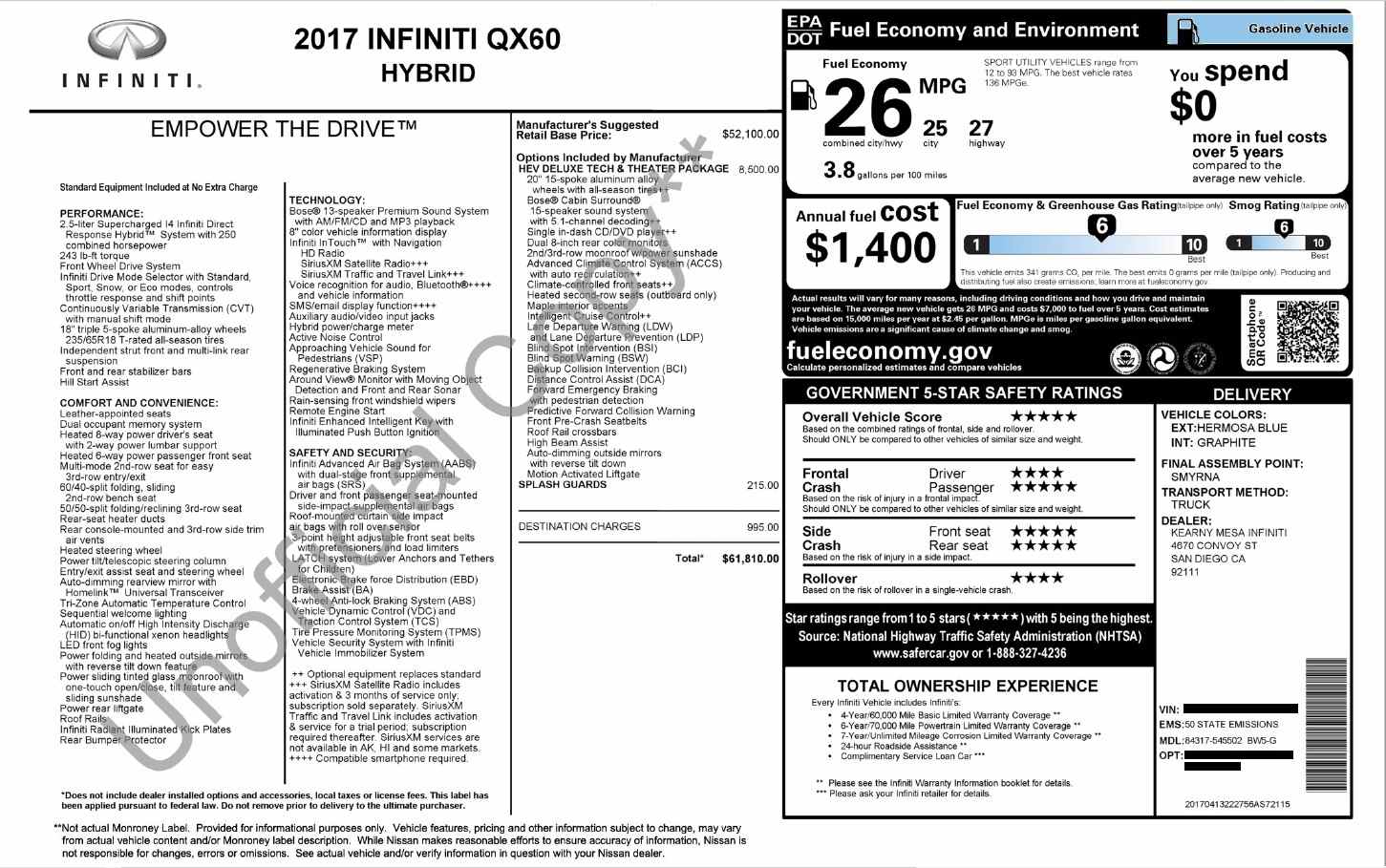
MSRP — the manufacturer's suggested retail price — is printed on the window sticker by law, and what does MSRP mean breaks down every line on that label. "Suggested" is the operative word: except in shortage conditions, dealers routinely transact below it, because the sticker was never the dealer's cost. The dealer's invoice price is lower, and MSRP vs invoice price maps the gap between the two.
So a below-MSRP deal is not automatically a good deal. A small discount off sticker on a car with a wide MSRP-to-invoice margin may still leave the dealer most of their margin, while a deal at MSRP on a scarce model with a thin margin may be the honest market price. Your target should never be "some amount below MSRP." It should be a position relative to invoice: at invoice, modestly above it, or — when the conditions in the next sections align — below it.
Step 1: Learn How to Buy a New Car Below MSRP by Starting at Invoice
Every below-MSRP deal begins with the invoice figure for the exact car: trim, drivetrain and factory options, because options carry their own markup and a base-model invoice tells you little about the car on the lot. How to find invoice price on a car covers the sources, and our invoice pricing tool exists for precisely this lookup.
With invoice in hand, estimate what sits beneath it. Holdback — money the manufacturer returns to the dealer after the sale — is commonly estimated in the 1–3% of MSRP range across brands, varying by make: our dated holdback table records Ford at 3% of total MSRP, Toyota at 2% of base MSRP and Honda at 2% of base MSRP, all secondary-source estimates rather than licensed figures (what is dealer holdback explains why they are estimates and how to use them honestly). Factory incentives then layer on top: customer rebates reduce your price, while dealer cash reduces the dealer's effective cost without appearing in any advertisement. The stack — invoice, minus holdback, minus dealer cash — is the estimated true cost, and the range between true cost and invoice is the territory where below-invoice deals live, as dealer true cost of a new car works through in detail.
Step 2: Choose Cars the Market Will Discount
No technique manufactures a discount on a car the market will not discount. Before you negotiate anything, sort your shortlist by supply: models with deep inventory, an approaching model-year changeover, or a newer rival stealing attention are the cars dealers compete on. Models with waiting lists, limited allocations or fresh-launch demand are not — and chasing a below-MSRP deal on one wastes the weeks when your target car was available.
A practical test: if several dealers within reach list the same trim in stock, the market is soft enough to work. If every listing is "in transit" or already spoken for, price your expectations at or around MSRP and focus your energy on refusing fee padding and add-ons instead — a clean deal at sticker beats a "discounted" deal carrying $1,500 (illustrative figure, not a live price) of accessories you never asked for (dealer fees explained names the usual suspects).
Step 3: Make Dealers Bid the Price Down For You
Arithmetic tells you where a deal can land; competition makes it land there. Send the same written request to a handful of dealers with the identical car: best out-the-door price, every fee itemised, specification fixed. How to get dealers to compete gives the full method and the script. The short version: dealers who know a rival is quoting the same VIN-class car quote from their real margin immediately, and a single counter round with the lowest total produces the genuine market price for that week.
Timing sharpens the bid. Requests sent in the last days of a month or quarter meet stores still chasing quota bonuses, and changeover season adds factory support on outgoing model years — best day to buy a car explains the cycles. None of this requires theatre: a short, courteous email with a deadline outperforms an afternoon of showroom endurance, because it lets each dealer answer the only question that matters — what is your best total on this exact car?
Step 4: Work the Whole Stack — Rebates, Fees and the Total
Your selling price is only one layer. The full stack on a below-MSRP deal, using a labelled illustrative example with invented round numbers (not a real vehicle):
| Layer | Illustrative amount |
|---|---|
| MSRP (window sticker) | $36,000 |
| Invoice price for the exact build | $34,100 |
| Winning quoted selling price | $33,800 |
| Customer rebate you qualify for | −$1,000 |
| Price after rebate | $32,800 |
| Documentation fee | +$499 |
| Tax, title and registration | per your state |
| Total checked in the new car below msrp calculator before signing | — |
Three checks keep the stack honest. First, confirm every rebate in the quote is one you actually qualify for — loyalty and conquest cash have eligibility rules, detailed in new car rebates and incentives. Second, compare dealers on out-the-door totals, because a store can win the selling price and lose the deal on fees. Third, keep trade-in and financing out of the price negotiation entirely; both are separate transactions with their own leverage, and folding them in is how a genuinely below-MSRP price quietly becomes an average one.
When Below MSRP Is the Wrong Goal
Sometimes the honest answer is that sticker is the market. First-year redesigns, limited-production trims and sudden demand spikes all produce MSRP-or-above pricing that no script will reverse — and a buyer who burns two months waiting for a discount that never comes may lose more to rising rates or a needed car than the discount was worth. In those conditions, redefine winning: pay MSRP at a store with no market adjustment, no forced add-ons and a fair doc fee, and consider the win real. Conversely, be suspicious of discounts that look too easy on a supposedly scarce car; a headline number far below the market usually reappears later as mandatory accessories, an inflated trade-in allowance charged back into the price, or a rebate you do not qualify for used to inflate the "discount." The Consumer Financial Protection Bureau's advice to compare total cost across offers exists precisely for this pattern.
How to Buy a New Car Below MSRP: FAQs
How far below MSRP can a new car realistically go?
It is bounded by the car's margin structure. The MSRP-to-invoice gap sets the first territory; holdback and dealer cash set how far below invoice a dealer can stretch on a supported model. On well-supplied mainstream cars the result is a meaningful discount; on scarce models it may be zero — which is why the target is always built from invoice, never quoted as a universal percentage off sticker.
Is buying below MSRP the same as buying below invoice?
No. Below MSRP is the easy milestone — most mainstream transactions clear it. Below invoice is the stronger result, achievable when holdback, dealer cash, quota pressure or changeover support give the dealer room. Our guide on how much below invoice for a new car covers when that territory realistically opens.
Do rebates count toward buying below MSRP?
They count toward what you pay, but keep the accounting clean: the negotiated selling price is the dealer's move, and rebates are factory money applied afterwards. A quote that quietly assumes a rebate you cannot claim is not a below-MSRP deal — verify eligibility for every incentive in the quote before you compare totals.
Can I buy below MSRP if I order the car from the factory?
Often yes — and sometimes more easily than on a car already in stock, because an ordered car never sits on the lot costing the dealer floorplan interest, and you are not competing with other buyers for that specific vehicle. What you cannot do is lock the whole deal months ahead. Most factory incentives are settled in the month the car is delivered, not the month you order, so the rebate in force at delivery is the one that counts; the part worth fixing now is the dealer's own discount. Get that in a signed order document: the agreed selling price, or a stated amount relative to the invoice of the car as finally built, plus the deposit amount and the conditions — late arrival, a price rise, a changed specification — under which the deposit comes back to you.
The Bottom Line on How to Buy a New Car Below MSRP
The route to buy a new car below MSRP is a sequence, not a secret: anchor on the invoice figure instead of the sticker, estimate the true cost beneath it, choose models the market is willing to discount, make dealers bid the identical car down in writing, and audit rebates and fees before you sign. Start with the buy a new car below msrp pricing tool, build your target with how to negotiate from invoice price, and check the final total in the calculator — and if you want the benchmarks for judging the result, what is a good price for a new car begins from the same stack.
Get the number dealers start from.
Invoice, estimated true cost, out-the-door — before any dealer hears your name.