
What Does MSRP Mean? The Sticker Price Explained Simply
The msrp meaning in practice matters more than the letters: printed by federal law on every new car's window, the sticker is neither the dealer's cost nor the price you must pay — here is what every line can and cannot mean.
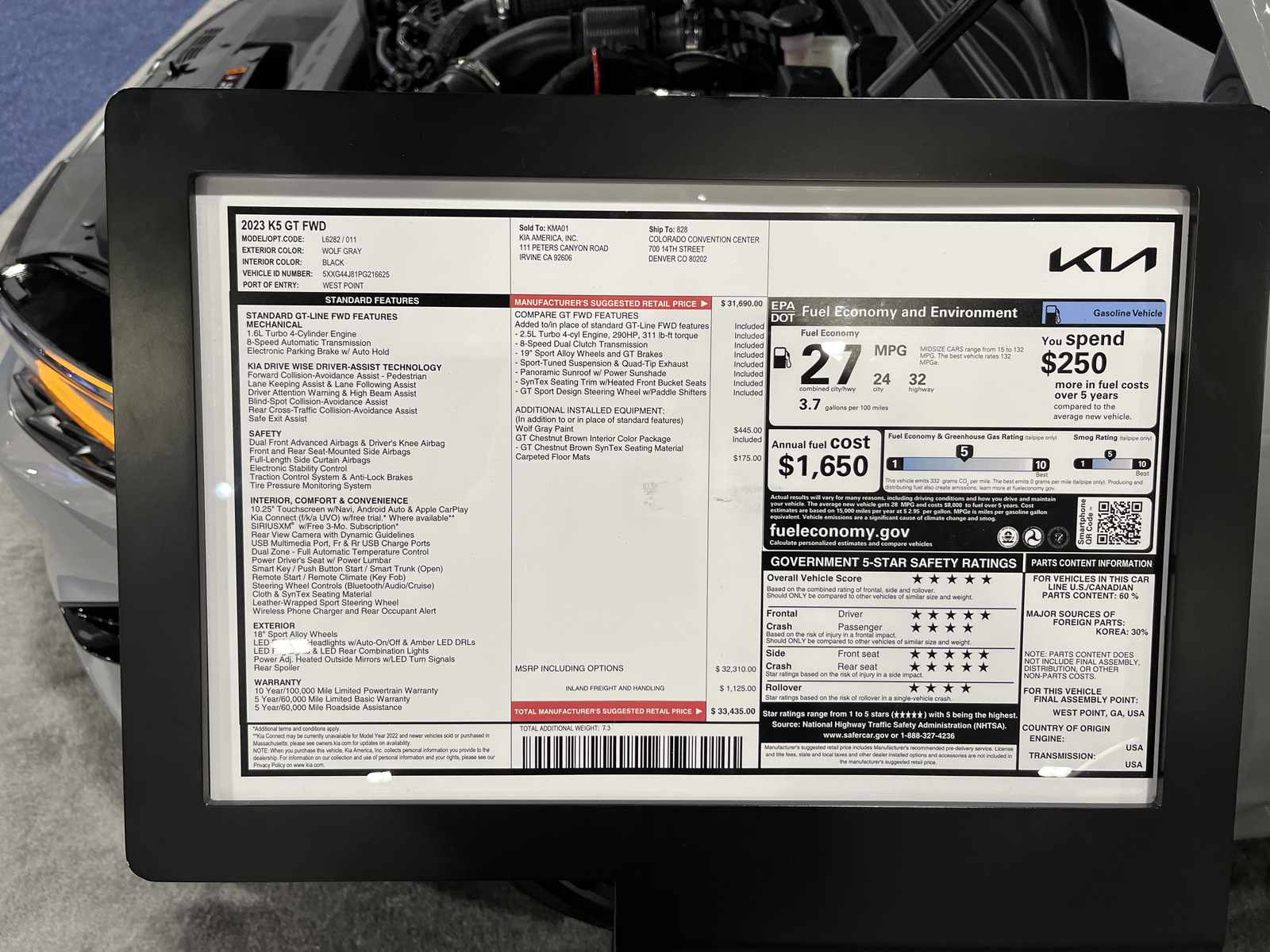
What does MSRP mean? It is the question behind every new-car window sticker in America. MSRP stands for manufacturer's suggested retail price — the price the carmaker recommends the dealer charge for that vehicle, exactly as built. It is printed by federal law on the window of every new passenger car, it is the starting point of almost every negotiation, and it is widely misunderstood: it is neither the dealer's cost nor the price you must pay. This page decodes every line of the sticker, including the lines that are not on it.
What Does MSRP Mean, in Plain English?
MSRP is the manufacturer's suggested retail price: the retail value the carmaker assigns to a specific vehicle with a specific set of equipment. Each word carries weight. "Manufacturer's" — the number comes from the factory, not from the dealer whose lot the car sits on. "Suggested" — it is a recommendation, not a mandate; franchise dealers are independent businesses and the final transaction price is whatever buyer and dealer agree. "Retail price" — it is the price intended for the end customer, as opposed to invoice price, the wholesale figure the manufacturer bills the dealer.
So when someone says a car is "priced at sticker," they mean it is offered at full MSRP. "Below sticker" means a discount from that figure; "over sticker" means the dealer is asking more than the manufacturer suggested, usually on a scarce model. None of those phrases tells you whether the price is good — for that you need the invoice side of the story, covered in MSRP vs invoice price.
The Monroney Sticker: Why MSRP Is on the Window at All
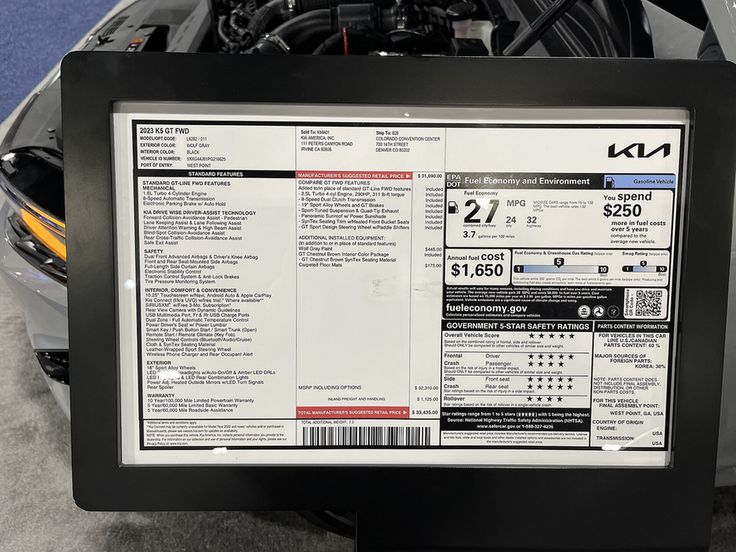
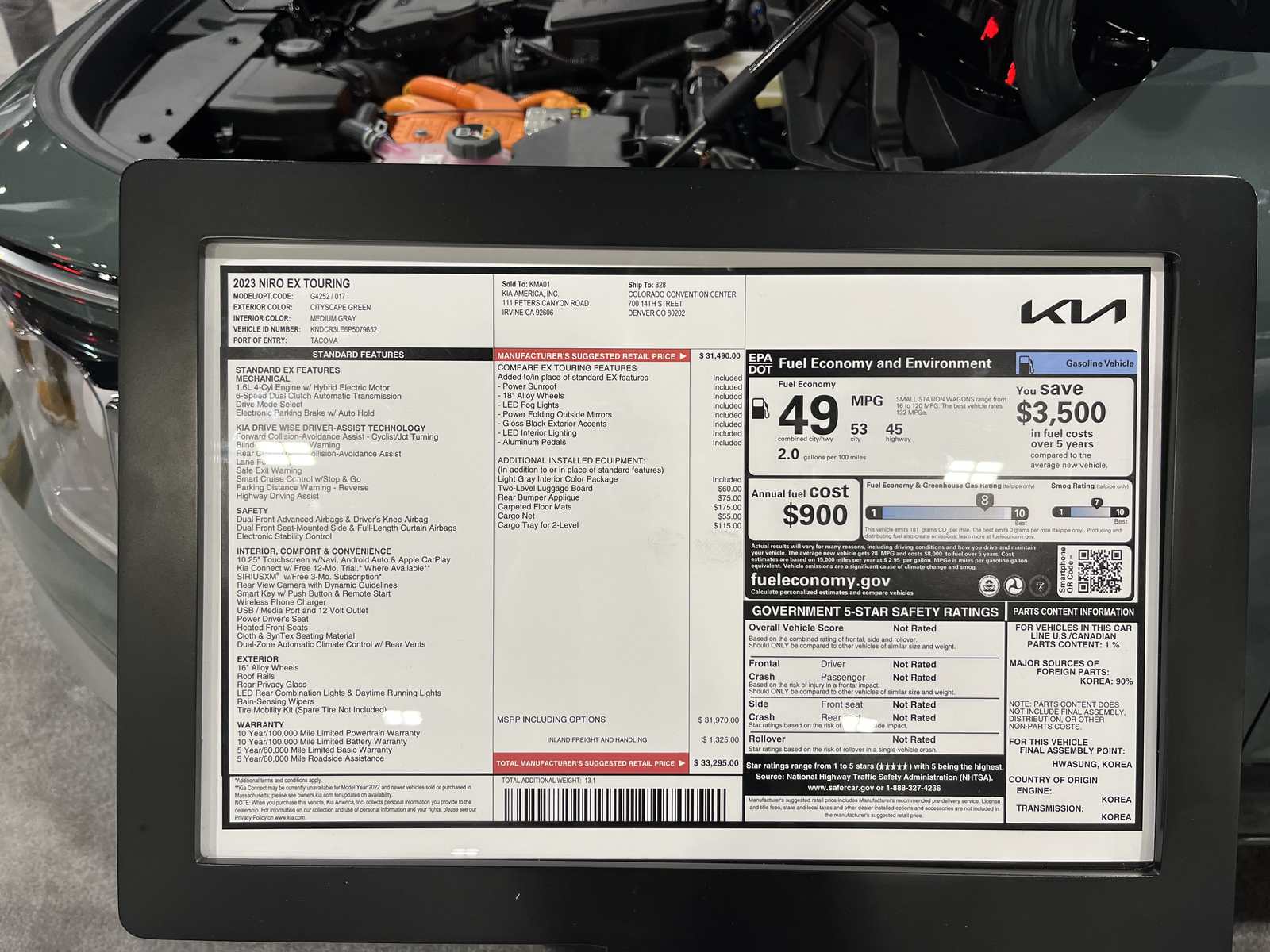
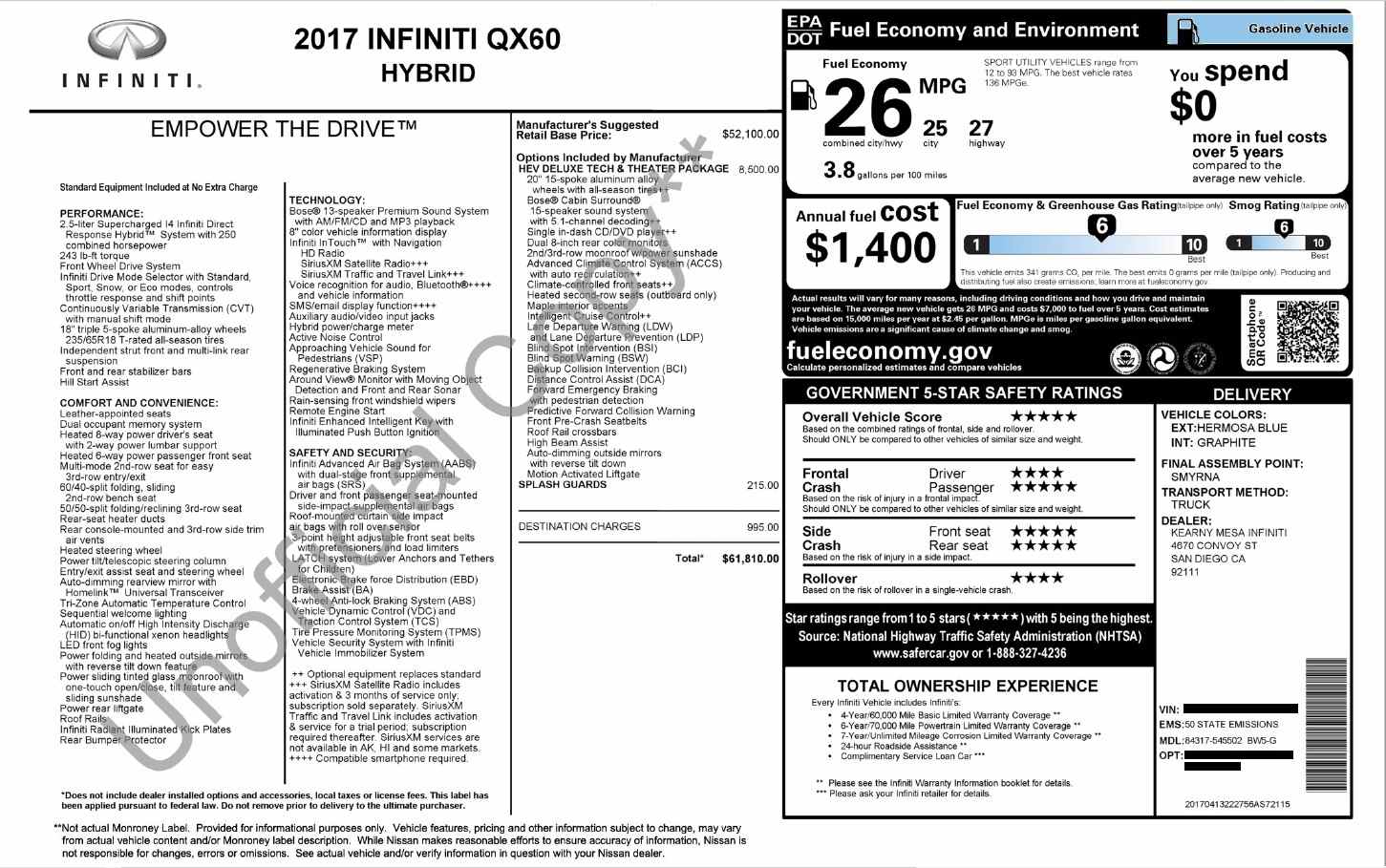
The sticker has a name — the Monroney label — and a legal basis. The Automobile Information Disclosure Act of 1958, sponsored by Oklahoma Senator Mike Monroney and codified at 15 U.S.C. §§ 1231–1233, requires manufacturers to affix a label to the windshield or side window of every new passenger car showing, among other things, the suggested retail price of the base vehicle, the price of each piece of factory-installed optional equipment, the transportation (destination) charge, and the total suggested retail price. The label must stay on the car until it is delivered to the first retail buyer; only the buyer may remove it, and tampering with it before delivery is a federal offence.
The law exists because, before 1958, there was no standardised price disclosure and buyers had no reliable way to compare what dealers claimed a car "listed" for. The Monroney label fixed the factory's numbers in print. Later laws layered on the non-price content you now see beside the prices: EPA fuel-economy figures, NHTSA government safety ratings, final assembly point and US/Canadian parts content. When you read a sticker, the price block governed by the 1958 Act is the foundation everything else hangs on.
What the Sticker Price Includes
Total MSRP is an arithmetic sum, and every component is printed on the label:
- Base price. The suggested retail price of the vehicle in that trim with its standard equipment — engine, transmission and features included at that trim level.
- Factory-installed options and packages. Each option or package physically installed by the manufacturer before delivery to the dealer, priced individually. A panoramic roof, a towing package, an upgraded audio system — each appears with its own retail price.
- Destination charge. The manufacturer's charge for transporting the vehicle from its final assembly point to the dealer. It is set by the manufacturer, is the same for that model wherever in the country the dealer sits, and is a required line on the label — not a dealer invention.
Add those three and you get the total MSRP at the bottom of the sticker. That is the whole of what MSRP covers. Everything else you will eventually pay sits outside it — which is the part of the sticker most buyers never read, because it is not there.
What MSRP Excludes: The Lines That Are Not on the Sticker
| Line item | In total MSRP? | Where it appears |
|---|---|---|
| Base vehicle price | Yes | Monroney label |
| Factory-installed options & packages | Yes, itemised | Monroney label |
| Destination charge | Yes | Monroney label |
| Sales tax | No | Purchase contract, set by your state/locality |
| Title & registration | No | Purchase contract, government charges |
| Dealer documentation fee | No | Purchase contract; varies by state |
| Dealer-installed accessories | No | Dealer addendum sticker |
| Market adjustment / dealer markup | No | Dealer addendum sticker |
Taxes and government charges are the obvious exclusions: MSRP is a price for the car, not for registering it in your state. The documentation fee — the dealer's paperwork charge — is also outside MSRP, and per Edmunds its median varies enormously by state, from $75 in New York to $899 in Florida and Virginia in 2025 data. Our companion piece, dealer fees explained, goes through those charges line by line.
The subtler exclusion is everything on the addendum sticker: a second, dealer-printed label placed beside the Monroney label listing dealer-installed accessories (paint protection, wheel locks, nitrogen-filled tyres) and, on in-demand models, a market adjustment — a straightforward markup above MSRP. The addendum is the dealer's document, not the manufacturer's, and its items are the most negotiable lines in the entire deal. Confusing the two stickers is expensive: buyers routinely assume the addendum total is "the sticker price" and negotiate down to what was MSRP all along.
MSRP vs the Price You Actually Pay
MSRP is best understood as the ceiling of the normal negotiation range, not the price. On well-stocked models, transaction prices typically land somewhere between invoice and MSRP; factory incentives can pull a fair price lower still, as our guide to new car rebates and incentives explains, and how to buy a new car below MSRP walks through the full playbook. On scarce models, the market clears above MSRP and the addendum tells you so in writing.
What MSRP never tells you is the dealer's cost. That is the invoice price, and the gap between the two numbers — which widens with price class and options — is the gross margin the negotiation is really about. If you take one habit from this page, make it this: before discussing any specific car, find its invoice figure (here is how to find invoice price on a car) and build your target from there, then check the result on our MSRP meaning invoice pricing tool.
What Does MSRP Mean for Your Negotiation?
Treat the sticker as a parts list with prices, not as a verdict. Verify that the car in front of you matches the label — VIN, trim, options — because the label prices that exact vehicle and no other. Read the addendum separately and decide which of its items, if any, you are willing to pay for. Then negotiate the out-the-door total, not the discount from sticker: as the Consumer Financial Protection Bureau notes, the vehicle price, fees and add-ons are all negotiable, and the total is the only number two dealers can be compared on fairly — run both through the what does msrp mean calculator before you choose. Making dealers bid the same car against each other is covered in how to get dealers to compete.
MSRP FAQs
Is MSRP the price I have to pay?
No. MSRP is the manufacturer's suggestion. Dealers can and routinely do sell below it on well-stocked models, and may ask above it on scarce ones. The price you pay is the one negotiated in the purchase contract — the sticker simply fixes a common reference point for the conversation.
Can a dealer legally charge more than MSRP?
Yes. Because MSRP is a suggestion, a dealer may ask any price; above-MSRP asks appear as a market adjustment on the dealer's addendum sticker. Whether anyone pays it depends on supply and demand for that model. What a dealer cannot do is alter or remove the Monroney label itself before the car is delivered to its first buyer.
Is the destination charge part of MSRP?
Yes. The destination charge is a manufacturer-set line item, disclosed on the Monroney label and included in total MSRP — and it is also included in the invoice total. It is not a dealer fee, and a second "delivery" or "freight" charge appearing on the dealer side of a contract is a duplicate worth challenging.
Why do two seemingly identical cars show different MSRPs?
Almost always the factory options. Each manufacturer-installed option and package is priced individually on the label, so two cars of the same trim can differ by thousands in total MSRP. Compare the option lines, not just the bottom line — and compare the same equipment when you compare prices between dealers.
The Bottom Line: What Does MSRP Mean for You?
So, what does MSRP mean? A manufacturer-set suggestion, printed on the Monroney label under a 1958 federal disclosure law, covering the base car, its factory options and destination — and nothing else. Taxes, government charges, dealer fees and addendum markups all live outside it, which is why the sticker — MSRP explained — is the start of price literacy, not the end. Pair it with the invoice figure for the same car — start at the invoice pricing tool and the makes hub — and you will know what the numbers on the window can and cannot tell you. Our methodology page explains how we source and label every figure we publish.

Get the number dealers start from.
Invoice, estimated true cost, out-the-door — before any dealer hears your name.