
Market Adjustment: Car Dealer Markups Over Sticker
A dealer market adjustment is pure margin printed in plain sight — this explainer shows when scarcity justifies any of it and how competing quotes make it vanish.
Key Takeaways
- A market adjustment is pure dealer margin printed on the addendum sticker — not a factory charge, tax, or cost — and it is the most negotiable line in the deal.
- At the January 2022 peak, 82.2% of new-vehicle purchases were made above MSRP (Edmunds), versus 0.3% in January 2020.
- Test scarcity before paying: count the same model in stock at nearby dealers, check allocation reality, ask how long the unit has sat, and get a competitor's written quote.
- When an adjustment is 'removed,' watch for the same margin returning as mandatory add-on packages — compare out-the-door totals, not line items.
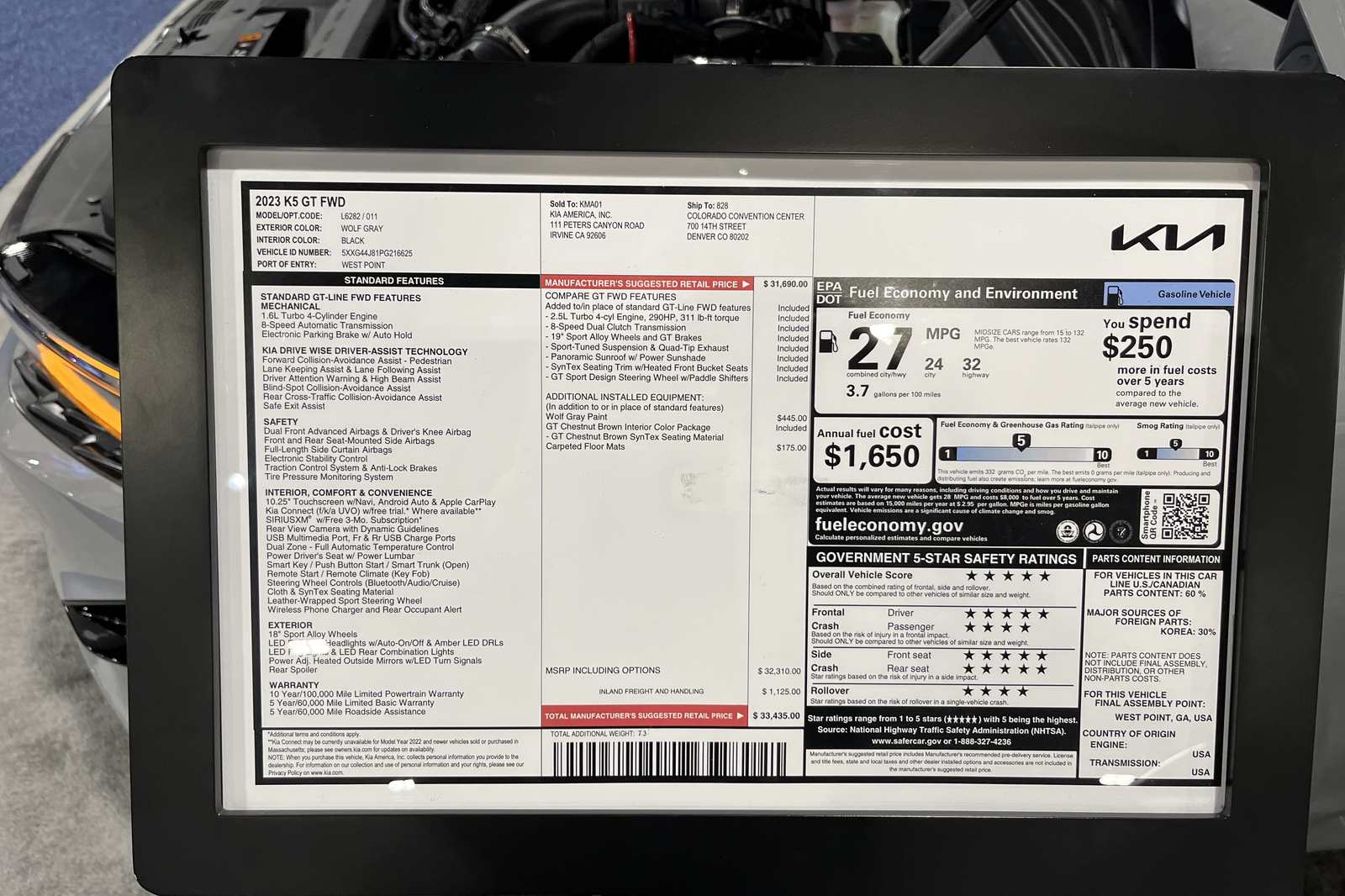
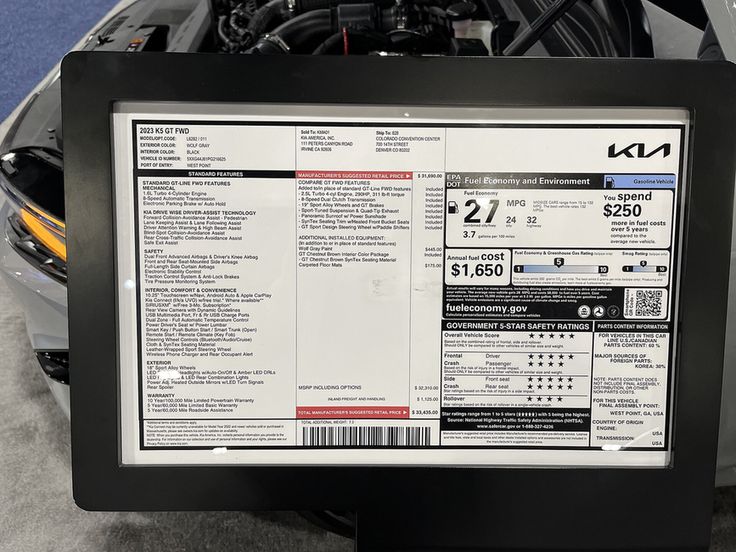
One subject runs through this whole guide: what is a market adjustment at a car dealer. What follows explains the market adjustment car dealer line in plain English, with the numbers attached. A market adjustment is a line a dealer adds above the manufacturer's suggested retail price — labeled "market adjustment," "ADM" (additional dealer markup), "price adjustment" or similar on the addendum sticker beside the factory window sticker. It is not a factory charge, not a tax and not a fee for anything. It is the dealer stating, in print, that this car can be sold for more than sticker and the store intends to collect the difference. Whether that claim is true depends entirely on the local market for that specific vehicle — and this explainer exists because the same line can be an honest scarcity price on one model and pure habit on the lot across town. Our dealer fees explained guide covers the rest of the addendum; this page is about the biggest number on it.
Market Adjustment Car Dealer at a Glance
| Item | What buyers should know |
|---|---|
| What it is | A dealer-set markup over MSRP, printed on the addendum sticker — pure dealer margin |
| What it is not | Not charged by the manufacturer, not required by law, not tied to any cost the dealer incurred |
| Where it appears | High-demand launches, allocated models, and any store still pricing like the shortage never ended |
| Is it negotiable | Yes — it is the single most negotiable line in the deal, because it has no cost basis to defend |
| Your strongest counter | A real competing quote at sticker or below on the same vehicle, from a store that has one |
| The disguise to watch | The same margin reappearing as mandatory add-on packages after the adjustment is "removed" |
The Shortage That Taught Dealers This Trick
Before 2021, paying over sticker was a curiosity confined to limited editions. The semiconductor shortage changed the market's physics: production fell, lots emptied, and buyers competed for cars instead of dealers competing for buyers. Edmunds measured the peak plainly — in January 2022, 82.2% of new-vehicle purchases were made above MSRP, against 2.8% in January 2021 and 0.3% in January 2020, with the average transaction price landing $728 above sticker. Some brands averaged thousands over. In that environment the market adjustment was, mechanically, just the market clearing: there were more buyers than cars, and price did what price does.
The shortage ended; the line item did not, entirely. Inventory recovered unevenly — genuinely scarce on some allocated models, ample on most mainstream nameplates — but a dealer who learned in 2022 that buyers will pay $5,000 over sticker does not unlearn it because supply improved. That is the situation today's buyer faces: adjustments that are sometimes a real scarcity signal and sometimes a test of whether you will check. The rest of this page is how to tell the two apart before you pay either.
Real Scarcity Versus a Line on the Addendum
Run four checks before treating any adjustment as real. Count the cars: if three dealers within driving distance list the same model and trim in stock, scarcity is a story, not a fact — adjustments survive on unshopped quotes. Check the model's allocation reality: launch-year performance cars, limited trims and some EVs are genuinely rationed by the factory — how dealer allocation works explains why a store may get only a handful a year, and on those vehicles an adjustment can persist across every store in a region. Ask how long the unit has sat: a car that has been on the lot for weeks is not scarce by any definition the market respects, whatever the addendum says. Get the number in writing from a competitor: one written quote at MSRP converts your negotiation from opinion into arithmetic.
The illustrative math shows what is at stake. On a $40,000 MSRP vehicle carrying a $5,000 adjustment — an example, not a quote — the asking price is $45,000, and the entire $5,000 is the adjustment: pay it and you have bought nothing but the dealer's margin. Finance that $5,000 at 8% over 84 months and it is not even $5,000 — it is $77.93 a month, $6,546 all-in, $1,546 of it interest on a line item with no car attached to it. Adjustments also damage the deal's structure: they sit outside the MSRP that lenders and valuation guides anchor to, which is one reason over-sticker buyers so often start their loans underwater.
How to Make the Adjustment Disappear
The counter-strategy is boring and it works: competing quotes. How to get dealers to compete is the full playbook — contact several stores, specify the identical vehicle, and negotiate the out-the-door price so the adjustment has nowhere to hide inside swapped fees. Where one store holds at an adjustment and another sells at sticker, the scarcity claim is settled by the market itself. Where every store holds, you have learned something real, and the choice becomes paying for scarcity, waiting it out, or ordering: a factory order at an agreed price is how buyers of genuinely allocated models sidestep the addendum entirely.
One warning completes the picture. When an adjustment is "removed" under pressure, watch the rest of the addendum: the same margin sometimes returns as a mandatory protection package, nitrogen, paint sealant or a "pro pack" priced to the dollar of the vanished markup. Removing the line while keeping the money is the oldest version of this trick — compare out-the-door totals, not line-item victories. And if the adjustment is genuinely market-wide on the car you want, the honest options are to pay it knowingly, wait for supply, or choose the rival model the market is pricing sanely. What you should never do is pay it by accident, rolled into a payment you never decomposed.
Frequently Asked Questions
Is a market adjustment legal?
Generally, yes — in most states a dealer may ask any price for a vehicle, and the market adjustment is simply an asking price printed on the addendum sticker. What dealers may not do is hide it: the addendum sits beside the federally required window sticker precisely so the asking price is disclosed, and advertising rules in many states prohibit advertising one price and charging another. Legal, however, is not the same as obligatory — nothing requires you to pay it.
Do I have to pay the market adjustment to buy the car?
No. It is a negotiable component of the asking price, and the most negotiable one, because unlike destination or taxes it corresponds to no cost. Whether a given dealer will drop it depends on the local market for that vehicle: if competing stores have the car at sticker, the adjustment usually falls; if the model is truly allocated and spoken for, it may not — and your leverage then is ordering, waiting, or choosing a different vehicle, not insisting.
Is a market adjustment the same as dealer add-ons?
No, though they share an addendum sticker. A market adjustment is a bare price increase — margin with nothing attached. Add-ons are products or services (protection packages, wheel locks, nitrogen, VIN etching) billed on top of the price; some have nominal value, most are marked up heavily. The two also blend: an adjustment "waived" in negotiation sometimes reappears as mandatory add-ons of the same total, which is why out-the-door comparisons matter more than line-item wins.
When is paying over sticker ever the rational choice?
When the scarcity is verified, time has real value to you, and the premium is survivable — a limited-production model every regional store prices identically, where waiting a model year costs you more than the adjustment. It can also happen on a launch vehicle you intend to keep for many years, where the premium amortizes across a decade of use. The common thread is that the buyer checked the market, saw the same price everywhere, and paid it as a decision — not as a surprise.
The Bottom Line on Market Adjustment Car Dealer
A market adjustment car dealer line is the dealer testing what the local market will bear, printed as if it were a fact of nature. Sometimes it is one — verified scarcity on an allocated model is real, and January 2022 proved how completely the market can flip — but on a stocked lot with competitors holding the same car, it is a $5,000 question the dealer is asking you, and competing out-the-door quotes are how you answer no. Check the supply, quote the identical vehicle at several stores, and never finance a markup you have not first tried to delete. That is the complete picture on the dealer market adjustment — know it before you negotiate, and the rest of the deal gets easier. Start at MyCarDiscount.com.



Get the number dealers start from.
Invoice, estimated true cost, out-the-door — before any dealer hears your name.