
Out the Door Price Explained: The Only Number That Matters
The out the door price is one number — car, tax, title and fees together — replacing advertised prices, monthly payments and partial quotes that each leave something out.

If you want one number to compare before you buy a new car, make it the out-the-door price. With out the door price explained clearly, you stop comparing advertised prices, monthly payments, and partial quotes that all leave something out — and start comparing the actual amount you would pay to drive the car home.
Most car shopping starts with incomplete numbers. An advertised price may exclude fees, a monthly payment may hide a longer loan, and one dealer's quote may include a rebate another's leaves out. The out-the-door, or OTD, price fixes that by putting the car, government charges, and dealer fees into one itemised total.
Out the Door Price Explained: What It Actually Includes
What is out the door price? It is the total due at purchase for the vehicle and the unavoidable charges tied to it, after discounts and credits that apply to you. It is not MSRP, not the advertised price, and not the amount financed if you take a loan — though it is the starting point that amount is built from.
Agreed selling price of the car. The negotiated price for the vehicle before taxes and government fees. It may start from MSRP or from invoice pricing, but what matters is the final selling price you agree on. For context on those starting points, see MSRP vs invoice price.
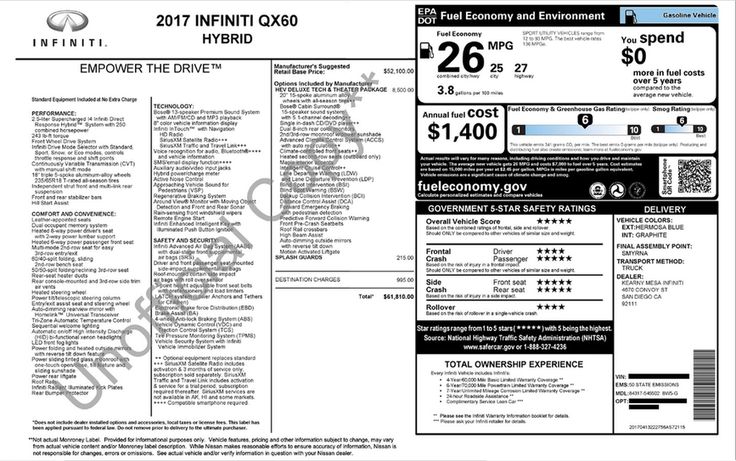
Destination charge. The manufacturer's charge for transporting the vehicle to the dealer. It is already included inside MSRP and inside invoice — it is not a second charge to add again on top. If a quote includes destination in the selling price and then adds it again as a separate line, that is double-counting. We cover this in destination charge explained.
Dealer documentation fee. Often called a doc fee, this dealer-charged fee covers preparing paperwork. It varies by dealer and state and is rarely negotiable on its own, so negotiate the OTD total instead. Our guide to dealer fees explained separates official fees from dealer-added ones.
Title fee. The government charge to transfer legal ownership into your name.
Registration and plate fees. Government charges to register the vehicle and issue or transfer plates. Like the title fee, they depend on where you live.
Sales tax. State and, in many places, local sales tax applies to the purchase. The rate and the exact tax base vary by state, so never treat any rate in an example as the rate you will pay. Some states tax the full price, others tax the price after a trade-in credit — another reason your quote must be calculated for your own ZIP code.
Minus manufacturer rebates you qualify for. If a manufacturer rebate applies to you and that vehicle, it reduces what you pay. Only subtract rebates you actually qualify for — a quote built on a rebate you cannot claim is not a real quote.
Minus trade-in equity, or plus negative equity. If your trade-in is worth more than you owe, that positive equity reduces the total. If you owe more than it is worth, the negative equity increases the amount you need to cover. Either way, it should appear as its own clear line.
What is not in the OTD price matters too. Financing interest is not in it, nor is insurance. Optional add-ons, such as protection packages or extended service contracts, are not in it unless you agree to buy them — remove any you did not ask for before comparing.
Why Monthly Payment Quotes Hide the Real Cost
A monthly payment sounds simple, which is why it is a poor way to judge a deal. The same car, at the same total cost, can produce very different payments depending on loan term, down payment, and interest rate. And a lower payment does not mean a lower cost — it often means the opposite.
Three common tricks hide cost inside a payment. First, term stretching: spreading a loan over more months lowers the payment while increasing total interest paid. Second, rate differences: a small change in interest rate changes total cost without changing the car, so two identical payments can represent different deals. Third, rolling extras into the amount financed: fees and optional add-ons disappear into the payment, where you pay for them — plus interest on them — without seeing a clear total.
The Federal Trade Commission makes the same point in its guidance on financing or leasing a car: know the total cost, not just the monthly payment, and get an out-the-door price in writing. The Consumer Financial Protection Bureau likewise advises buyers to negotiate and understand the individual elements of a car deal rather than focusing on one payment figure. A payment is an output. The OTD price is the input you can compare and negotiate.
The payment is not irrelevant — once you have agreed an OTD total, check the rate, term, and total interest fit your budget. Order matters: agree the car's price first, then arrange the money.
Out the Door Price Explained in a Worked Example
Examples make how out the door price works concrete. The following figures are round, invented, and illustrative only — they are not prices for any real vehicle, and the tax line uses an example rate purely to show the maths, because the real rate varies by state.
| Item | Illustrative amount |
|---|---|
| Agreed selling price (destination charge already included) | $35,000 |
| Dealer documentation fee | $500 |
| Title fee | $75 |
| Registration and plate fees | $125 |
| Sales tax (illustrative example rate — varies by state) | $2,500 |
| Less: manufacturer rebate you qualify for | -$1,000 |
| Less: trade-in equity | -$3,000 |
| Out-the-door total | $34,200 |
Read the table as you should read a real quote: every line visible, nothing added twice, credits shown separately. Here the OTD total is lower than the selling price because the rebate and trade-in equity outweigh fees and tax; with no trade-in or rebate, it would be higher. Both are normal — what matters is that you can see why.
Run your own out the door price with our calculator: enter a selling price, add your local fees and tax, subtract any rebate and trade-in equity, and you have the number every dealer should be asked to beat.
How to Ask for an Out-the-Door Quote
Asking well costs nothing and changes the quality of the answers you get. Contact each dealer with the same request in writing — email is ideal because it leaves a record.
Ask for an itemised out-the-door quote for one specific vehicle: same model, trim, options, and ideally the same stock or VIN, quoted for your ZIP code so tax and government fees are calculated correctly. Ask them to list the selling price, doc fee, title, registration, tax, and any rebates separately, and to confirm whether destination is included in the selling price rather than added again. Repeat the identical request to multiple dealers.
Then compare only the OTD totals — not selling prices, not payments, and not whichever line a dealer chose to discount. If one total is lower, take that written quote back to another dealer and ask if they can beat the total, which is the core of how to negotiate a new car price.
Treat a non-itemised quote as a red flag. A lump sum with no breakdown, a refusal to put the price in writing, or a quote that changes when you arrive all mean you cannot verify what you are paying for — a written, itemised quote is much harder to move later.
One boundary: the OTD price is the selling-side total — what you pay. Dealer-cost concepts sit on the other side. Invoice is what the dealer is billed, and holdback is a manufacturer-to-dealer amount commonly estimated at around 1–3% of MSRP depending on brand; it is an estimate, not a published figure. Those concepts hint at a dealer's room, but judge deals by the OTD total in front of you.
Frequently Asked Questions
Is the out-the-door price the same as the amount I finance?
No. The OTD price is the total cost of buying the car before financing. If you finance, the amount financed is typically the OTD total minus your down payment, and interest is then charged on top over the loan term. Two buyers with the same OTD price can finance different amounts.
Why is the out-the-door price higher than the advertised price?
Because the advertised price usually covers only the car itself, and sometimes assumes rebates not everyone qualifies for. The OTD price adds the doc fee, title, registration, and sales tax the purchase actually requires, then subtracts only the rebates and trade-in equity that apply to you.
Can I negotiate the out-the-door price directly?
Yes, and it is often the cleanest way to negotiate. Instead of arguing over each fee line by line, ask dealers to compete on the itemised OTD total for the same vehicle. A dealer who will not reduce one fee may still reduce the selling price to reach a better total.
Should I get the out-the-door price before visiting a dealer?
Yes. Getting an itemised OTD quote in writing before you visit — as the FTC advises — lets you compare dealers on equal terms, spot extra add-ons, and avoid negotiating under time pressure in the showroom. Walk in with competing written totals, not just a payment in mind.
Conclusion: Compare Totals, Not Payments
With out the door price explained properly, car shopping gets simpler: one itemised total, built from a defined selling price, the real government charges, and only the credits you actually qualify for. Get it in writing, for the same vehicle and ZIP code, from more than one dealer, and compare nothing else until the totals are side by side. Then, and only then, look at financing on top of the winner. Start building your own out the door price explained comparison at MyCarDiscount, where the total always comes before the pitch.


Get the number dealers start from.
Invoice, estimated true cost, out-the-door — before any dealer hears your name.