
Destination Charge Explained: The Fee Nobody Negotiates Off
Destination charge, in short: every buyer pays it and nobody negotiates it off — what the charge really is, and how to spot the fake freight lines dealers add on top of it.
If you have ever wondered why you are paying over a thousand dollars to have a car delivered to a dealership a short drive from the factory, you are not alone. Getting the destination charge explained in plain language clears up a common point of confusion — and helps you spot the fake freight charges dealers sometimes add on top of the real one.
The real destination charge is legitimate, fixed, and unavoidable in the way most buyers try to avoid it. The charges you should fight are the lookalikes that come after it.
Destination charge explained: what it actually is
The destination charge — also labelled destination and handling, or D&H, on stickers — is the manufacturer's charge for transporting the vehicle from the factory or port of entry to the dealership. It is a real transportation cost the manufacturer builds into the price of every vehicle it ships.
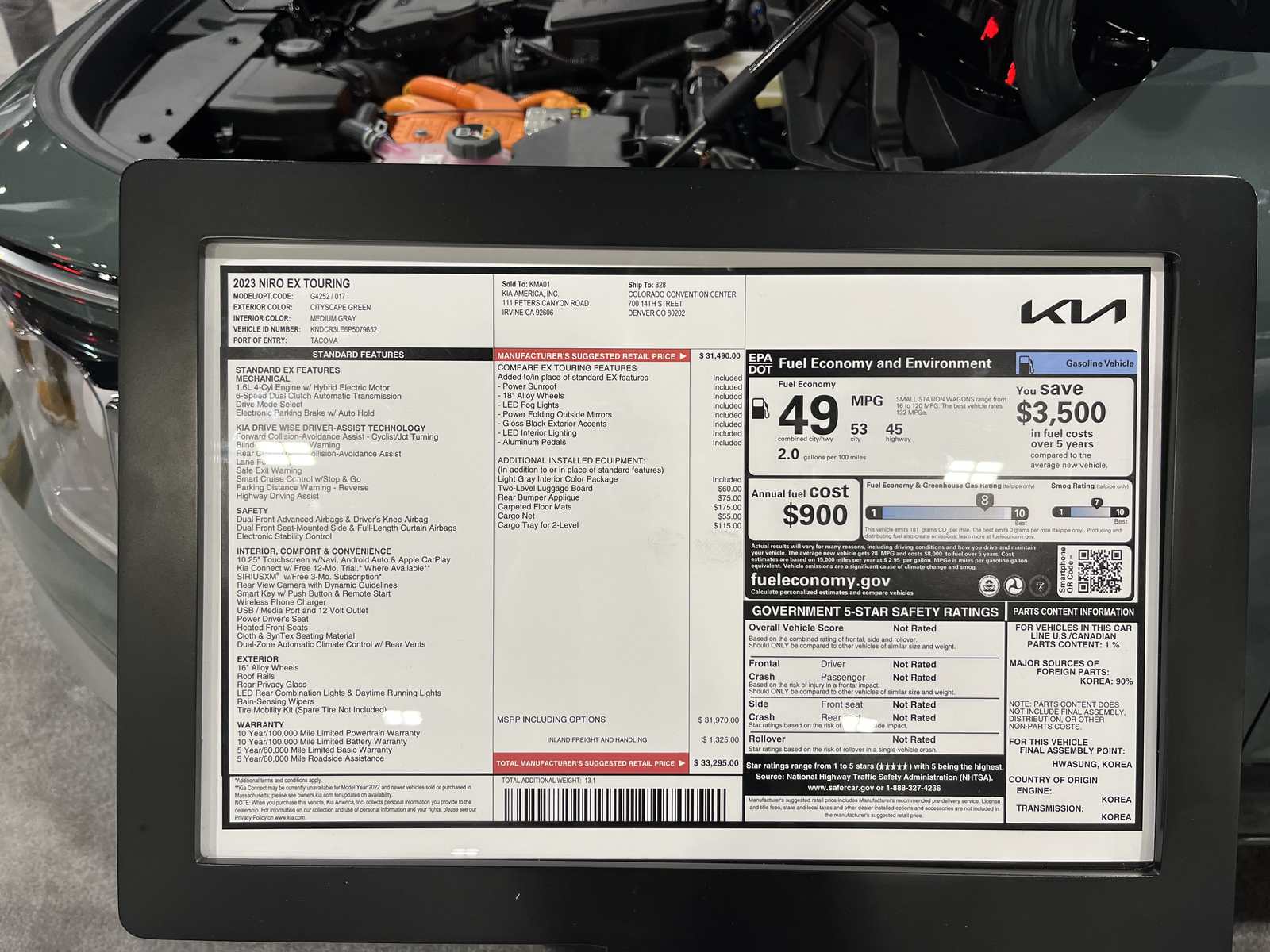
Two facts define how destination charge works. First, it is set by the manufacturer, not by the dealer, who does not choose the amount. Second, it is printed as its own line on the factory window sticker — the Monroney label required on new cars — so you can verify the exact figure on the car's own sticker rather than a dealer's worksheet.
The charge is also uniform: the same amount for that model wherever the dealer is located. A buyer next door to the plant pays the same as a buyer across the country, because the manufacturer averages the shipping cost across all buyers of that model — a system known as equalised freight — instead of charging each buyer their car's individual transport cost.
It is already inside both prices
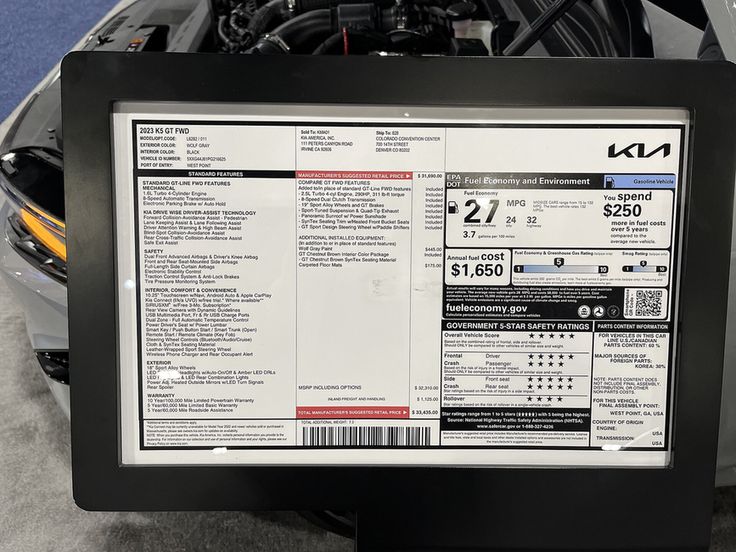
This point prevents the most expensive misunderstanding: the destination charge is already included in both the MSRP total and the invoice total. It is not a fee added on top at the register.
The total MSRP already contains it, and the invoice total already contains it too. The line is itemised on the sticker so you can see it, but itemised does not mean extra — it is one component of the total you are already looking at. Our guide to MSRP vs invoice price walks through what sits inside each price basis.
A dealer who lists destination as an extra line on top of an agreed MSRP-based or invoice-based price is double-charging you. You agree a price described as "invoice" or as a discount off MSRP, and then the buyer's order shows that figure with destination added again underneath it. Since the charge was already inside the price you negotiated from, adding it a second time bills the same dollars twice. If you see that, name it directly and ask for the line to be removed.
Destination charge explained: why you can't negotiate it off
Buyers try to negotiate this line because it looks like a fee, and fees feel negotiable. But because it is a real, uniform manufacturer cost baked into both price bases, no dealer can remove it. If a dealer deleted the line from your paperwork, the same dollars would simply reappear as a higher selling price — the car cost the dealer a delivered amount, and that amount does not change because a line was relabelled.
The negotiable lever is the selling price of the car, not this line. A dealer offering to "waive the destination fee" has simply moved the same dollars around, usually by discounting the selling price and presenting the discount as a waived fee. That discount may be real — but judge it as a discount on the selling price. The Consumer Financial Protection Bureau makes a similar point in its guidance on what things you can negotiate when shopping for a car or auto loan: the price of the car itself is where negotiation belongs.
Once you accept that destination is fixed and identical at every dealer for the same model, it stops being a distraction. Any difference between two dealers' totals comes from the selling price and the fees they add themselves — exactly where your attention should be.
How much is it, and where to find the exact figure
According to Edmunds editorial reporting on destination charges, as covered in the source set for this article, current destination fees typically run roughly $1,000–$2,000+ depending on brand and model, and they have risen sharply in recent years. Motor1's destination-fee tracker, echoed by Autoblog, puts the recent average near $1,500.
Treat that as a sourced range, not a price list. Charges vary by brand and model, and manufacturers adjust them over time. We do not present any per-model fee here as a live or current database value. The exact figure for a specific model comes from that car's window sticker or from licensed data. Read the destination line on the Monroney label and check that the same figure — appearing once, inside the price — shows up on the dealer's paperwork.
The real charge vs. the fake lookalikes
Buyers who have been told "freight is non-negotiable" sometimes accept any freight-sounding line. Use this table to tell them apart.
| Charge | What it is | Who sets it | Negotiable? |
|---|---|---|---|
| Destination charge (D&H) | Manufacturer's transport cost from factory or port to the dealer, printed on the Monroney label | The manufacturer | No — negotiate the selling price instead |
| Second "delivery" or "freight" line | Duplicate freight added on the dealer's worksheet when destination is already in the price | The dealer | Yes — refuse it; it is double-charging |
| Dealer prep fee | Charge for preparing the car, work the manufacturer already pays the dealer to do | The dealer | Yes — refuse it, or have it offset in the selling price |
| Market adjustment / addendum | Extra markup on an addendum sticker, presented as if it were a standard cost | The dealer | Yes — pure margin; refuse it or offset it in full |
A second delivery or freight line. This appears on the dealer's worksheet or buyer's order — not the factory sticker — as "delivery," "freight," or "handling" charged on top of your agreed price. It is not the real destination charge, because the real one is already inside the MSRP and invoice totals. Refuse it outright; the correct amount for a duplicate charge is zero.
Dealer prep fees. Preparing a new car — inspecting it, removing protective coverings, checking fluids and systems — is work the manufacturer already pays the dealer to perform. A separate "dealer prep" fee asks you to pay a second time for the same work. Refuse it, or, if the dealer will not strike the line, make them offset it by cutting the selling price by the same amount.
Market adjustments and addendum stickers. An addendum is a supplementary sticker the dealer adds beside the factory sticker. On in-demand models it may carry a "market adjustment" — a markup formatted to look like a genuine charge. It is not mandatory and not set by the manufacturer; it is additional dealer margin. Treat it as part of the selling price: refuse it, or require an equal reduction elsewhere.
The Federal Trade Commission's guidance on buying a new car gives you procedural protection: ask dealers to list add-on prices up front, know your total cost, and get the out-the-door price in writing. For a fuller breakdown, see our guide to dealer fees explained.
Judge the deal on the out-the-door total
Destination being fixed is exactly why comparing out-the-door totals between dealers works. Every dealer selling the same model works from the same destination charge, MSRP, and invoice base, so the differences that matter — selling price and dealer-added fees — all show up in one number: the total you will actually pay, including taxes and legitimate government fees.
Ask each dealer for a written, itemised out-the-door figure on the same car. Our guide to the out-the-door price explained shows how that total is constructed, and the destination charge explained invoice pricing resources on this site help you sense-check the selling price. The lowest honest out-the-door number wins — and a duplicate freight line is exposed immediately.
Frequently asked questions
Can a dealer legally charge destination twice?
No legitimate deal charges it twice. The destination charge is included once, inside both the MSRP total and the invoice total. If a buyer's order adds a destination, freight, or delivery line on top of a price that already included it, that is double-charging. Ask for the duplicate line to be removed and get the corrected total in writing.
Why is the destination charge the same if I live next to the factory?
Because the manufacturer averages the shipping cost across all buyers of that model rather than charging each buyer their car's individual transport cost. The figure is set by the manufacturer, printed on the window sticker, and does not vary by dealer location.
If a dealer offers to waive the destination fee, is that a good deal?
Treat it as a discount on the selling price, not as a removed fee — no dealer can remove a manufacturer charge baked into the car's cost. Judge it by the final out-the-door total compared with other dealers' written totals, not by the label on the discount.
How do I find the exact destination charge for the car I want?
Read the destination and handling line on that car's factory window sticker, the Monroney label. That is the authoritative figure. General ranges — roughly $1,000–$2,000+, with a recent average near $1,500 according to Motor1's destination-fee tracker, echoed by Autoblog — are useful context, but not a substitute for the sticker.
Conclusion
To leave with the destination charge explained in one sentence: it is a real, manufacturer-set transport cost, identical for a model at every dealer, already included in both the MSRP and invoice totals — and because it cannot move, it is the wrong line to spend negotiating energy on. Save that energy for the selling price, refuse the duplicate freight lines, prep fees, and addendum markups that imitate it, and compare written out-the-door totals instead — run yours through our destination charge calculator.



Get the number dealers start from.
Invoice, estimated true cost, out-the-door — before any dealer hears your name.