
How to Read a Car Window Sticker (Monroney), Line by Line
Read a car window sticker, box by box: the window sticker is the only federally standardized price document in the deal — this guide reads every box on it, including the two totals dealers hope you confuse.
Key Takeaways
- The Monroney label is the only federally standardized price document in the deal: base price, itemized factory options, destination charge and total MSRP.
- Total MSRP is base price plus factory options plus destination charge — that certified figure is the number to negotiate from.
- The second, addendum sticker is the dealer's own paper: its accessories, protection packages and market adjustments are negotiable or refusable.
- The sticker never shows invoice price, incentives or what you should pay, and it does not follow the car — a used car has no Monroney to read.
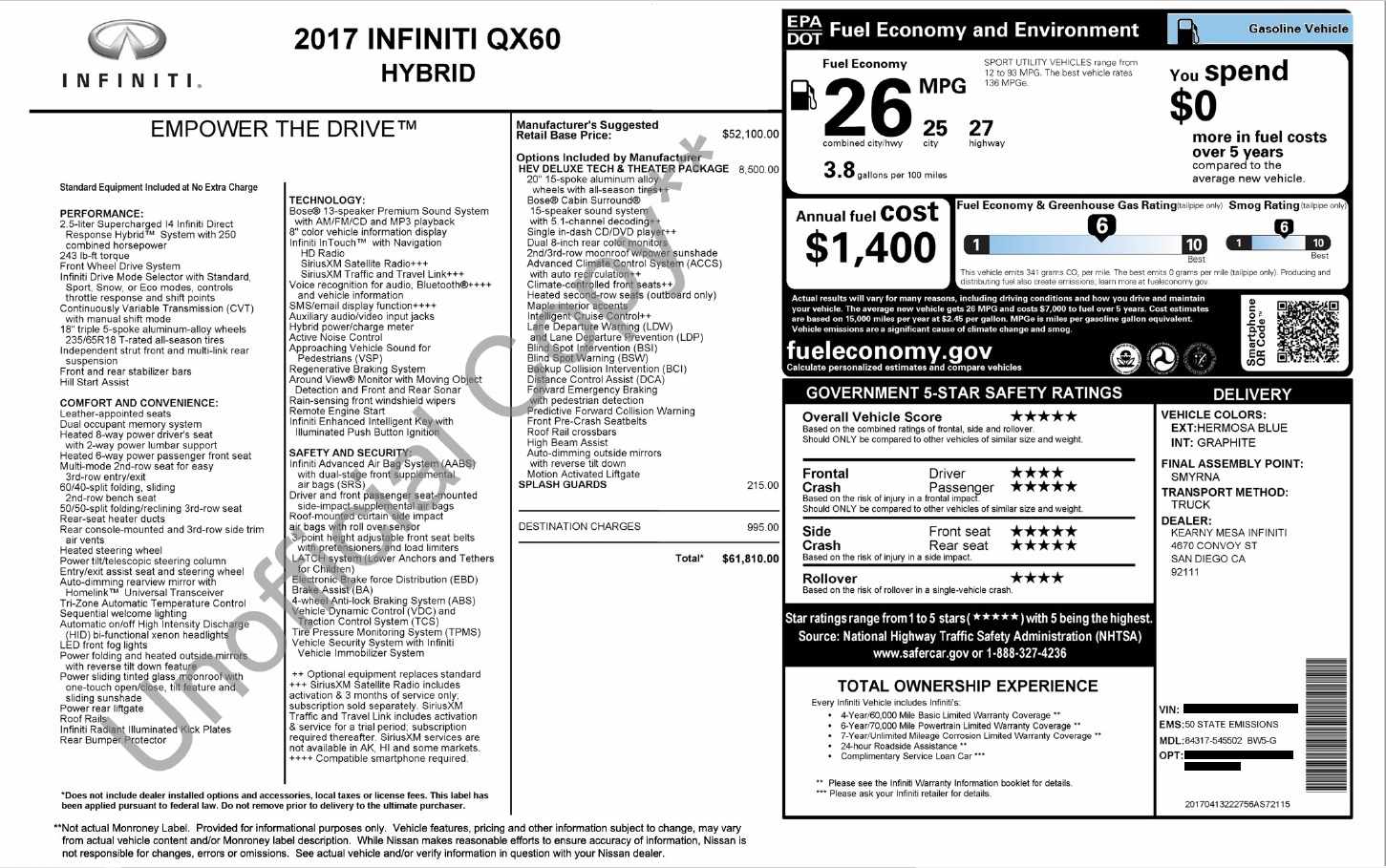
How to read a car window sticker? This guide answers it in full, in plain English. Every new car on a dealer's lot wears the same document: the window sticker, formally the Monroney label, required by federal law since 1958. It is the only price document in the entire transaction whose contents the government dictates — the manufacturer must print the base price, the factory options and their prices, the destination charge and the total, in a standard place, and only the buyer may take the label off the car. Everything else in the deal — quotes, worksheets, advertisements — is the dealer's own paper. That makes the sticker the ground truth of what a specific car is and what its manufacturer says it should cost, and it is why our history of MSRP treats the label as the moment car pricing became honest. This guide reads the label box by box, including the second, unofficial sticker dealers place beside it — because confusing the two totals is the oldest trick on the lot.
How to Read a Car Window Sticker at a Glance
The price column is the spine of the label. A shortened, illustrative version:
| Line on the label | Illustrative example | What it means |
|---|---|---|
| Base MSRP | $32,000 | The manufacturer's price for this model and trim, before options |
| Equipment package | $1,200 | A factory option bundle, priced individually on the label |
| Premium paint | $395 | Factory options are itemized — every one has its own price |
| All-weather floor mats | $255 | Small factory accessories appear here too |
| Total options | $1,850 | The factory-installed extras this specific car carries |
| Destination charge | $1,395 | Delivery from the plant, set by the manufacturer, not negotiable as a line |
| Total MSRP | $35,245 | Base + factory options + destination: the number the label certifies |
The Top of the Label: Which Car, Exactly
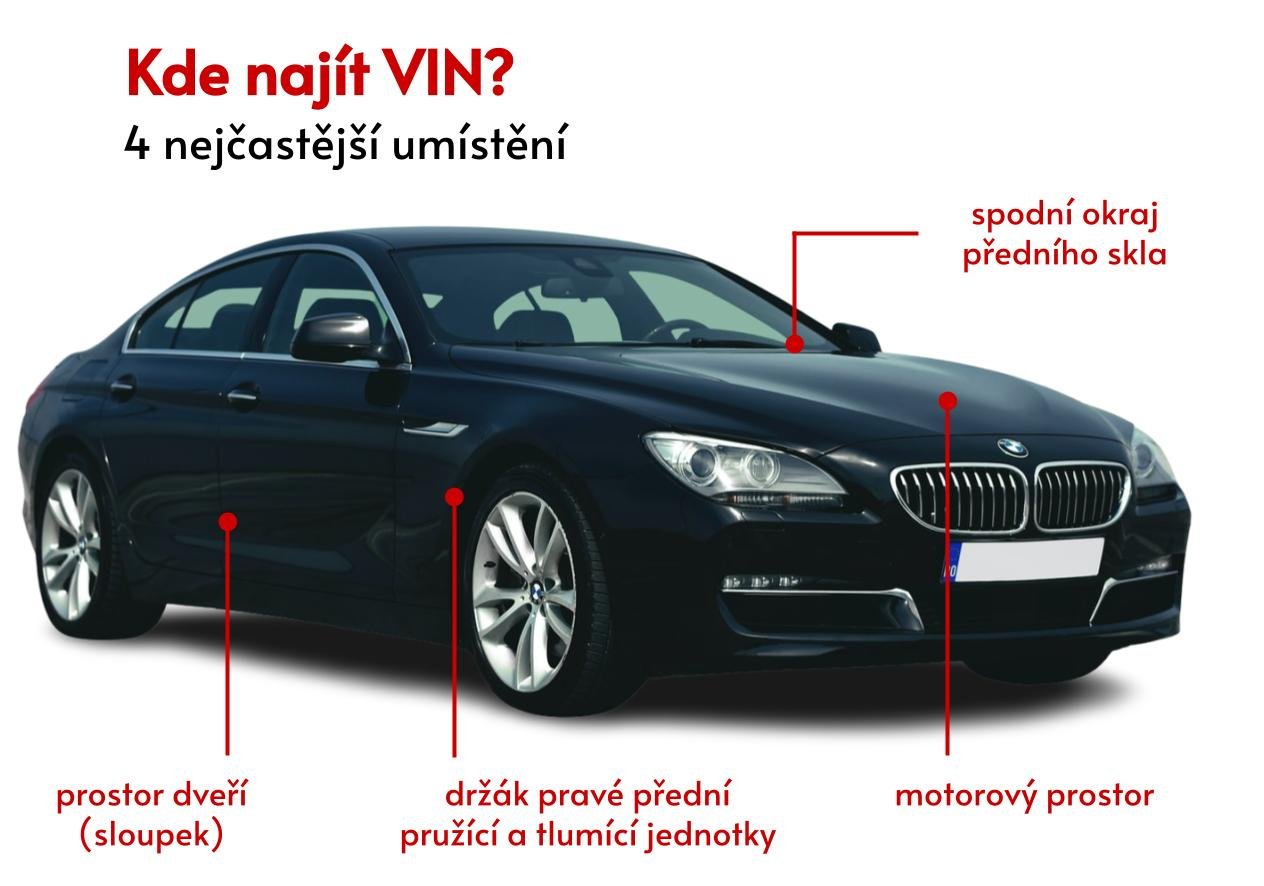
The label identifies one specific car, not a model line. It names the manufacturer, the model and trim, the model year, and — critically — the full VIN, plus the final assembly point and the name and location of the dealer the car was delivered to. This is your first cross-check: the VIN on the sticker must match the VIN plate on the car itself, and the trim and equipment the salesperson has been describing must match the car this label describes. Cars get swapped in conversation, deliberately and accidentally; the label pins the conversation to a vehicle. Our guide to reading a VIN number decodes the number itself if you want to verify year and origin on the spot.
The Price Column: Base, Options, Destination, Total
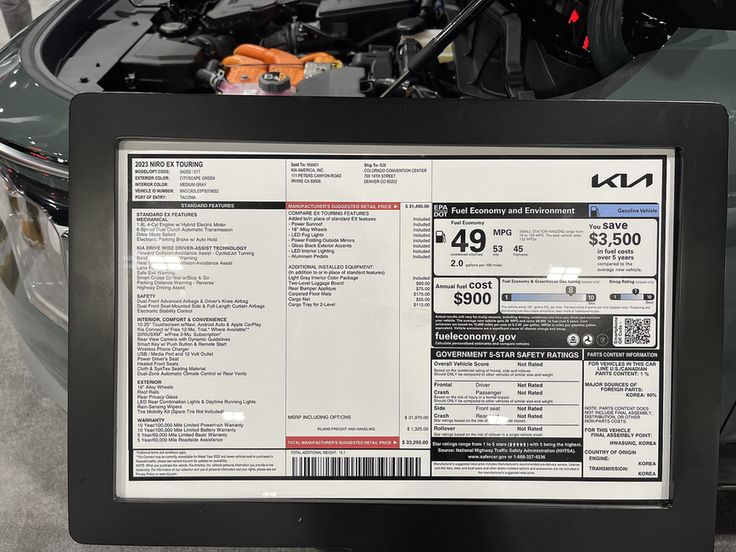
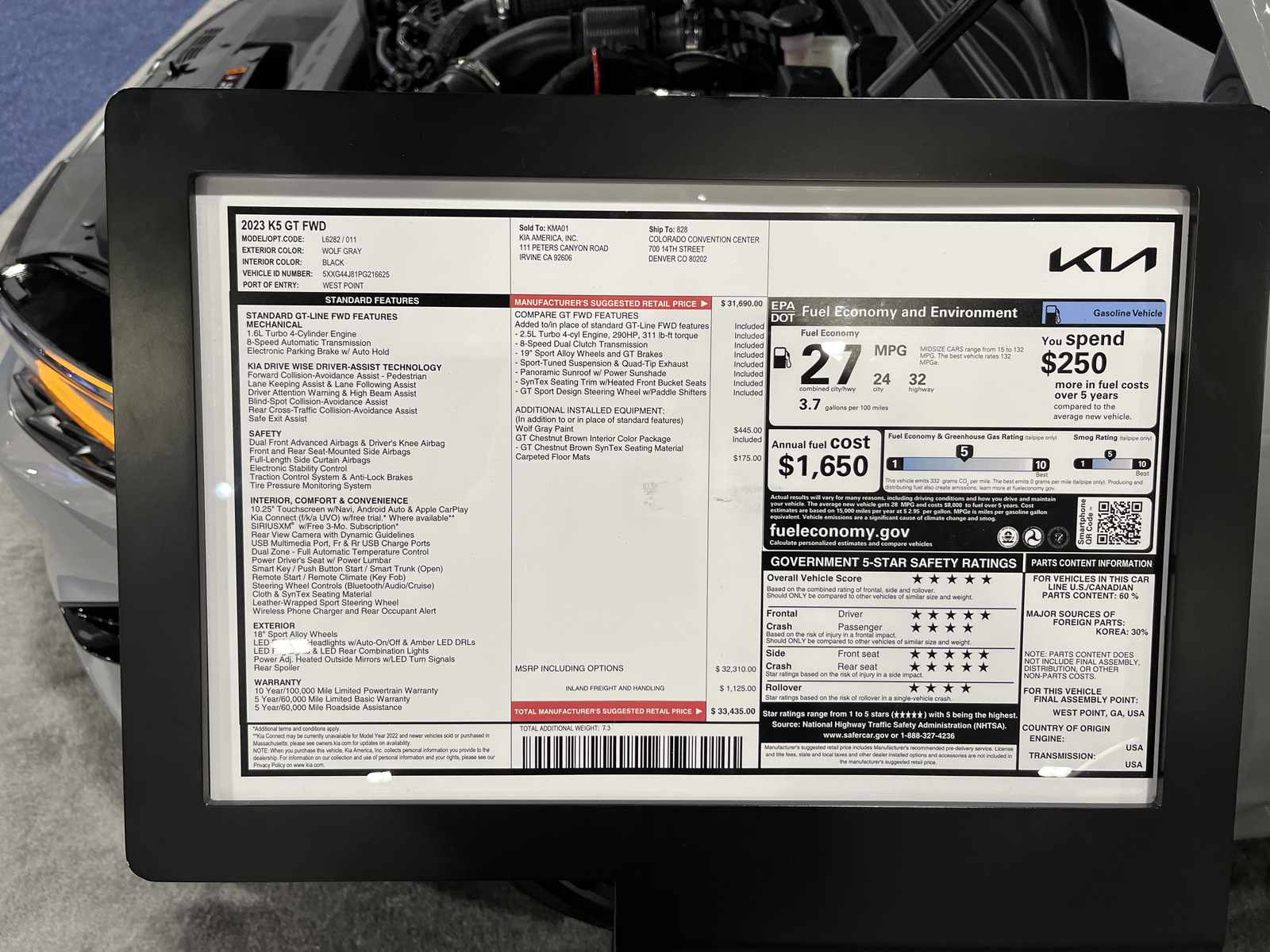
Base MSRP is the manufacturer's suggested price for that trim with standard equipment — the meaning of the term is covered in depth in what does MSRP mean. Below it, every factory-installed option on this car is listed with its own suggested price: packages, standalone options, special paint, accessories fitted before delivery. Itemization is the point of the law — a dealer cannot bury a factory option's price, and you can see exactly which equipment is driving this car's total above the trim's headline price. The destination charge follows: the manufacturer's delivery fee from the factory or port to the dealer. It is part of MSRP math, identical for the same model whether the dealer sits beside the plant or across the country, and it is not a dealer fee to argue about — argue about the total instead. The column ends in total MSRP, the label's certified figure: base plus factory options plus destination. Remember this number's exact construction, because the trick in the next section depends on it.
The Second Sticker: The Total the Dealer Hopes You Use
Beside the Monroney label, many dealers affix their own addendum sticker. Nothing about it is federally standardized. This is where dealer-installed accessories, protection packages, nitrogen-filled tires, anti-theft etching — and market adjustments — appear, added to total MSRP to produce a higher "asking price" total. None of those lines is a manufacturer price; each is dealer margin, and each is negotiable or refusable in a way factory options are not. The read is simple once you see the two documents for what they are: the white federal label is the car as the manufacturer built and priced it; the addendum is the dealer's opening bid on top. When you negotiate, negotiate from the Monroney total and treat every addendum line as a question — what is it, why is it on this car, and what happens if it comes off. Our out-the-door price explained guide shows how these lines flow into the final number you should actually be comparing between dealers.
The Fuel Economy Box: More Than the Big Numbers
The EPA section leads with the combined MPG figure in the largest type, flanked by city and highway ratings. Read past it. The box also prints the estimated annual fuel cost, a five-year fuel-cost comparison against the average new vehicle, gallons per 100 miles (a more honest comparison figure than MPG when cars get efficient — the gap between 30 and 40 MPG matters far more than the gap between 40 and 50), and for electrified vehicles the range and charge-time figures. A QR code links to the full federal data. One caution: the ratings are laboratory-derived estimates for comparison shopping, and the label says so; your mileage will differ, but the comparison between two cars you are cross-shopping remains valid because both were tested the same way.
The Safety and Parts-Content Boxes
The government 5-star safety ratings box carries NHTSA crash-test scores: frontal, side and rollover, plus the overall rating. On a newly redesigned model it may read "not rated" — that is a testing-schedule fact, not a verdict, and it is worth checking the federal database for results published after the label was printed. The parts-content section, required by a separate law, reports the percentage of US and Canadian parts content, the major sources of foreign parts, the final assembly point, and the countries of origin for the engine and transmission. Buyers who care where a car is made — for parts availability, for principle, or for tariff-era pricing reasons — get the answer here rather than from the badge: the brand's nationality and the car's content are often different stories, and this box is where the label tells the true one.
What the Sticker Does Not Show
The label certifies the manufacturer's price; it is silent on everything after that. It does not show the invoice price or what the dealer paid, current incentives or rebates, the dealer's add-on pricing (that is the addendum's job), or the price you should pay — MSRP is a starting reference, and on most models the transaction happens below it. It also does not follow the car: the label is a new-car document, removed by the first buyer, so a used car has no Monroney to read — one more reason the VIN decode and the history report carry the weight there. When your deal is written up, the figures should travel from this label into the contract unchanged — our guide to reading your purchase agreement shows where to verify that they did.
Frequently Asked Questions
Can a dealer remove or change the window sticker?
No. Federal law requires the label on every new car offered for sale, and only the ultimate buyer may remove it. A dealer cannot lawfully alter the manufacturer's figures on it either — which is precisely why dealer additions live on a separate addendum sticker rather than on the Monroney itself.
Is the total MSRP the price I should pay?
It is the reference price, not the expected one. Most models transact below total MSRP once discounts and incentives are counted, and in scarce periods some transact above it via the addendum. Use total MSRP as the certified description of the car, then compare dealers on the out-the-door figure.
What is the difference between the window sticker and the addendum sticker?
The Monroney label is the federal document: manufacturer-set base price, itemized factory options, destination charge and total MSRP, contents fixed by law. The addendum is the dealer's own sticker listing dealer-installed items and adjustments. Only the first one's numbers are manufacturer prices; everything on the second is negotiable.
Why does the sticker on the car differ from prices I saw online?
Online prices are dealer advertisements, which may assume rebates you do not qualify for, exclude the destination charge, or describe a differently equipped car. The sticker describes the specific car in front of you, VIN and all. If an advertised price and this car's total MSRP disagree, the sticker is describing the car — the advertisement may not have been.
The Bottom Line on How to Read a Car Window Sticker
How to read a car window sticker starts with the federal label — the car's certified description: VIN, base price, itemized factory options, destination, total MSRP. Read everything on the second sticker as a negotiable opening bid. Check the fuel, safety and parts-content boxes for the facts the price column cannot give you, and make sure the numbers that reach your contract are the ones the label printed. How do you read a car window sticker? By now you have the full answer — use it to judge every offer on the same terms. Start at MyCarDiscount.com.


Get the number dealers start from.
Invoice, estimated true cost, out-the-door — before any dealer hears your name.