
How Much Does It Cost to Charge an Electric Car? Per Mile
The cost to charge an electric car can run $5 or $35 depending on where the plug is — this guide prices home, public and fast charging per mile with the national rate data.
Key Takeaways
- Charging cost is one multiplication: kWh per mile times price per kWh — at 0.30 kWh per mile and the 17.3-cent home average, that is 5.2 cents a mile.
- Home charging undercuts every public option: about $623 a year over 12,000 miles, against $1,200 for a 30-mpg gas car at an illustrative $3.00 a gallon.
- DC fast charging at a $0.48 midpoint costs 14.4 cents a mile — more than gasoline — so treat it as a road-trip cost, not a daily fuel source.
- Your own utility rate decides the bill: state averages span roughly 12 cents to over 40 cents per kWh, and overnight EV rate plans cut home costs further.
How much does it cost to charge an electric car? This guide answers it in full, in plain English. Charging an electric car can cost 5 cents a mile or 15, and the difference is not the car — it is the plug. The same vehicle, with the same battery, can fill at home for the price of a coffee or at a highway fast charger for the price of a pizza. This guide prices each kind of charging the same way: cost per mile, cost per 1,000 miles, and cost of a full charge, all built from the national electricity data published by the U.S. Energy Information Administration (EIA) and the rate ranges the charging networks publish. Installation costs for home equipment are a separate question, covered in our home EV charging guide; this page is about the running cost once the plug exists.
How Much Does It Cost to Charge an Electric Car at a Glance
| Where you charge | Price per kWh used here | Cost per mile | Cost per 1,000 miles |
|---|---|---|---|
| Home (EIA 2025 average residential rate) | $0.173 | 5.2 cents | $51.90 |
| Public Level 2 (published range midpoint) | $0.30 | 9.0 cents | $90.00 |
| DC fast charging (published range midpoint) | $0.48 | 14.4 cents | $144.00 |
| Gasoline car at 30 mpg (illustrative $3.00/gal) | — | 10.0 cents | $100.00 |
Every figure assumes a typical EV using 0.30 kWh per mile. Your car and your rates will move the numbers; the method below lets you recompute them with your own.
The Only Math You Need
An EV's fuel cost is two numbers multiplied: how much electricity it uses per mile, and what you pay per kilowatt-hour. Most current EVs use between 0.25 and 0.35 kWh per mile — the EPA prints this on the window sticker as kWh per 100 miles, so a car rated at 30 kWh/100 mi uses 0.30 per mile. Multiply by your price per kWh and you have your cost per mile. At the EIA's 2025 national average residential price of 17.3 cents, that is 0.30 × $0.173 = 5.2 cents a mile. Over 12,000 miles a year — 3,600 kWh — home charging at the national average costs about $623 a year. Everything else in this guide is that formula with a different price plugged in.
Home Charging: The Cheap Seat
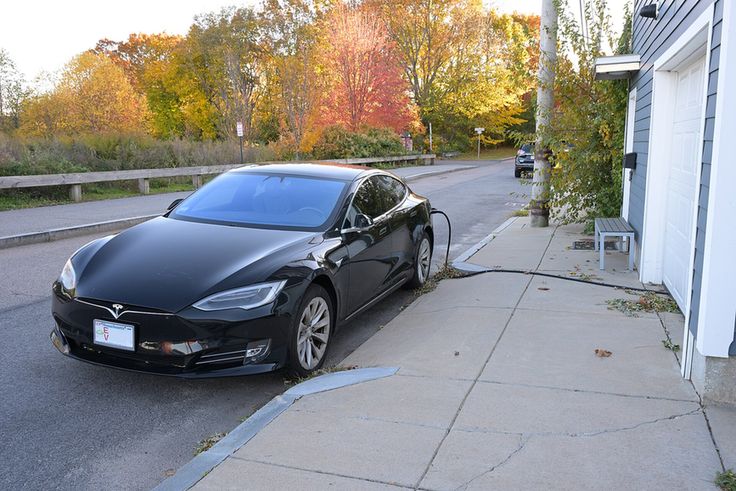
Home is where EVs earn their reputation. The EIA put the average U.S. residential price at 17.30 cents per kWh for 2025, and even though monthly readings since have run a little higher, home charging at anything near that average undercuts every public option. A full charge makes the point: refilling a mid-size 75 kWh battery from empty at 17.3 cents costs $12.98, and a smaller 40 kWh battery costs $6.92. Spread across a state map, the same fill costs about half that in the cheapest-rate states (Louisiana and North Dakota average near 12 cents) and more than double in Hawaii (over 40 cents) — your utility bill, not the national average, is the number that matters.
Two refinements before you bank the average. First, time-of-use rates: many utilities offer EV plans that cut the overnight price well below the standard residential rate in exchange for higher peak prices, and charging while you sleep moves nearly all of an EV's consumption into the cheap window. Second, charging losses: the meter counts more energy than the battery stores — roughly a tenth more on Level 2 equipment — so the honest home figure is the rate divided by about 0.9. Even with losses counted, home charging at national-average prices lands near 6 cents a mile.
Public Level 2: The Middle Price
Public Level 2 chargers — workplaces, parking garages, hotels, curbsides — sit in the middle. Where they bill by the kilowatt-hour, published prices commonly run about $0.25 to $0.35 per kWh; at the $0.30 midpoint, our typical EV costs 9 cents a mile and $90 per 1,000 miles, roughly gasoline money. But Level 2 billing is a patchwork: many stations charge by the hour (cheap if your car charges fast, punishing if it does not), some charge a session fee on top, and a meaningful share of workplace and retail chargers are simply free — a perk priced at zero that no formula improves on. The rule is to read the app before you plug in: the per-kWh price, any session or idle fees, and whether the rate changes after a set number of hours.
DC Fast Charging: Paying for Speed
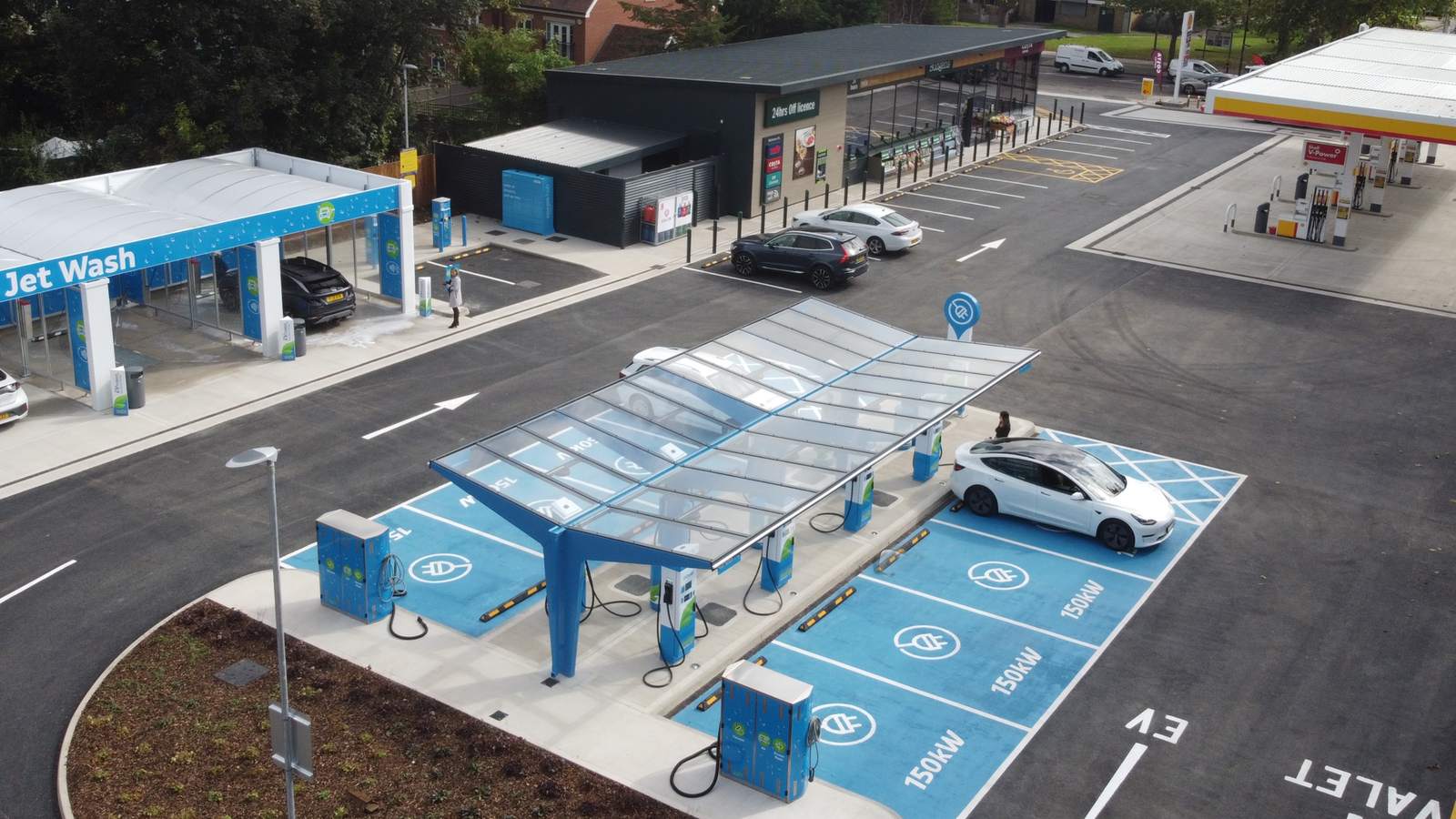
DC fast charging is the most expensive way to fill and the only one that works on a road trip. Published network prices commonly run about $0.35 to $0.60 per kWh, varying by state, network and time of day; at a $0.48 midpoint, the typical EV costs 14.4 cents a mile — more than a 30 mpg gasoline car at an illustrative $3.00 a gallon. A full 75 kWh fill at that rate is $36.00, against $12.98 at home. Membership plans trim the per-kWh price for a monthly fee, and some networks bill by the minute in states where per-kWh resale is restricted, which rewards cars that charge quickly. None of this makes fast charging a mistake — it makes it a travel cost, best budgeted per trip rather than per month. Drivers who can charge at home and reserve fast charging for the highway typically see a blended cost close to the home rate; drivers who rely on fast charging for daily driving give back much of the EV fuel advantage, a pattern worth pricing honestly before buying, alongside the maintenance picture in our EV maintenance costs vs gas cars comparison.
Frequently Asked Questions
How much does it cost to fully charge an electric car?
It depends on the battery size and the price per kilowatt-hour. At the EIA's 2025 average residential rate of 17.3 cents, a full charge costs about $6.92 for a 40 kWh battery, $12.98 for 75 kWh, and $17.30 for a 100 kWh truck battery. At a DC fast charger at $0.48 per kWh, those same fills cost about $19.20, $36.00 and $48.00. Nobody charges from truly empty to truly full, so treat these as ceiling figures.
Is charging an EV cheaper than buying gas?
At home, decisively: about 5.2 cents a mile at the national average residential rate, against 10 cents a mile for a 30 mpg car at an illustrative $3.00 a gallon — over 12,000 miles, roughly $623 against $1,200. At public Level 2 prices the two are close, and at DC fast-charging prices the gasoline car can be cheaper per mile. Where you charge matters more than what you drive.
Why is fast charging so much more expensive than home charging?
You are paying for the equipment and the speed: DC fast chargers are industrial installations that cost far more to buy, install and supply with power than a home wallbox, and operators recover that through the per-kWh price, plus demand charges from their own utility bills. The driver is buying minutes — a 10-to-80-percent charge in the time a home charger adds a few miles — and the price reflects it.
How can I work out my own charging cost?
Take your car's EPA consumption from its window sticker (kWh per 100 miles), divide by 100, and multiply by the price per kilowatt-hour on your electricity bill — that product is your cost per mile at home. Do the same with a network's posted per-kWh price before a trip. If your utility offers a time-of-use or EV rate plan, run the math with the overnight rate too; for most drivers it is the single biggest lever on charging cost.
The Bottom Line on How Much Does It Cost to Charge an Electric Car
The answer to how much does it cost to charge an electric car is decided by where it sleeps. Charged at home on national-average electricity, it runs at about half the per- mile cost of a comparable gasoline car; charged entirely on DC fast chargers, it can cost more than gas. Price your own situation with the one multiplication in this guide — your car's kWh per mile times your price per kWh — before you buy, and fold the result into the full ownership picture in our true cost of owning a carguide. How much does it cost to charge an EV? By now you have the full answer — use it to judge every offer on the same terms. Start at MyCarDiscount.com.

Get the number dealers start from.
Invoice, estimated true cost, out-the-door — before any dealer hears your name.