
History of the Ford Mustang: Six Decades of the Pony Car
The Ford Mustang history starts with a car that created its own segment in 1964 and outlived every rival — this history traces the nameplate through oil crises, retro revivals and the electric namesake controversy.
Key Takeaways
- The pony car began at $2,368 in April 1964: Ford expected about 100,000 sales a year, took 22,000 orders on day one and sold roughly 417,000 in twelve months.
- The Mustang never left production — even the downsized Mustang II kept the name alive — while the Challenger ended after 2023 and the Camaro after 2024.
- The S550 generation went global with independent rear suspension and sold over 800,000 worldwide; the ten-millionth Mustang was built in August 2018.
- The range now spans from the attainable coupe to the $325,000, 815-hp GTD — a price 137 times the original's, paid for the same badge.
This guide traces the history of the Ford Mustang from its first model year to the current car, and explains why it still shapes today's prices. Every car segment has a founding document, and the pony car's is a price tag: $2,368. For that money, in April 1964, Ford sold style that looked like it cost twice as much — a long hood, a short deck, bucket seats and a floor shifter — to a generation that had been offered nothing but its parents' sedans. The Mustang did not just sell; it detonated, and then it did something harder: it survived. Across the Ford Mustang generations — sixty years, oil shocks, emissions laws, a downsizing, a retro revival and an electric namesake — it is the last American pony car standing, its two great rivals gone. Our history lane has traced the Jeep Wrangler and the Toyota Corolla through the same decades; the Mustang's story is the one about what a nameplate is worth. Today's car is mapped in our Ford buying guide.
History of the Ford Mustang at a Glance
| Generation | Years | The defining fact |
|---|---|---|
| First generation | 1964½–1973 | The $2,368 launch that created the pony car; about 417,000 sold in 12 months |
| Mustang II | 1974–1978 | Downsized for the fuel crisis — smaller, slower, and it kept the name alive |
| Fox body | 1979–1993 | The 5.0 era: cheap, light and fast, the performance bargain returns |
| SN-95 | 1994–2004 | Modern styling on Fox bones; the nameplate steadies |
| Fifth generation (S197) | 2005–2014 | The retro revival: 1960s shape, modern hardware, Shelby GT500 returns |
| Sixth generation (S550) | 2015–2023 | Independent rear suspension and global sales; 10 millionth Mustang in 2018 |
| Seventh generation (S650) | 2024–present | The last V8 pony car standing; Dark Horse and the $325,000 GTD at the top |
1964: The Launch That Broke the Industry
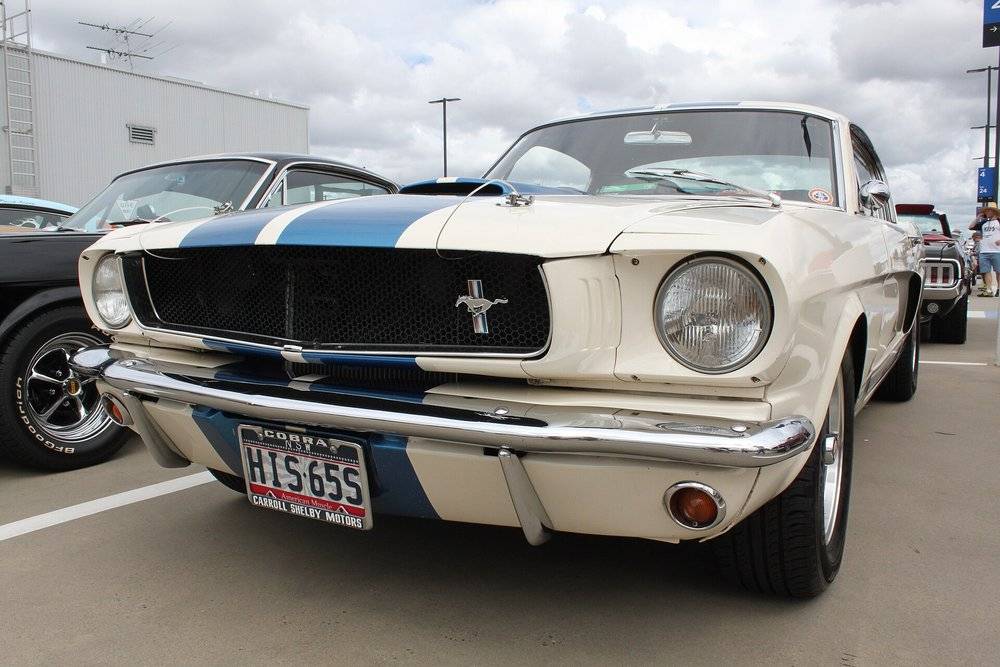
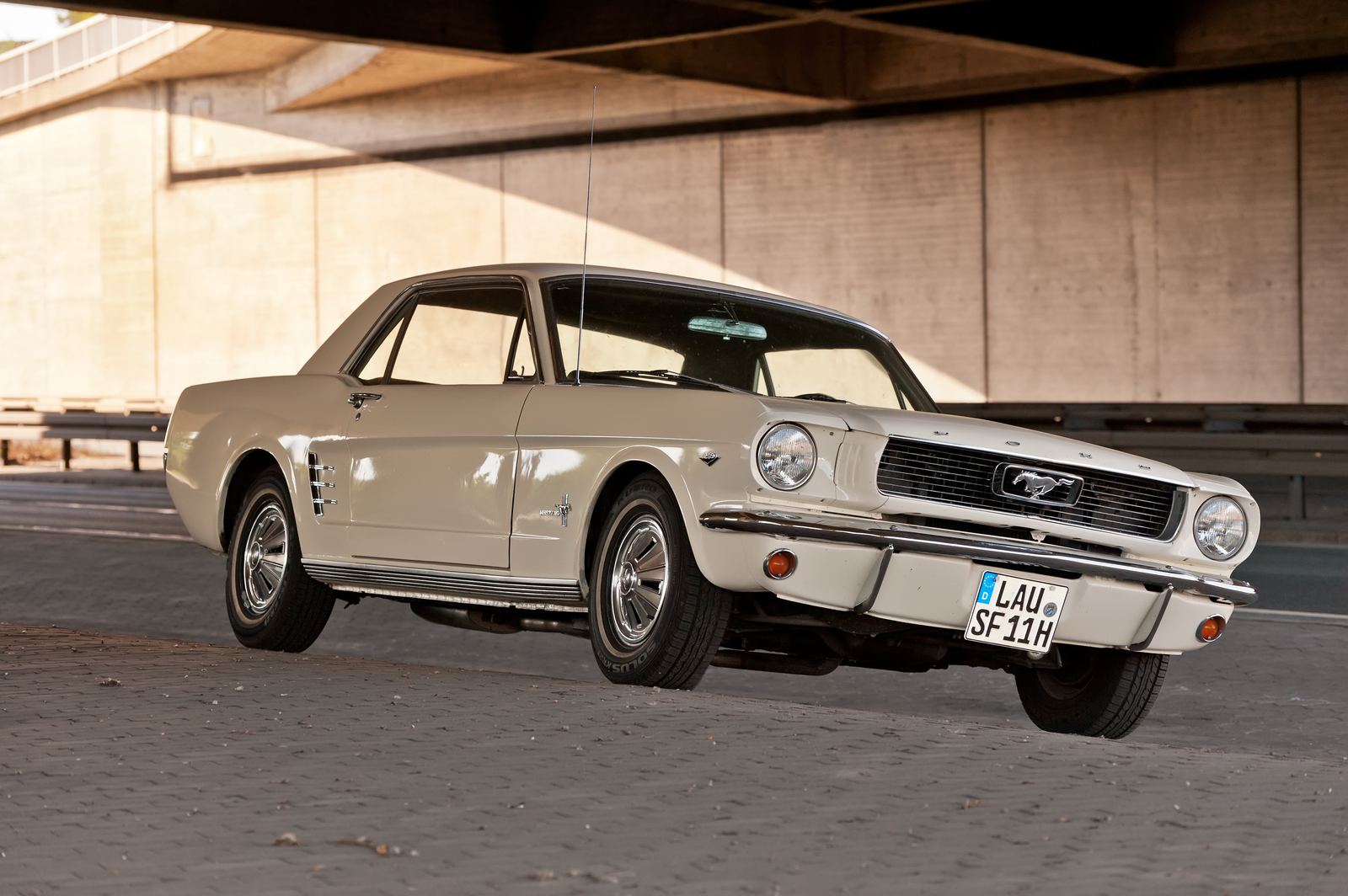
Ford's insight was demographic. The baby boom was reaching driving age, and Ford Division chief Lee Iacocca's team built them a car from Falcon parts dressed as something entirely new: a compact four-seater with European proportions, endless options to personalize it, and a base price of $2,368 that put it within reach of the young buyers it was drawn for. The Mustang debuted at the New York World's Fair on April 17, 1964 — the "1964½" of collector shorthand, sold as an early 1965 model. Ford expected to sell about 100,000 in a year. It took 22,000 orders on the first day, sold roughly 417,000 in the first twelve months, and built its millionth Mustang by March 1966.
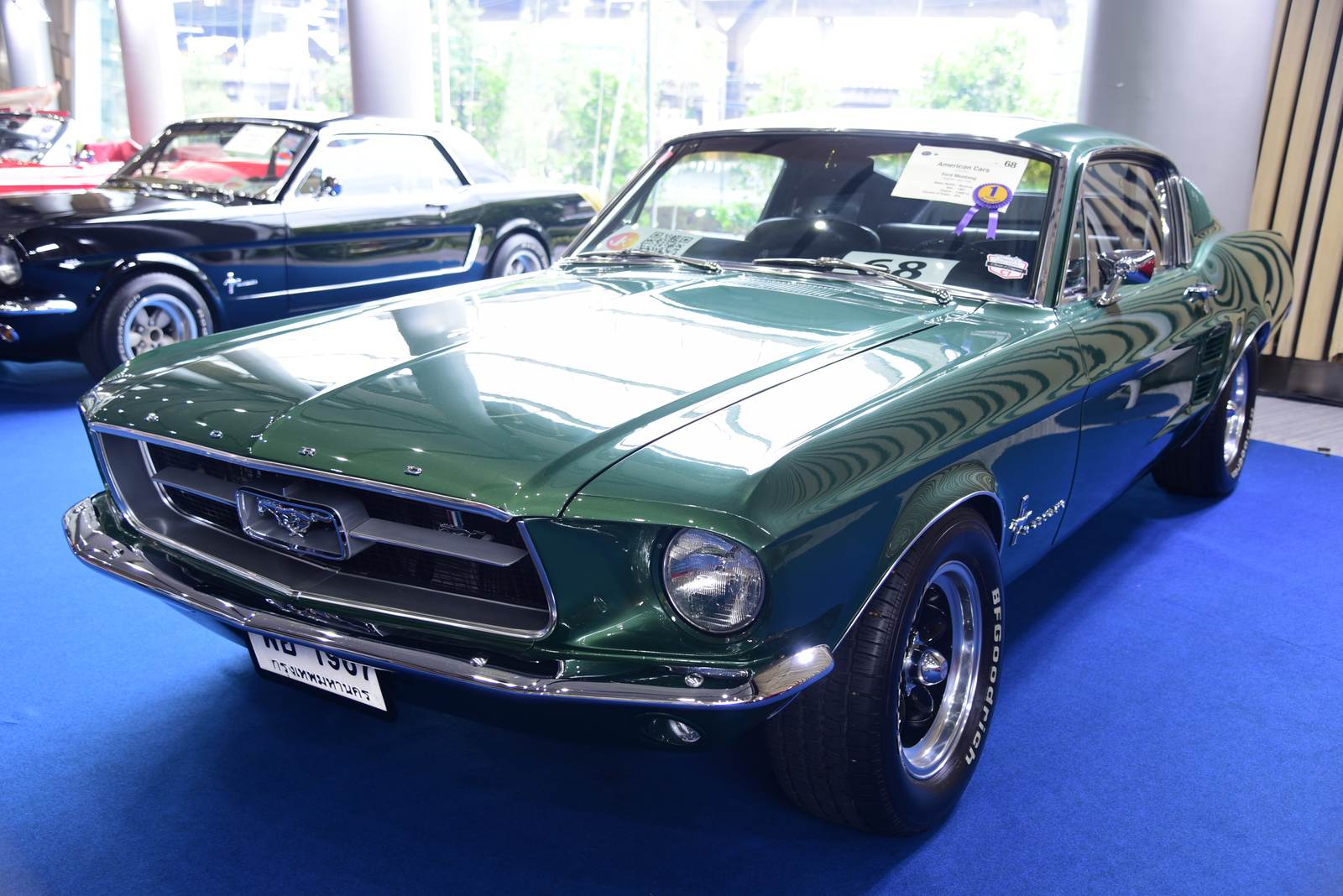
The industry responded the only way it could: by copying it. Chevrolet's Camaro and Pontiac's Firebird arrived for 1967, Plymouth and Dodge and AMC fielded entries, and the "pony car" — named, in the end, for the original — became a permanent American category. The first generation grew more muscular as it went: the Shelby GT350 arrived for 1965 with a 306-horsepower 289 V8, bigger fastbacks and big-block cars followed, and the Mustang's cultural footprint (a Highland Green GT fastback chasing through San Francisco in the 1968 film Bullitt) outgrew the showroom. By the early 1970s the car had swollen into something heavier and softer — just as the fuel crisis arrived to punish exactly that.
Mustang II and the Fox: Survival, Then Revival (1974–1993)
The Mustang II of 1974 was the anti-Mustang: Pinto-derived, drastically smaller, and — in its first year — offered without a V8 at all. Enthusiasts have never quite forgiven it, which is unfair in one specific way: it sold. In an era of fuel lines and insurance surcharges, a small, economical Mustang was precisely what the market would bear, and the nameplate it preserved was still alive when conditions changed. The V8 returned for 1975, and the II carried the badge through the industry's bleakest decade.
The Fox body of 1979 reset the formula on a modern unibody platform and then, in the 1980s, quietly became a performance legend. The Mustang GT's 5.0-liter V8, fuel injection and a generation of affordable speed made the Fox the default fast car of its era — light, cheap, endlessly modified. Fourteen years is a long run for a design, and by 1993 the Fox was a dinosaur, but it had restored the Mustang's essential bargain: real performance for regular money. It is the same bargain our history of MSRP traces across the industry — the sticker rising with everything else, the Mustang's position at the attainable end of fast surviving every era.
Retro and Global (1994–2023)
The SN-95 of 1994 wrapped modern styling around Fox-derived bones and steadied the nameplate through the 1990s. The real revival came in 2005, when the fifth generation wrapped unmistakably 1960s styling — long hood, fastback roofline, tri-bar taillights — around modern structure and power. Retro worked: the Shelby GT500 name returned, horsepower climbed past 500, and the Mustang reclaimed its status as a cultural object as well as a car.
The S550 of 2015 was the grown-up: independent rear suspension at last, and a brief to sell the car globally, in right-hand drive, as Ford's worldwide sports car flagship. It worked abroad as it had at home — production histories put S550-generation sales at over 800,000 worldwide, and in August 2018 the ten-millionth Mustang of all generations was built. The sixth generation also carried the nameplate's biggest modern controversy, which arrived wearing its badge but not its shape.
The Mach-E Controversy and the Last One Standing (2019–present)
In November 2019 Ford revealed the Mustang Mach-E: an electric crossover, with the Mustang's name, badge and taillights, and nothing else Mustang-like about it. Purists called it dilution bordering on sacrilege; Ford called it the nameplate's future and noted, correctly, that famous names are too valuable to leave behind in a market going electric. The honest resolution is that both won. The Mach-E sold; the gasoline coupe did not die to make room for it. When the seventh-generation S650 coupe arrived for 2024 — still with a V8, still with a manual gearbox available — it did so as something no one predicted in 1964: the last of its kind. Dodge ended Challenger production after 2023 and Chevrolet ended the Camaro after 2024, leaving the Mustang alone in the segment it created. At the top of the range sits the GTD, a limited-production, carbon-bodied halo coupe at $325,000 with an 815-horsepower supercharged V8 — a price 137 times the original's, paid willingly, for the same badge.
Frequently Asked Questions
Why is the first Mustang called a 1964½?
The Mustang debuted on April 17, 1964 — halfway through the model year — and was sold as an early 1965 model. Collectors call the cars built before the autumn 1965 production changes "1964½" models; Ford never used the designation officially, but the shorthand has stuck for sixty years.
How many Mustangs have been sold?
Ford built the ten-millionth Mustang in August 2018, and production has continued since — more than ten million across six decades, making it one of the best-selling nameplates in history and, by Ford's accounting, the world's best-selling sports car over much of the past decade.
Did the Mustang Mach-E replace the Mustang?
No. The Mach-E is an electric crossover that borrows the Mustang name; the gasoline coupe continued alongside it and entered a seventh generation for 2024 with V8 power and an available manual transmission. The controversy is about what the badge may legitimately cover, not about the coupe being discontinued.
Why did the Mustang outlive the Camaro and Challenger?
Continuity. The Mustang never left production — even the unglamorous Mustang II years kept the nameplate, its factories and its audience intact — while the Camaro was discontinued once before (2002–2009) and the Challenger's revival platform aged out. Uninterrupted presence compounded: the last pony car standing inherited the whole segment.
The Bottom Line on History of the Ford Mustang
The Mustang's six decades run on one insight repeated in every era: style and speed priced within reach of ordinary buyers will always find a market — in 1964 at $2,368, in the Fox years at 5.0 money, and today in a car that is simultaneously the segment's sole survivor and, at the GTD's $325,000, its most expensive expression ever. Rivals came and went; the Mustang stayed, changed shape, shrank, grew, went retro, went global and lent its name to an electric crossover — and outsold them all into history. If the story has you pricing the current car, bring the same unsentimental eye the market has always brought to it. The history of the Ford Mustang explains the car you can buy today — and why it holds its value the way it does. Start at MyCarDiscount.com.
Get the number dealers start from.
Invoice, estimated true cost, out-the-door — before any dealer hears your name.