
History of the Jeep Wrangler: From Army Jeep to 4xe
The Jeep Wrangler history runs from wartime utility to six-figure-adjacent lifestyle icon — it is also a history of what Americans will pay for capability they rarely use.
Key Takeaways
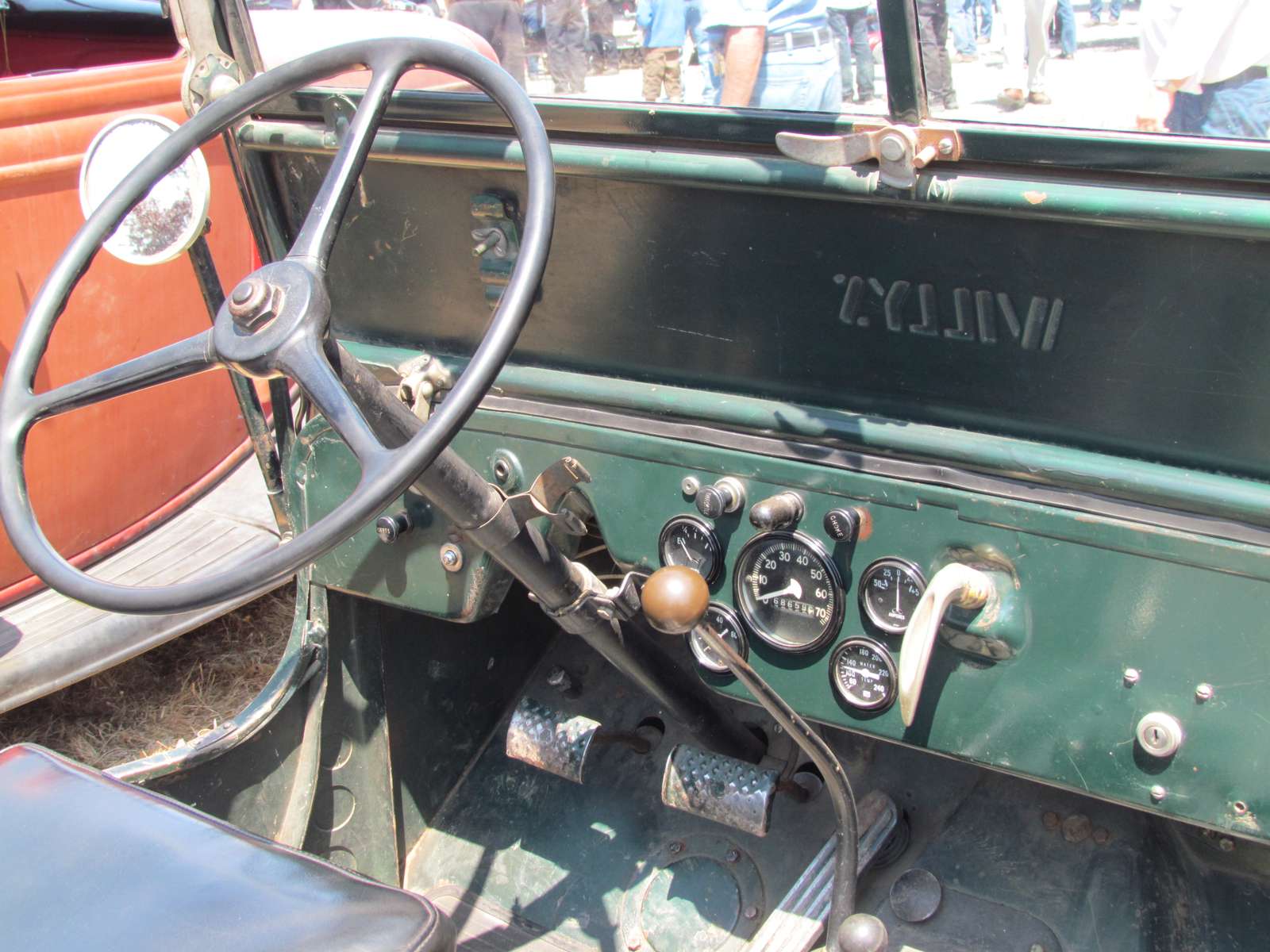
- The line starts as a wartime tool: the 1945 CJ-2A, the first mass-produced civilian 4x4, launched at $1,090 and marketed as farm equipment with a power take-off.
- The four-door JK Unlimited of 2007 changed the economics: family-sized and modern-equipped, it pushed sales toward 200,000 a year and repriced the nameplate.
- Capability became a trim level with the TJ-era Rubicon — factory locking differentials and a 4:1 crawl ratio, hardware owners once had to build themselves.
- The 2021 4xe plug-in hybrid makes 375 hp with roughly 25 miles of electric range; its Sahara version launched at $47,995, about 44 times the CJ-2A's price.
This guide traces the history of the Jeep Wrangler from its first model year to the current car, and explains why it still shapes today's prices. No vehicle in America has traveled further from its founding purpose. The Jeep began as the cheapest, most disposable machine in the US Army's inventory — a wartime tool built to a price and a weight limit — and it became the Wrangler: a lifestyle icon whose buyers pay premium prices for removable doors, a folding windshield and off-road hardware most will never engage. Telling its history means telling two stories at once, one about capability and one about what capability is worth. Our history lane has traced the same arc for the Ford F-150 and the Toyota Corolla; the Wrangler's version runs from a $1,090 farm tool to a plug-in hybrid that outsprints sports sedans. For the present tense, our Jeep buying guide maps the current range.
History of the Jeep Wrangler at a Glance
| Era | Years | The change that mattered | Price marker |
|---|---|---|---|
| Willys MB | 1941–1945 | The military original: lightweight 4x4 built for war | Built to a government contract |
| CJ series | 1945–1986 | The civilian Jeep: CJ-2A, CJ-5, CJ-7 sell utility to farmers and outdoorsmen | CJ-2A launched at $1,090 |
| Wrangler YJ | 1987–1995 | The first Wrangler: square headlights, wider track, road manners | The nameplate begins |
| Wrangler TJ | 1997–2006 | Round headlights return; coil springs; first Rubicon; LJ Unlimited | Capability becomes a trim |
| Wrangler JK | 2007–2018 | First four-door Unlimited — the sales explosion | Family money arrives |
| Wrangler JL | 2018–present | Aluminum panels, modern tech, Gladiator sibling | Premium pricing throughout |
| Wrangler 4xe | 2021–present | Plug-in hybrid: 375 hp, electric trail running | Sahara 4xe launched at $47,995 |
The Army Jeep and the Civilian CJ
The story starts with a specification. In 1940 the US Army asked for a lightweight, four-wheel-drive reconnaissance vehicle; Willys-Overland won the production contract, and the Willys MB — built also by Ford as the GPW — became the wartime Jeep, the machine Eisenhower is said to have listed among the tools that won the war. When peace came, Willys did something no one had done before: it sold the military vehicle to civilians. The CJ-2A of 1945 — CJ for Civilian Jeep — was the first mass-produced four-wheel-drive vehicle offered to the public, marketed not as recreation but as equipment. At $1,090 it promised a farmer a tractor, a truck and a power source in one machine, its power take-off ready to run saws, pumps and plows.
The CJ line ran for four decades and more than 1.5 million vehicles. The CJ-5 of 1955 became the archetype — the round-headlight, flat-fender shape the world still draws when it draws a Jeep — and the longer CJ-7 of 1976 bridged toward modernity with more room and available automatic transmission. Through Kaiser and then American Motors ownership, the CJ stayed a working tool that people increasingly bought for fun. That tension — tool or toy — set up everything that followed.
YJ: The First Wrangler (1987–1995)
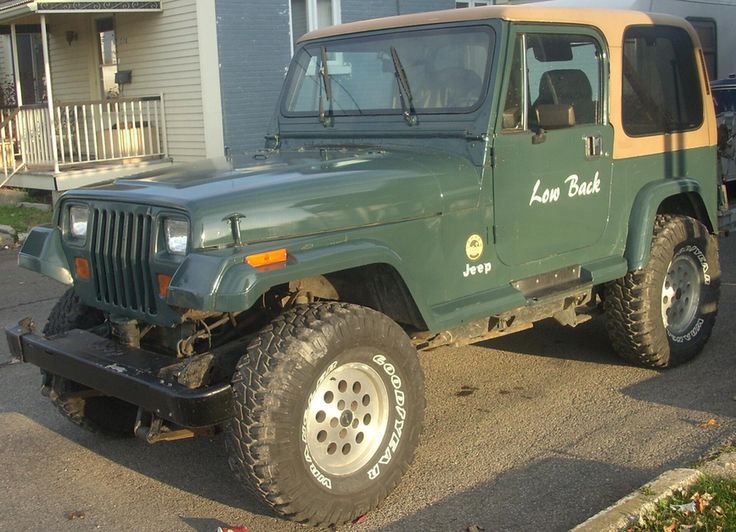
AMC retired the CJ name in 1986 and launched its replacement at the Chicago Auto Show: the Wrangler YJ, sold as a 1987 model. The YJ kept the body-on-frame construction, solid axles and open top, but it was deliberately civilized — a wider track, a lower stance, an interior borrowed in spirit from the Cherokee, and the decision that still defines it in Jeep folklore: rectangular headlights. Purists were appalled; the market was not. Chrysler bought AMC within a year of the YJ's launch, inheriting a nameplate whose brief had quietly changed from farm equipment to everyday vehicle with adventure in its image. There was no 1996 Wrangler — the line paused a year while its successor was readied.
TJ: The Purists' Answer (1997–2006)
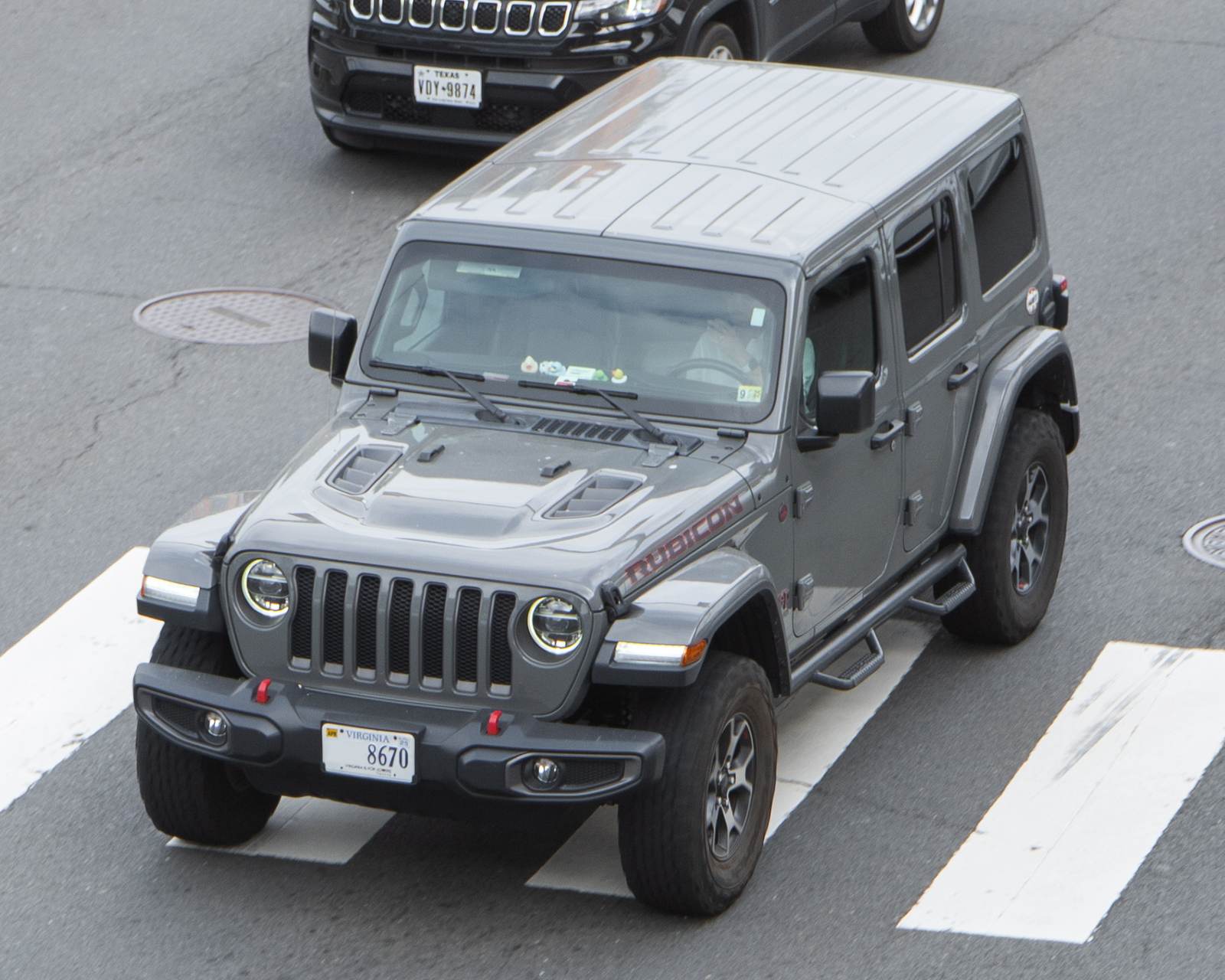
The TJ of 1997 was an apology and an upgrade in equal measure. Round headlights returned. Leaf springs — a CJ-era inheritance — gave way to a coil-spring suspension that improved both axle articulation on the trail and ride quality on the road. The 4.0-liter inline-six became the era's beloved engine. Then the TJ did something quietly revolutionary: it packaged capability as a trim level. The Rubicon, arriving in the TJ run, bundled locking differentials, a low-range transfer case with a 4:1 crawl ratio and bigger tires from the factory — hardware owners had previously built themselves. A longer-wheelbase Unlimited (the LJ) followed for 2004–2006, testing whether Wrangler buyers wanted more room. They did, and Jeep noticed.
JK: Four Doors Change Everything (2007–2018)
The JK of 2007 is the hinge of the whole history. For the first time the Wrangler was designed from the start as both a two-door and a four-door — the Unlimited — with power windows, power locks and room for a family. Sales climbed toward 200,000 a year, transforming the Wrangler from an enthusiast niche into one of the franchise's volume pillars. The early JK's borrowed minivan V6 was the era's weak point; the fix arrived in 2012 with a 285-horsepower Pentastar V6 and a better interior already fitted in 2011. The four-door discovery reset the pricing story permanently: the Wrangler was now competing for household money, and its prices began their long climb from tool money to SUV money.
JL and 4xe: The Icon Plugs In (2018–present)
The JL of 2018 modernized the formula without disturbing its silhouette: aluminum doors and tailgate to save weight, a fold-down windshield that finally folded easily, current infotainment, more engine choices. The Gladiator pickup returned to the line in 2019 wearing the Wrangler's face. Then, in 2021, Jeep did the thing the nameplate's history said was impossible and electrified it. The Wrangler 4xe pairs a turbocharged 2.0-liter with electric motors and a 17 kWh battery for 375 horsepower and 470 lb-ft of torque — at launch, the quickest Wrangler ever sold, good for 0–60 in six seconds and roughly 25 miles of silent electric running, with locking differentials at both ends for the trail. Its pricing tells the era's story in one line: the Sahara 4xe launched at $47,995 and the Rubicon 4xe at $51,695, before destination and the then-available federal tax credit — roughly forty-four times the CJ-2A's price, for a machine whose direct ancestor cost $1,090. The same year brought the Rubicon 392, a factory V8 Wrangler, completing the top of a range that now stretches from workaday Sport to six-figure-adjacent halo models. What buyers actually pay for today's line is broken down in our Jeep Wrangler invoice price guide.
Frequently Asked Questions
What do the codes CJ, YJ, TJ, JK and JL mean?
They are the Jeep Wrangler generations in code, adopted by owners as the lineage's language: CJ (1945–1986) is the Civilian Jeep line; the later generations are YJ (1987–1995), TJ (1997–2006), JK (2007–2018) and JL (2018–present), with U added for four-door Unlimited versions of the JK.
Why did the YJ have square headlights?
The YJ was designed under AMC to broaden the Jeep's appeal beyond off-roaders — a wider track, a lower stance and a more car-like face for on-road buyers. The rectangular headlights were part of that modernization brief, and they remain the most debated styling decision in the nameplate's history; the TJ restored round lamps six years later.
When did the four-door Wrangler arrive, and why did it matter?
The four-door Unlimited arrived with the JK generation in 2007. It turned the Wrangler from a second vehicle into a primary one — family-sized, with modern conveniences — and sales climbed toward 200,000 a year, permanently repricing the nameplate as a mainstream SUV rather than an enthusiast toy.
Is the Wrangler 4xe a real off-roader or a compliance special?
A real one, on the hardware: the 4xe's 375-hp plug-in system drives both axles mechanically, Rubicon 4xe models carry front and rear locking differentials, and its instant electric torque is genuinely useful on trails. Its roughly 25 miles of electric range is the compromise — enough for silent trail running and short commutes, not for electric touring.
The Bottom Line on History of the Jeep Wrangler
The Wrangler's eight decades are a pricing story as much as a product one: a $1,090 wartime tool became a five-figure family SUV and then a six-figure-adjacent icon, without ever changing its basic silhouette or surrendering the solid axles, removable top and trail hardware that created the demand. Each generation answered the same question — how much civilization can a Jeep absorb before it stops being one — and each time the market answered: more than the purists feared, at higher prices than anyone predicted. If the history has made you want one, price the current car with the same clear eyes. The history of the Jeep Wrangler explains the car you can buy today — and why it holds its value the way it does. Start at MyCarDiscount.com.
Get the number dealers start from.
Invoice, estimated true cost, out-the-door — before any dealer hears your name.