
History of the Toyota Corolla: The World's Best-Selling Car
The Toyota Corolla history, in short: the least dramatic success story in the industry: six decades of the same promise — affordable, efficient, dependable — compounded until the Corolla became the best-selling nameplate in history.
Key Takeaways
- The Corolla became the best-selling nameplate in automotive history in 1997; cumulative sales passed 50 million in 2021.
- No single Corolla was the fastest or prettiest of its year — the formula was dependable transport improved a little every generation.
- The modern Corolla is hybrid-first, with an occasional wild streak.
- Its history is a lesson in compounding: small consistent improvements beat revolutions.
The history of the Toyota Corolla is the least dramatic success story in the car industry, and that is exactly its point. No single Corolla was ever the fastest, the prettiest or the most advanced car of its year. Instead, Toyota spent six decades making the same promise — affordable, efficient, dependable transport, improved a little every generation — until, in 1997, the Corolla became the best-selling nameplate in automotive history, and in 2021 cumulative sales passed 50 million. This is how a simple 1966 sedan quietly out-sold every car ever made.
History of the Toyota Corolla: Milestones at a Glance
| Milestone | When | Why it matters |
|---|---|---|
| Corolla launches in Japan | 1966 | A compact sedan aimed at Japan's new car-owning families, with features from larger cars |
| Reaches the United States | Late 1960s | The foothold that grew into Toyota's largest market presence |
| One million cumulative sales | Within about four years | Proof the formula traveled; production and exports scaled rapidly |
| Front-wheel drive era | Early 1980s | Mainstream models switch layout for space and efficiency; the rear-drive AE86 coupe becomes a legend |
| World's best-selling nameplate | 1997 | Cumulative sales pass every other nameplate in history |
| 50 million cumulative sales | 2021 | The record extends; hybrid versions carry the formula into the electric transition |
| GR Corolla arrives | 2023 | A rally-bred performance flagship proves the nameplate can do excitement after all |
1966: A Small Car With Big-Car Ideas
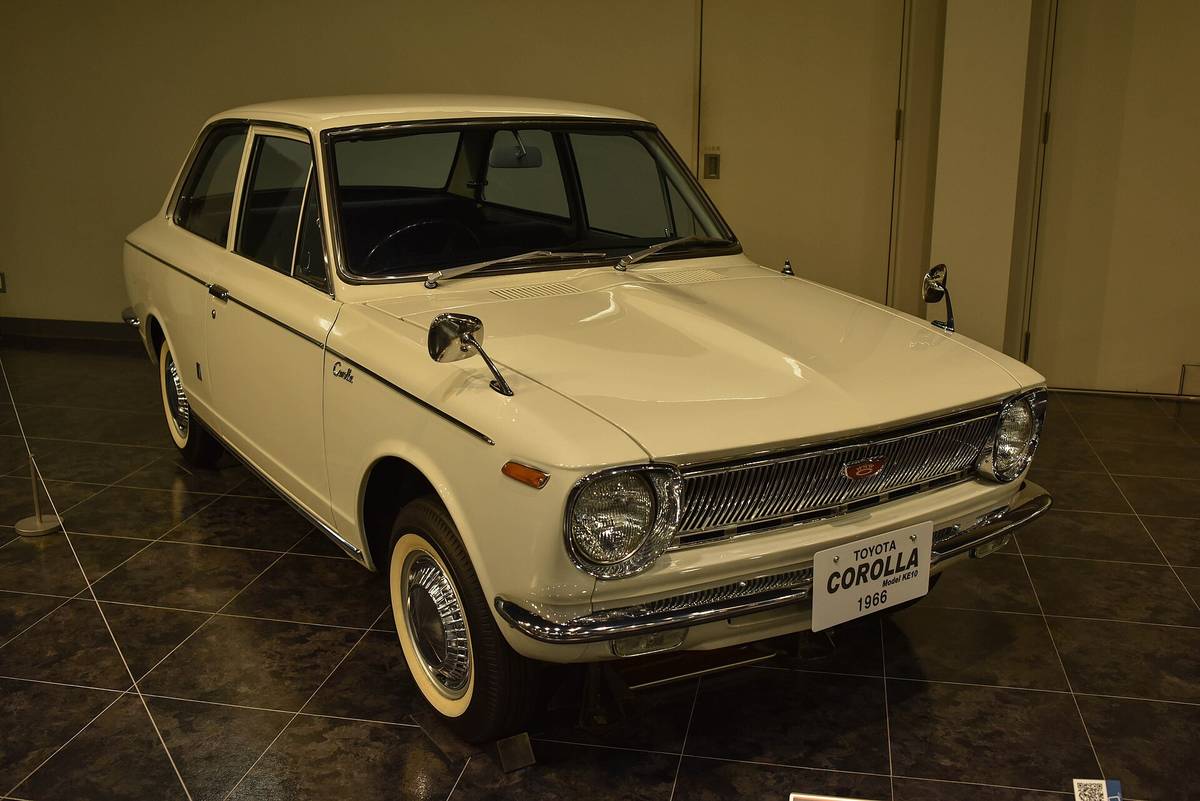
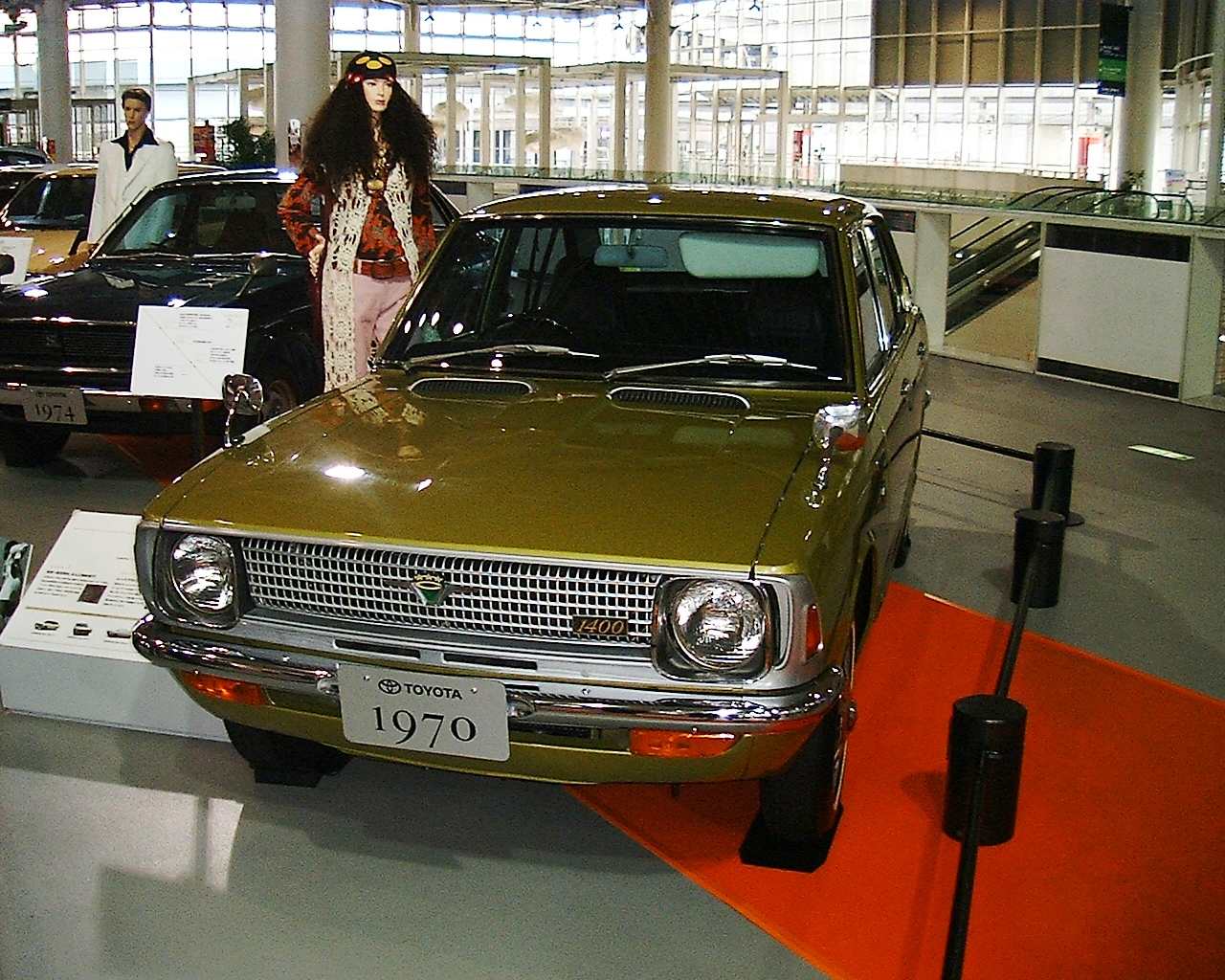
Toyota launched the Corolla in Japan in 1966, aimed at a country motoring for the first time. The brief, led by chief engineer Tatsuo Hasegawa, was a car for ordinary families that borrowed touches from larger, more expensive cars — a floor-mounted gear lever when column shifts were normal, individual front seats, generous equipment for the class. The name itself, meaning the ring of petals around a flower's center, signaled that Toyota wanted its smallest sedan to feel like a proper car, not a penalty box.
The timing was perfect. Japan's economy was motoring its population, and exports followed almost immediately — the Corolla reached the United States before the decade was out, arriving as an unknown brand's inexpensive compact just as American buyers were discovering that small imported cars could be thrifty and well-built at the same time. Within roughly four years of launch, cumulative Corolla sales reached one million.
The 1970s and 1980s: The Formula Sets
Through the 1970s the Corolla rode the decade's fuel crises perfectly: when fuel prices spiked, an economical, reliable compact was precisely what buyers in America, Europe and Asia wanted, and each new generation widened the range — sedans, coupes, wagons, hatchbacks — without disturbing the core formula. Toyota's discipline was manufacturing as much as product: consistent quality at high volume built a reputation that competitors' advertising could not buy.
The early 1980s brought the layout change that defines the modern Corolla. Mainstream models switched to front-wheel drive, gaining interior space and efficiency; the sporty rear-drive coupe line, the AE86, went the other way into legend, later becoming one of the most celebrated enthusiast cars Toyota has ever made. The split tells the story of the nameplate's range: one badge could be a student's first car and a driver's cult object simultaneously, and both versions fed the same reputation.
1997–2021: The Record and the Fifty-Million Mark
In 1997 the Corolla passed a milestone no nameplate had reached: the highest cumulative sales in automotive history, overtaking cars that had been on sale far longer. The achievement was not a launch event or a single huge year — it was arithmetic. Sell a dependable car, in more than 150 countries, for three decades, improving it steadily, and the total compounds. Toyota claims about one in five of all Toyotas ever sold has been a Corolla.
The generations kept their rhythm through the 2000s and 2010s — safer, quieter, more equipment, hybrid versions spreading from the Prius's pioneering work into the mainstream line. Production had long since globalized with them: the Corolla was built on several continents, often the first Toyota manufactured in a new market, which kept prices local, supply close to owners, and the nameplate insulated from any single factory or currency. In 2021 cumulative sales passed 50 million. To put that figure in perspective: it is more cars than most manufacturers have built under all their nameplates combined. Our Toyota invoice prices guide shows how the same discipline — controlled pricing, modest margins, steady demand — still shapes what a Corolla costs today.
The Modern Corolla: Hybrid First, and a Wild Streak
The current, twelfth-generation Corolla reflects where the volume market has moved. Hybrid power is now central to the range rather than a niche variant, safety technology that was luxury equipment a decade ago is standard, and the line has stretched sideways: the Corolla Cross applies the nameplate to a compact SUV, acknowledging that many of the Corolla's natural buyers now shop that shape — a shift our SUV vs sedan comparison examines in cost terms.
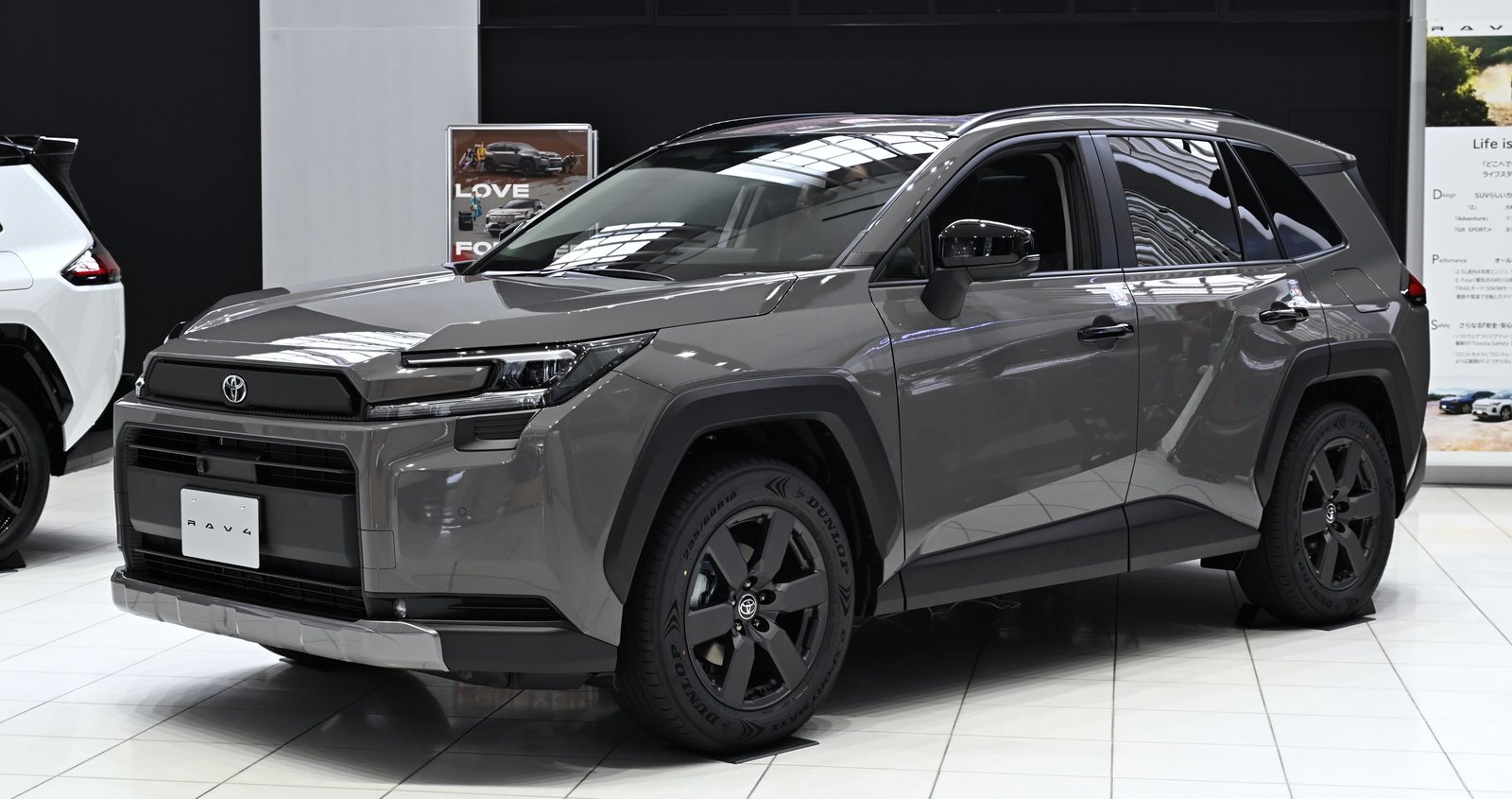
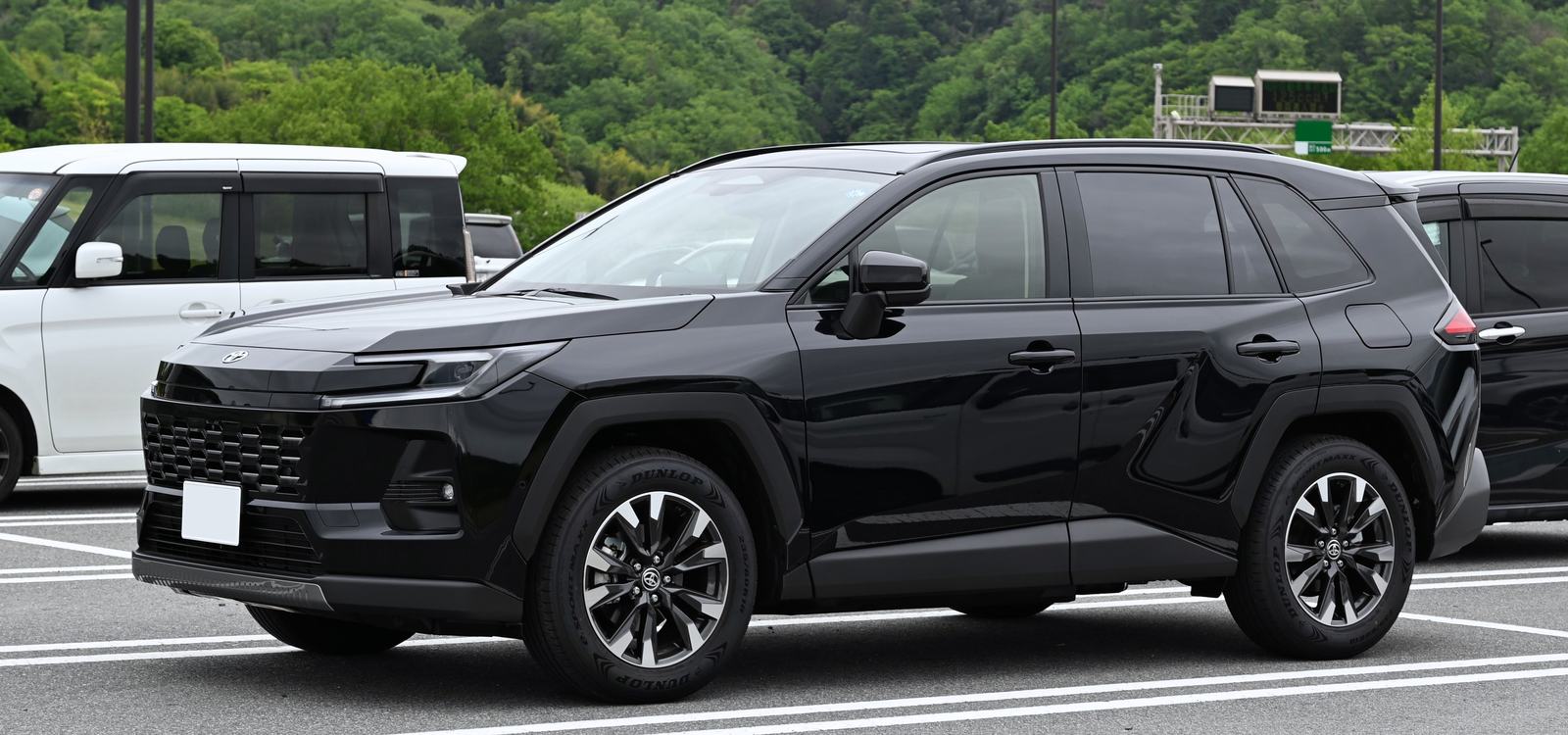
And then there is the GR Corolla of 2023: a rally-bred, all-wheel-drive performance hatchback wearing the same badge as the world's default rental car. It matters less for sales than for what it proves — after nearly sixty years, Toyota judged the nameplate strong enough to carry excitement as well as dependability. Buyers weighing the current car against rivals can see how its pricing structure works in our Toyota invoice pricing guide guide — and how the same pricing formula looks on the SUV side of the family in our guide to Toyota RAV4 invoice prices — and the Corolla's own enduring value story in our piece on the true cost of owning a car, where modest depreciation and running costs are exactly the Corolla formula expressed in dollars.
Frequently asked questions
When does the history of the Toyota Corolla start?
In 1966, when Toyota launched the first Corolla in Japan as a compact family sedan with equipment borrowed from larger cars. Exports began almost immediately, and the Corolla was on sale in the United States before the end of the decade.
Why is the Toyota Corolla the world's best-selling car?
On cumulative sales. Toyota records the Corolla becoming the best-selling nameplate in automotive history in 1997 and passing 50 million cumulative sales in 2021 — the product of selling an affordable, dependable car in more than 150 countries, across twelve generations, without interruption since 1966.
How many generations are in the history of the Toyota Corolla?
Twelve. The current twelfth generation carries the broadest range yet: sedan and hatchback body styles, hybrid power at the center of the line, the Corolla Cross SUV variant, and the high-performance GR Corolla.
What does the history of the Toyota Corolla mean for buyers today?
It explains the car's resale behavior. Six decades of dependability reputation, enormous parts and service availability, and constant demand for used examples are why Corollas depreciate gently compared with most compact cars — the history is priced into every used listing and every new-car quote.
Conclusion: The History of the Toyota Corolla Is a Lesson in Compounding
Seen whole, the Toyota Corolla history contains no revolution — just an ordinary promise kept 50 million times. For buyers, that is the most useful kind of history there is: it tells you the current car comes from the deepest pool of manufacturing experience, parts support and resale demand in the industry. Other nameplates have been faster, prettier and cheaper. None has been this consistent, for this long, in this many places — price a current one with our history of the toyota corolla invoice pricing guide and run the deal in our toyota corolla history calculator. Start at MyCarDiscount.com.
Get the number dealers start from.
Invoice, estimated true cost, out-the-door — before any dealer hears your name.