
Volkswagen Buying Guide: Tiguan, Atlas, Taos and Jetta
How to buy a Volkswagen, model by model: VW's line is two SUVs deep where it matters and one sedan hanging on — this guide maps each model, its trims, and where VW's discounting reputation holds up.
Key Takeaways
- The Tiguan (from $31,205) and Atlas (from $41,610, tows 5,000 lb) carry VW's volume; the Taos ($26,500) guards the price floor and the Jetta ($23,995) is among America's cheapest cars.
- Buy the Taos lean: a well-optioned Taos and a base Tiguan sit close in money, and the Tiguan is substantially more vehicle for it.
- The ID.4 (from $45,095) now competes without the federal credit, which ended for vehicles acquired after September 30, 2025 — VW's own factory and lease support is the real price signal.
- VW holdback is 2% of base MSRP, and the discounting reputation runs on program money — factory incentives that come off your price on top of the negotiated discount.
This Volkswagen buying guide is organised around one goal: helping you buy the right car at the right price, without the usual dealership detours. Volkswagen's American line is a study in concentration: two SUVs carry the brand's volume, a subcompact crossover guards the price floor, one sedan refuses to die, and an electric SUV fights a market that changed underneath it. That focus is good for buyers — VW knows exactly which fights it is in — and this guide maps each model, what it costs, and where it wins. It also takes up the brand's favorite subject: VW's reputation for discounting, and where that reputation still holds up in 2026. Model-level cost structure is in our Volkswagen invoice prices guide; this page is the shopper's map that goes with it.
Volkswagen Buying Guide at a Glance
| Model | Starts at (MSRP, before destination) | What it is | Headline figure |
|---|---|---|---|
| Jetta | $23,995 | Compact sedan | 158 hp; among America's cheapest new cars |
| Taos | $26,500 | Subcompact SUV | 1.5L turbo, 174 hp |
| Tiguan | $31,205 | Compact SUV | Redesigned; up to 268 hp in SEL R-Line Turbo |
| Atlas Cross Sport | $38,300 | Two-row midsize SUV | 269 hp; coupe-roof Atlas |
| Atlas | $41,610 | Three-row SUV | Tows up to 5,000 lb |
| ID.4 | $45,095 | Electric SUV | Rear-drive or dual-motor all-wheel drive |
The Volume Pair: Tiguan and Atlas
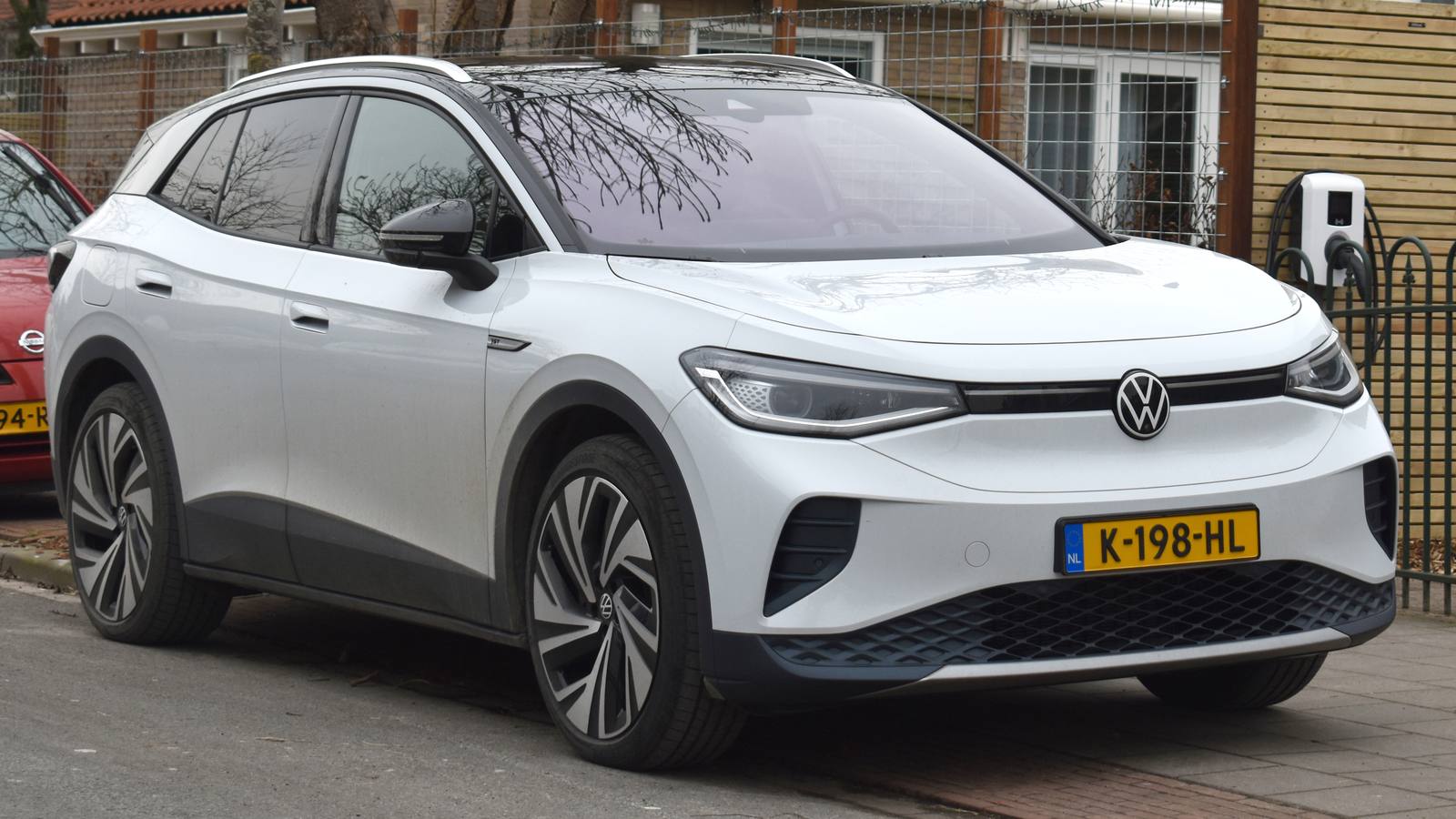
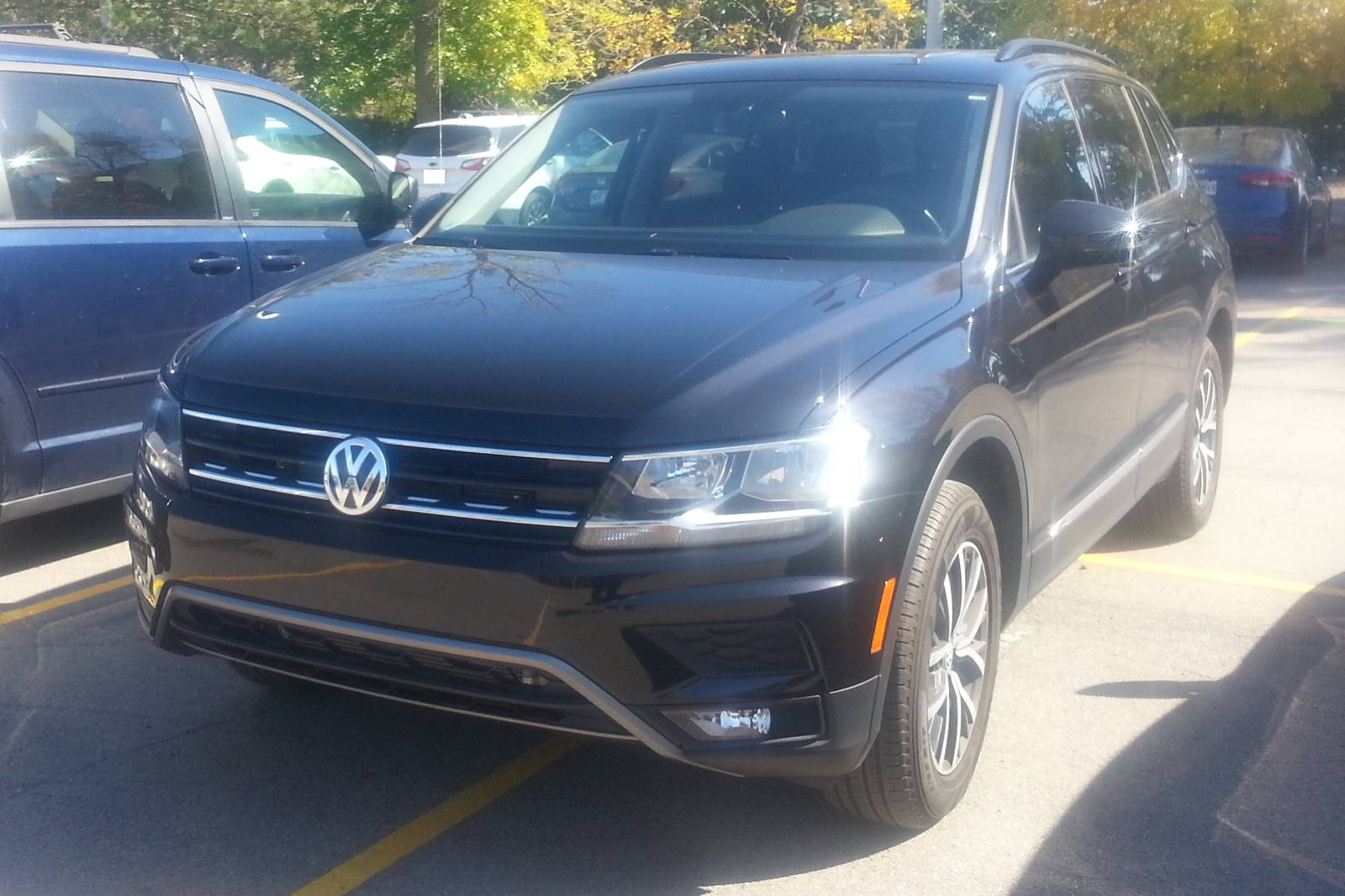
The Tiguan is VW's center of gravity in America, and the current third-generation car, from $31,205, is the strongest version yet: a 2.0-liter turbo making 201 horsepower, a properly premium interior, and a range now topped by the SEL R-Line Turbo, whose 268-horsepower tune turns the family crossover into something genuinely quick. It is sized and priced directly against the RAV4 and CR-V, and its case is the cabin — VW's materials and screens run a class above the sticker. Buyers who need a third row skip it entirely; that is the Atlas's job. Read this section as aVolkswagen Tiguan buying guidein miniature — the trims, the price and the case for the cabin.
The Atlas, from $41,610, is the biggest Volkswagen sold here: three usable rows, a 269-horsepower 2.0-liter turbo in place of the old V6, and towing up to 5,000 pounds. The Atlas Cross Sport, from $38,300, is the same vehicle with a coupe roofline and no third row, bought for looks and a lower price rather than seats. The Atlas family's honest pitch is space per dollar — few three-rows this roomy start this low — and its honest weakness is that the Korean and Japanese rivals fight it with longer warranties and hybrid options VW does not offer here. Anyone buying a new Volkswagen should note what VW offers instead: price, which brings us to the discount section below.
Taos: The Price Door
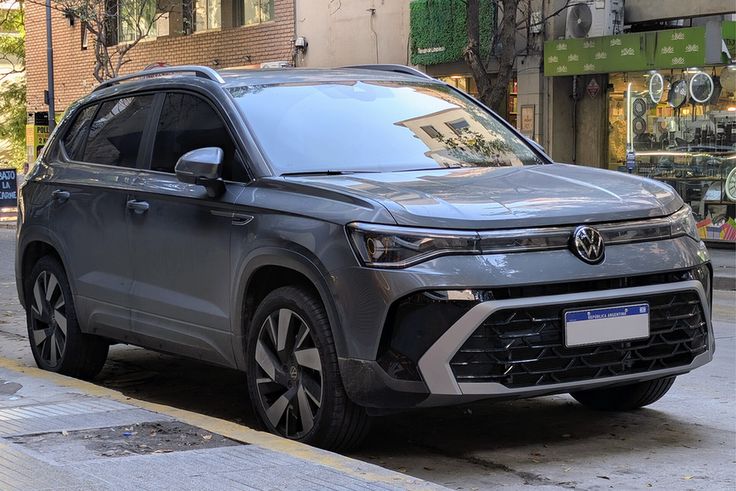
The Taos, from $26,500, is the SUV-shaped way into the brand: a subcompact crossover with a 174-horsepower version of VW's 1.5-liter turbo, available all-wheel drive, and a cargo hold that embarrasses larger vehicles. It is not fast and it is not plush, but it is the cheapest path to a new VW wagon on stilts, and its running costs stay sedan-low. Cross-shoppers should note the arithmetic that defines this corner of the line: a well-optioned Taos and a base Tiguan are separated by very little money, and the Tiguan is substantially more vehicle. The Taos makes sense bought lean; optioned heavily, it argues against itself.
Jetta: The Sedan Hanging On
The Jetta survives because it is very good at being a car. From $23,995, it is one of the cheapest new vehicles in America of any kind, and unlike the market's other budget answers it is a real sedan — a 158-horsepower 1.5-liter turbo, a proper trunk, highway manners from the German side of the family — rather than a penalty box. It sells in a segment the industry keeps abandoning, which makes it both a value and a small act of defiance. The range's stealth member is the GLI, from $33,745: the GTI's 228-horsepower-class drivetrain in a sedan body, and one of the last inexpensive sport sedans with a manual gearbox. (The hot hatches themselves — Golf GTI from $34,590 and the 328-horsepower Golf R from $49,455 — remain the enthusiast ceiling of the line, and the ID. Buzz electric van, from $59,995, its nostalgia flagship; both are specialty purchases outside this guide's volume map.)
ID.4: The Electric, After the Credit
The ID.4, from $45,095, is VW's electric SUV, offered in rear-wheel-drive and dual-motor all-wheel-drive forms, and it now competes in a market missing its biggest subsidy: the federal clean-vehicle credit that once cut thousands from EV prices and leases ended for vehicles acquired after September 30, 2025. VW's response has been to become its own incentive — the ID.4 is one of the most heavily supported EVs in the industry, with factory money and lease support doing the work the credit used to do. That makes the ID.4 a negotiation-first purchase: the sticker is the opening position, the manufacturer's support is the real price signal, and a buyer comparing the ID.4 against a Tesla or Hyundai EV should compare total deal figures, never stickers. On the vehicle itself: it is roomy, quiet, and unexciting in the way family appliances should be.
Where VW's Discounting Reputation Holds Up
Volkswagen's reputation as the discountingest European brand was earned over decades of incentive spending, and the structure underneath supports it. VW holdback is published at 2% of base MSRP on our dealer holdback by make table — a mainstream cushion, neither the fattest nor the thinnest — and the invoice spread on a Tiguan or Atlas is comparable to the Japanese brands, as the Volkswagen invoice prices guide shows in detail. The reputation's real engine is program money: VW supports slow-turning models, leases and the ID.4 with factory incentives that cost the dealer nothing and therefore come off your price on top of the negotiated discount. The method in how to negotiate from invoice price — build the target in layers, invoice, then holdback, then live program money — was practically written for this brand. Where the reputation overshoots is the hot end: a new SEL R-Line Turbo or a Golf R will not be given away, and expecting ID.4-style support on a GTI is how buyers talk themselves out of a fair deal.
Frequently Asked Questions
Which Volkswagen is the best value in the line?
The Jetta, in absolute terms — a complete, well-mannered sedan under $24,000 in a market that has nearly abandoned the price point. Among the SUVs, the Tiguan is the value center: the newest design, the best interior in its class at the price, and VW's incentive attention. The Taos only wins bought lean, before its options walk it into Tiguan money.
Tiguan or Atlas for a family?
Count the rows you will actually use. The Tiguan is the better drive, the better interior and the cheaper vehicle, and covers families of four with room to spare. The Atlas earns its premium the moment a third row carries passengers weekly rather than theoretically — and it is the only one of the two that tows 5,000 pounds. Occasional third-row duty is not worth several thousand dollars; weekly duty is.
Is the Jetta still worth buying in 2026?
Yes, and the case is arithmetic: it is one of the least expensive new cars in America, it is economical to run, and its sedan format — trunk, low seating position, highway stability — is disappearing from the market, which supports its used values. Buyers who want the format with pace should look at the GLI before concluding the Jetta line is only about thrift.
Should I buy an ID.4 now that the federal credit has ended?
The credit's end (for vehicles acquired after September 30, 2025) removed the subsidy, not the deal: VW has replaced much of it with its own factory support, especially on leases. The right move is to negotiate the ID.4 as a total figure against its subsidized-era reputation — if the dealer's number assumes you have not heard the credit ended, another dealer's will not.
The Bottom Line on Volkswagen Buying Guide
Volkswagen in America is a focused line bought best with a layered target: the volume SUVs priced against Japan, the Jetta holding the sedan floor, the ID.4 negotiated off its support rather than its sticker. The brand's discounting reputation is real but it is program money, not margin — which means it rewards buyers who ask what is live on their model, this month, in writing. How to buy a Volkswagen well comes down to this: pick the model from the map above, then price it in layers. That is this Volkswagen buying guide in full — the lineup, the prices and the pitfalls, in one place. Start at MyCarDiscount.com.
Get the number dealers start from.
Invoice, estimated true cost, out-the-door — before any dealer hears your name.