
Nissan Invoice Prices: Rogue, Altima, Sentra and Frontier
The Nissan invoice price is where a Nissan deal really starts: Nissan discounts more willingly than most brands, and its holdback is calculated on a different basis — both change how you estimate true cost.
Key Takeaways
- Nissan holdback is 2% of total invoice — a different basis from most other makes, which changes the true-cost math.
- Nissan is among the brands most willing to discount, so the invoice gap understates the room on many models.
- Rogue, Altima, Sentra, Pathfinder and Frontier each carry their own invoice figures by trim.
- Start every Nissan negotiation from the invoice for your exact trim.
Nissan invoice prices are the numbers a Nissan dealer actually paid the factory for the vehicle on the lot, and they sit below the MSRP on the window sticker. For Nissan shoppers the gap matters twice over: Nissan is one of the brands most willing to discount, and its holdback is calculated on a different basis from almost every other make, which changes how you estimate the dealer's true cost. This guide explains how Nissan invoice prices work and how to pull the exact figure for the trim you want.
Start with the free lookup on our Nissan make page, then run the numbers in the calculator before you contact anyone.
Nissan Invoice Prices at a Glance
| Item | What Nissan buyers should know |
|---|---|
| Invoice price | What the dealer paid Nissan for the vehicle as configured, including destination |
| Holdback | 2% of total invoice — Nissan is the rare make whose holdback is based on the invoice itself, not the sticker |
| Discount pattern | Nissan discounts more readily than most brands; advertised prices below invoice are common on volume models |
| Destination charge | Set by Nissan, identical at every dealer for the same model, included in both MSRP and invoice |
| Incentive pattern | Public cash rebates, APR support, and loyalty/conquest offers that change monthly by region |
| Best first step | Pull the invoice for your exact trim, subtract holdback correctly, then compare out-the-door quotes |
How Nissan Invoice Pricing Works
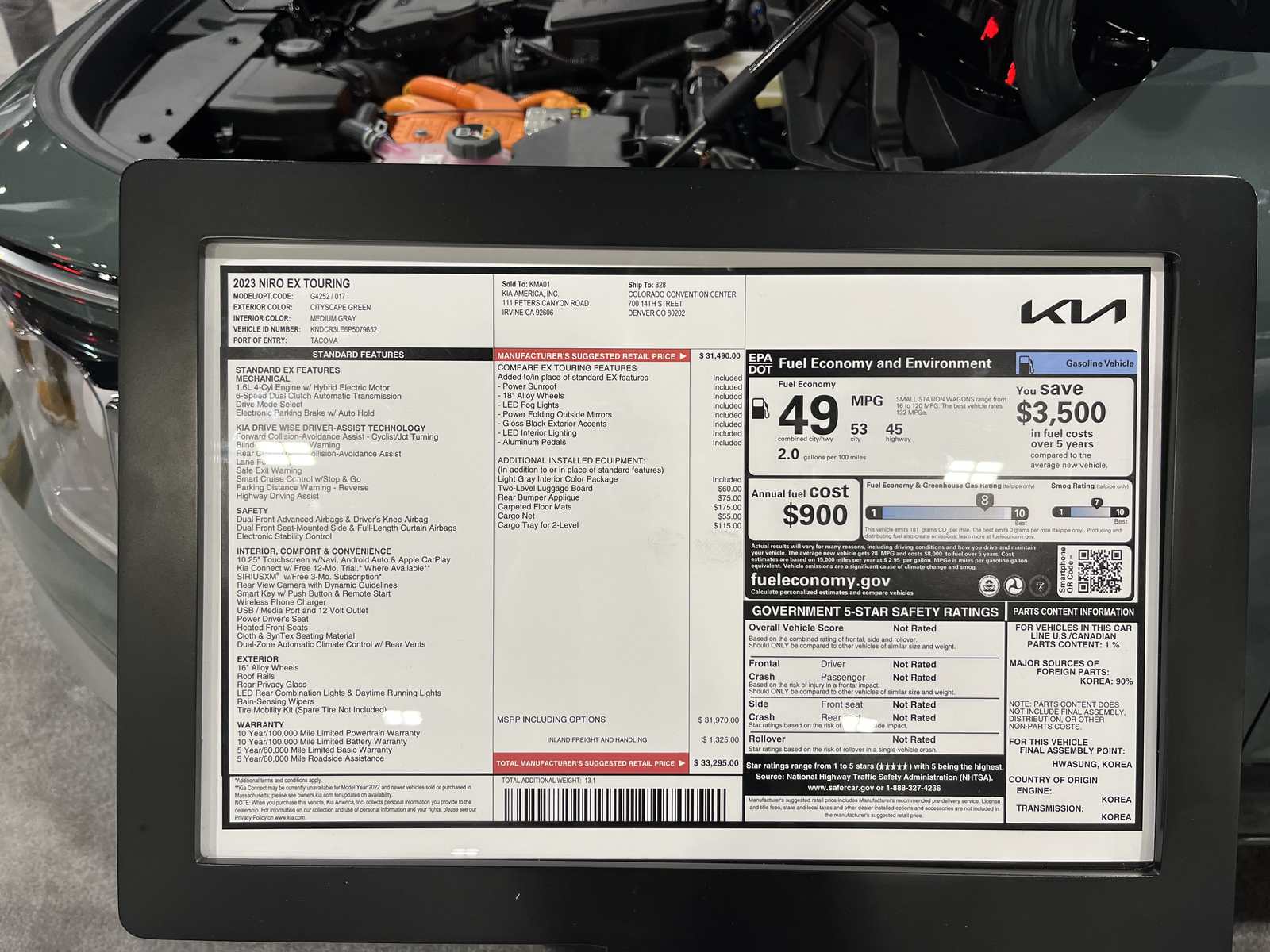
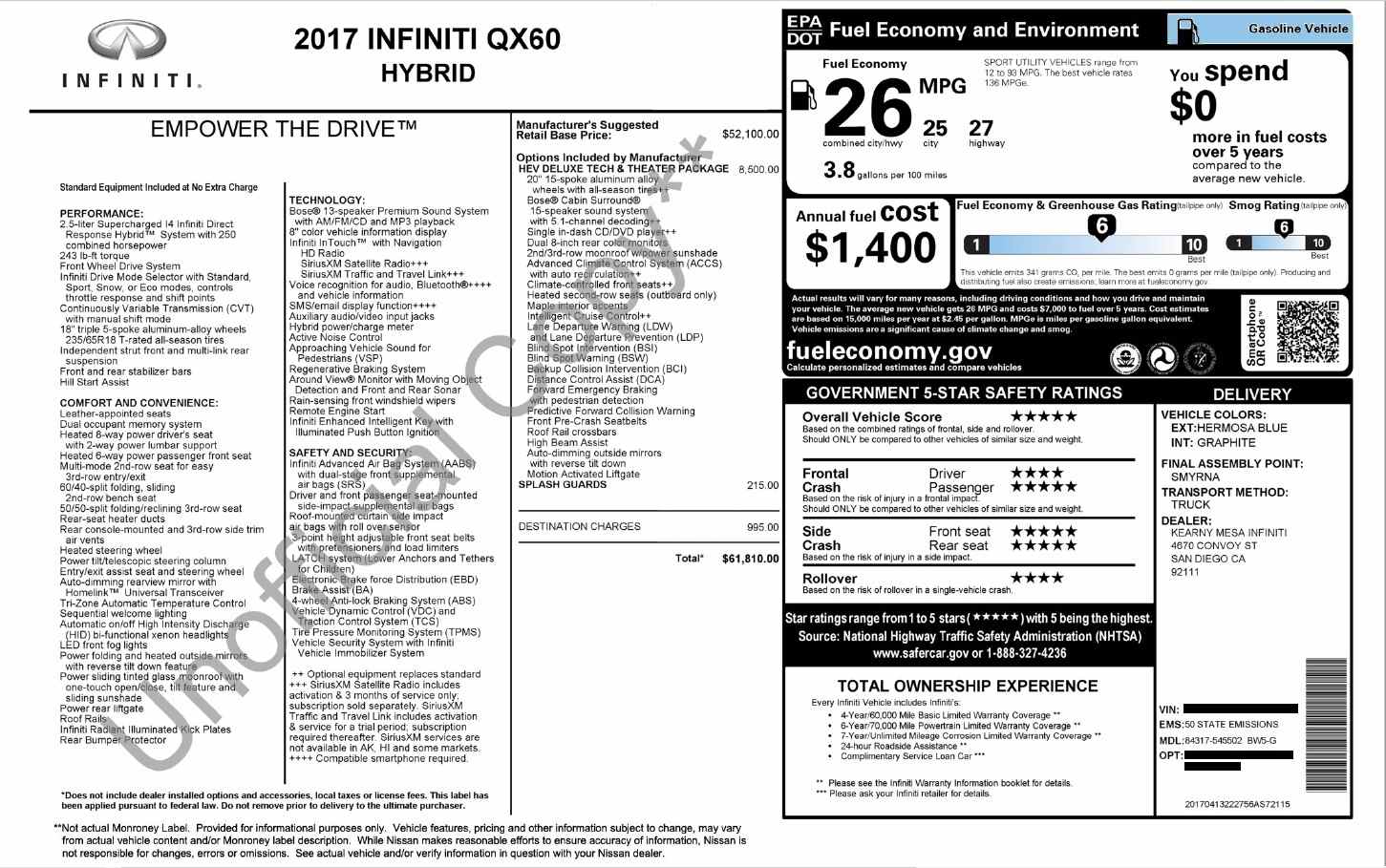
Every new Nissan ships to the dealer with a factory invoice listing the base invoice for the trim, the invoice cost of factory options and packages, and the destination charge. The MSRP on the window sticker is built from the same vehicle priced at retail, so the two totals differ line by line, and the invoice is always the lower starting point.
Two Nissan specifics are worth knowing. First, invoice is still not the dealer's final cost: Nissan returns a holdback payment after the sale, and factory-to-dealer incentives can reduce the effective cost further on supported models. Second, Nissan's retail strategy leans on visible discounting more than most brands. Dealers routinely advertise prices at or below invoice on volume models, funded by factory incentive money — which makes invoice a realistic negotiating anchor for a Nissan. Knowing the number tells you whether an advertised deal is genuinely strong or just ordinary pricing dressed up.
New to the vocabulary? Our pillar guides explain MSRP vs invoice price and whether invoice price is the dealer cost in full.
How Much Lower Are Nissan Invoice Prices Than MSRP?
The MSRP-to-invoice gap on a Nissan is moderate in percentage terms and grows in dollars as trims and options climb — a loaded Pathfinder carries a far larger dollar gap than a base Sentra. What sets Nissan apart is what happens around that gap: because Nissan supports its dealers with comparatively generous incentive programmes, transaction prices at or below invoice are a normal outcome on mainstream models rather than an exception you have to fight for. The contrast with our guide to Toyota invoice prices is instructive: Toyota's holdback is a percentage of the sticker, Nissan's of the invoice — different maths.
Use that pattern this way:
- On the Rogue, Altima, and Sentra, expect published offers and dealer discounts to cluster around invoice, and treat anything above it as a starting quote, not a final one.
- On the Frontier and Titan, truck incentives swing with inventory and fuel prices; the factory money often matters more than the sticker-to-invoice gap itself.
- On freshly redesigned or low-stock trims, dealers hold closer to MSRP, and invoice becomes your fairness check rather than an offer template.
For the spread on the car you are shopping, use the live lookup on our invoice pricing page: it prices the current model year, your trim and your options as they stand today.
Nissan Holdback: 2% of Total Invoice — a Different Basis
Holdback is the amount the manufacturer returns to the dealer after the vehicle sells, and it is the main reason a dealer can sell at invoice without selling at cost. Nissan's holdback has one quirk that matters for your maths: it is calculated as a percentage of the total invoice, not of the MSRP.
Three published sources agree on this. Auto Cheat Sheet's holdback chart (titled for 2026, last updated December 2024) lists Nissan holdback at 2% of total invoice. The Vantage Group Auto's holdback explainer independently lists Nissan at 2% of invoice, and a historical holdback chart (revised 2008, as reposted) records the same 2%-of-invoice basis. Nissan is the only high-volume make where the sources consistently use an invoice basis — most brands calculate holdback from the sticker price instead. Our full explainer on dealer holdback covers how the payment works and why dealers defend it.
Illustrative example — not a live price: on a vehicle with a $35,000 total invoice, a 2%-of-invoice holdback returns $700 to the dealer after the sale. When you estimate a Nissan dealer's true cost, subtract roughly 2% of the invoice, not 2% of the sticker, or you will overstate the dealer's room.
The Destination Charge on a Nissan
The destination charge covers transporting the vehicle from the plant or port to the dealership. Nissan sets it, it is identical at every dealer for the same model, and it is included in both the MSRP total and the invoice total. Because the dealer paid it too, destination is not part of the dealer's negotiable margin, and no dealer can honestly "waive" it — a discount presented that way is simply coming out of the selling price.
Destination itself is not negotiable — negotiate the selling price, dealer-added accessories, and fees instead. Documentation fees are set dealer by dealer and state by state, so judge every quote on its out-the-door total in the calculator.
Nissan Invoice Prices by Popular Model
Nissan's volume concentrates in a few nameplates — the models where invoice research pays back fastest:
- Rogue — Nissan's best seller and the centre of its discounting. Volume is high, competition between Nissan dealers is real, and offers around invoice are common.
- Altima — a mid-size sedan in a shrinking segment, which works in the buyer's favour: dealers move Altimas with factory support more readily than SUVs.
- Sentra — the value sedan. The dollar gap is small at this price, so fees and add-ons decide whether a Sentra deal is actually good.
- Frontier — the mid-size truck. Pricing firms up when inventory is thin and loosens quickly when Nissan adds support, so timing matters.
- Pathfinder — the three-row family SUV, where trim and option loads create the widest dollar spreads in the Nissan line.
We publish the live figure for each model and trim on the Nissan make page rather than printing static dollar amounts here, because invoice figures change with each model year, price revision, and option package, and a stale printed number would mislead you. New to the method? How to find invoice price on a car takes you through it in order.
How to Use MyCarDiscount for a Nissan
The workflow mirrors our invoice pricing tool:
- On the makes index, choose Nissan, then your model and trim.
- Three numbers come up front — MSRP, invoice, and an estimated true-cost range with holdback and incentives subtracted — before the site asks for any contact details.
- Because Nissan discounts readily, check the current factory offers for your model before setting your target; our methodology page explains how incentives are layered into the estimate.
- Work out the out-the-door total in the calculator, local tax and dealer fees included, so rival quotes land on the same basis.
- To have dealers compete, pick up to three named dealers and request their offers, email-first. The price is revealed first here — nothing waits behind a form.
Negotiating a Nissan With the Invoice in Hand
Nissan negotiation rewards preparation more than pressure, because the factory money moves monthly:
- Check the current manufacturer offers on Nissan's official site before you shop. Nissan rotates cash, APR, and lease programmes by model and region, and a dealer quote that ignores a public programme is a quote to reject.
- Ask whether a low advertised price depends on loyalty, conquest, military, or recent-graduate eligibility. Nissan stacks targeted offers frequently, and an advertised price that assumes rebates you do not qualify for is not your price.
- Because Nissan dealers compete on headline price, insist on the out-the-door figure in writing. A below-invoice selling price paired with inflated fees or forced accessories is not below invoice in any sense that matters.
- Compare at least two dealers on the identical trim. Nissan's discount culture means the spread between dealers is often larger than the remaining room at a single dealer. Our guide to negotiating from invoice price works through the offer maths.
Frequently Asked Questions
How do I find Nissan invoice prices for my exact trim?
Start on our Nissan page, pick your model, then the exact trim and factory packages — the invoice pricing tool returns the figure for that build, not a blended average. That matters on a Nissan: the spread between a base Sentra and a loaded Pathfinder is wide, and monthly offers attach to specific trims, so a range-wide average misleads.
Is the invoice price the dealer's real cost on a Nissan?
No — and on a Nissan the gap below invoice is easier to size than on most brands. Holdback is published at 2% of the total invoice itself, with factory-to-dealer incentive money underneath it on supported models. Our explainer is invoice price the dealer cost works through the layers.
Why is Nissan holdback calculated differently from other brands?
Most manufacturers calculate holdback as a percentage of the sticker price, but the published sources consistently record Nissan's as 2% of the total invoice itself. The practical effect is a slightly smaller holdback dollar amount, and you must subtract it from the invoice figure when estimating true cost — an MSRP-based percentage overstates the dealer's cushion.
Why do Nissan dealers advertise prices below invoice?
Because invoice is not their cost. Between the 2%-of-invoice holdback and factory incentive money, a dealer can advertise below invoice and still clear a margin — especially on volume models Nissan is supporting that month. The catch to check is eligibility: some advertised prices assume loyalty or conquest rebates that not every buyer qualifies for.
The Bottom Line on Nissan Invoice Prices
Nissan invoice prices are a genuinely usable negotiating anchor: Nissan discounts more readily than most brands, and once you correct for its unusual holdback basis — 2% of the total invoice, not the sticker — you can estimate the dealer's true cost with unusual confidence. Pull the live Nissan invoice price for your trim on MyCarDiscount, layer in the current factory offers, build the out-the-door total, and let named dealers compete on a number you already understand. Start at MyCarDiscount.com.
Get the number dealers start from.
Invoice, estimated true cost, out-the-door — before any dealer hears your name.