
Kia Invoice Prices: K4, K5, Sportage, Sorento and Telluride
The Kia invoice price is where a fair Kia deal starts: Kia is no longer the automatic-discount brand, and on the SUVs everyone wants, the invoice is the difference between a firm price and a fair one.

Key Takeaways
- Kia's pricing has firmed up with demand — the old assumption of an easy discount rarely holds on popular SUVs.
- Kia holdback is published at 3%, with a dispute over the basis it is calculated on.
- K4, K5, Sportage, Sorento and Telluride each carry their own invoice figures by trim.
- Pull the exact invoice for your trim before you set an offer target.
Kia invoice prices are what a Kia dealer paid the factory for the vehicle, and they are the reference point every Kia negotiation should start from. Kia is no longer a budget brand, and its pricing has firmed up as demand grew — which makes knowing the invoice more valuable, not less, because the old assumption that a Kia will simply be discounted rarely holds on the popular SUVs. This guide explains how Kia invoice prices work, where the remaining margin sits, and how to pull the exact figure for your trim.
Start with the free lookup on our Kia make page, then run the numbers in the calculator before you contact anyone.
Kia Invoice Prices at a Glance
| Item | What Kia buyers should know |
|---|---|
| Invoice price | What the dealer paid Kia for the vehicle as configured, including destination |
| Holdback | 3% — but the basis is disputed: base MSRP in the newest chart, base invoice in the older one |
| Discount pattern | Firmer than Kia's budget reputation suggests; hot SUVs like the Telluride often hold near sticker |
| Destination charge | Set by Kia, identical at every dealer for the same model, included in both MSRP and invoice |
| Incentive pattern | APR support, lease programmes, and targeted cash offers that change monthly by region |
| Best first step | Pull the invoice for your exact trim, then compare out-the-door quotes on the identical spec |
How Kia Invoice Pricing Works
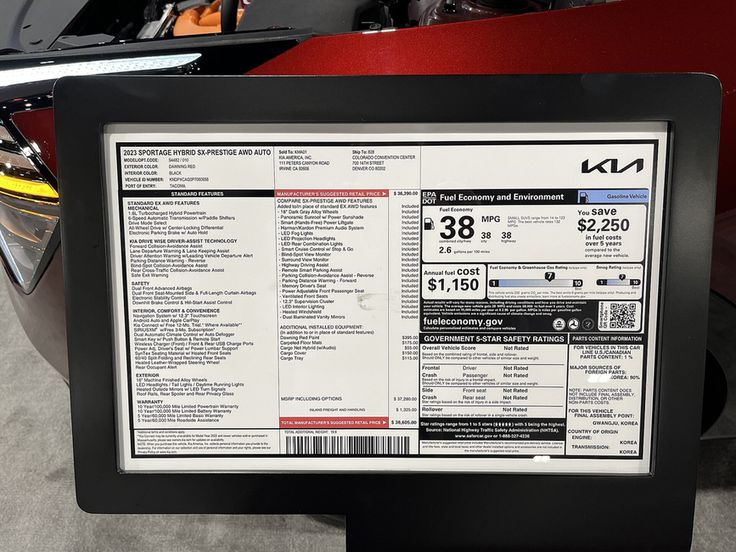
Every new Kia arrives with a factory invoice listing the base invoice for the trim, the invoice cost of factory options and packages, and the destination charge. The MSRP is the same vehicle priced at retail, so the difference between the two totals is the first layer of the dealer's margin.
Two points matter for Kia specifically. First, invoice is not the dealer's final cost: Kia pays the dealer a holdback amount after the sale, and factory-to-dealer incentives can lower the effective cost further on supported models. Second, Kia's market position has changed. The Telluride built waiting lists at launch, and in-demand Sportage and Sorento trims still transact far closer to sticker than Kias did a decade ago. Knowing the invoice does not force a discount — it tells you whether the quote in front of you is fair for that model in your market, and it stops you wasting time demanding a figure no dealer can reach.
The concepts underneath are covered in our pillar guides on MSRP vs invoice price and whether invoice price is the dealer cost.
How Much Lower Are Kia Invoice Prices Than MSRP?
Kia's MSRP-to-invoice gap is moderate and trim-driven. On the K4 and K5 sedans the dollar gap is modest; on upper Sorento and Telluride trims with heavy option loads the gap widens in dollars even when the percentage is similar. Kia also prices keenly against rivals, so the sticker may already undercut a comparable rival — the invoice gap is only one part of judging the deal.
Use that pattern this way:
- On the K4 and K5, where sedan demand is soft, dealers have more reason to deal; invoice is a realistic reference for an opening offer.
- On the Sportage and Sorento, hybrid versions carry the strongest demand; expect firmer pricing there when hybrid stock is thin.
- On the Telluride, treat invoice as a fairness check. A clean deal at or near MSRP with no forced add-ons can be a genuinely good outcome in a tight market — a "discount" funded by inflated fees is not one.
A static article cannot carry that exact spread; it belongs in a live lookup. Run it on our invoice pricing page so the figure reflects the current model year, trim, and options — and compare the sibling brand's numbers in our guide to Hyundai invoice prices.
Kia Holdback: 3%, With a Basis Dispute
Holdback is the amount Kia returns to the dealer after the vehicle sells. It is built into the invoice structure, so a deal done exactly at invoice still leaves the dealer the holdback payment. For Kia the percentage is consistent across sources but the basis — the number the percentage is applied to — is not.
Auto Cheat Sheet's holdback chart (titled for 2026, last updated December 2024) lists Kia holdback at 3% of base MSRP. A historical holdback chart (revised 2008, as reposted) records 3% of base invoice instead. Same percentage, different base, different dollars: the base invoice is lower than the base MSRP, so 3% of invoice is the smaller payment. Kia does not publish the figure, so we use the newest chart's basis as primary and flag the disagreement. Payment timing, and why dealers defend the system, is covered in our full explainer on dealer holdback.
Illustrative example — not a live price: on a vehicle with a $32,000 base MSRP, holdback at 3% of base MSRP would be $960. Calculated instead on a base invoice of roughly $30,000, the same 3% would be about $900. The gap is small on any single car, but it is why we show Kia's estimated true cost as a narrow range rather than a single point.
The Destination Charge on a Kia
The destination charge covers delivery of the vehicle from the plant or port to the dealership. Kia sets it, it is identical at every dealer for the same model, and it is included in both the MSRP total and the invoice total. Because the dealer paid it too, destination is not part of the negotiable margin, and no dealer can honestly "waive" it — a discount presented that way is simply coming out of the selling price.
Treat destination as fixed and negotiate the selling price, dealer-added accessories, and fees instead. Documentation fees vary by dealer and state, which is why we compare deals on the out-the-door total in the calculator. The FTC's consumer guidance on buying a new car makes the same point: compare the total, not the monthly payment.
Kia Invoice Prices by Popular Model
Kia's volume concentrates in a handful of nameplates — the models where invoice research pays back fastest:
- Sportage — Kia's SUV volume leader, in petrol and hybrid versions. Option content drives the invoice spread; hybrid stock levels drive dealer flexibility.
- Telluride — the three-row flagship and the Kia most likely to be quoted at or above sticker in a tight market. A no-add-on deal at MSRP can be a win here; check several dealers.
- Sorento — the mid-size three-row between the Sportage and Telluride; pull the invoice for the exact powertrain, hybrid and plug-in included.
- K5 — the mid-size sedan; softer sedan demand usually means more negotiating room than on the SUVs.
- K4 — the compact sedan that replaced the Forte; small margins, so fees decide whether a deal is good.
- EV6 and EV9 — the electric flagships, where factory programmes move the real price more than the invoice gap does.
We publish the live figure for each model and trim on the Kia make page rather than printing static dollar amounts here, because invoice figures change with each model year, price revision, and option package, and a stale printed number would mislead you. New to the method? How to find invoice price on a car walks through it in order.
How to Use MyCarDiscount for a Kia
The workflow mirrors our invoice pricing tool:
- On the makes index, choose Kia, then your model and trim.
- Up front, before any contact details are requested, you see the MSRP, the invoice price, and the estimated true dealer cost range — invoice less holdback and known incentives.
- Open the calculator and build the out-the-door total with your local tax and fees so quotes are comparable; our methodology page explains the estimate.
- Competition runs on your terms: select up to three named dealers and have offers come to you email-first, the price already known — nothing waits behind a form.
Negotiating a Kia With the Invoice in Hand
Kia negotiation rewards knowing which models are actually scarce:
- Check the current manufacturer offers on Kia's official site before you shop. Kia rotates APR, lease, and cash programmes monthly by region, and targeted offers appear in the mix; ask for the programme name and confirm you qualify before it is written into a quote.
- Refuse forced add-on packages, especially on scarce models. Paint protection, nitrogen, and VIN etching added at the dealer are not on the factory invoice, and on a Telluride they are frequently where the real markup hides.
- Cross-shop a Hyundai dealer on the equivalent model. Kia and Hyundai share platforms and often compete for the same buyer; a Tucson quote can discipline a Sportage quote and vice versa.
- Keep the comparison on out-the-door totals for the identical trim. Kia's keen sticker pricing means a smaller percentage discount can still be the better car for the money. The offer maths is in our guide to negotiating from invoice price.
Frequently Asked Questions
How do I find Kia invoice prices for my exact trim?
Enter your trim in the lookup on our Kia page — or the invoice pricing tool — and the figure is built from that trim's base invoice plus its factory packages at invoice cost. A model average hides what matters: a K4 and a loaded Telluride trim sit thousands of dollars apart, and scarce trims sell on their own number.
Is the invoice price the dealer's real cost on a Kia?
No. Underneath the printed invoice sit two more layers: holdback — published at 3%, though sources dispute whether the base is MSRP or invoice — and whatever factory-to-dealer money applies to that model. Is invoice price the dealer cost unpacks both.
Do Kia invoice prices include destination?
Yes. Kia sets the destination fee for each model, printed at the same amount on the window sticker and the factory invoice in every state. Because the dealer pays that figure to bring the car to the lot, it sits outside the negotiable margin — haggling belongs on the selling price and add-ons.
Why do some Kias sell at or above MSRP if I know the invoice?
Because invoice knowledge does not change supply. On high-demand models like the Telluride, more buyers than cars means dealers can hold at sticker and still sell through. The invoice still protects you: it tells you how large the premium is, so you can decide whether to pay it or wait.
The Bottom Line on Kia Invoice Prices
Kia invoice prices give you the reference point the whole negotiation turns on: what the dealer paid, the 3% holdback sitting below it, and a clear-eyed view of which Kia models have real negotiating room and which are genuinely scarce. Start from the Kia invoice price for your trim — the live figure is on MyCarDiscount — build the out-the-door total, and make dealers compete on a number you already understood. Start at MyCarDiscount.com.


Get the number dealers start from.
Invoice, estimated true cost, out-the-door — before any dealer hears your name.