
Can You Trade In a Car With Damage? Costs and When to Fix
Trade in a car with damage: dealers price damage at wholesale repair cost plus a fear discount — this guide shows how appraisers grade damage and which repairs pay back before trade-in day.
Key Takeaways
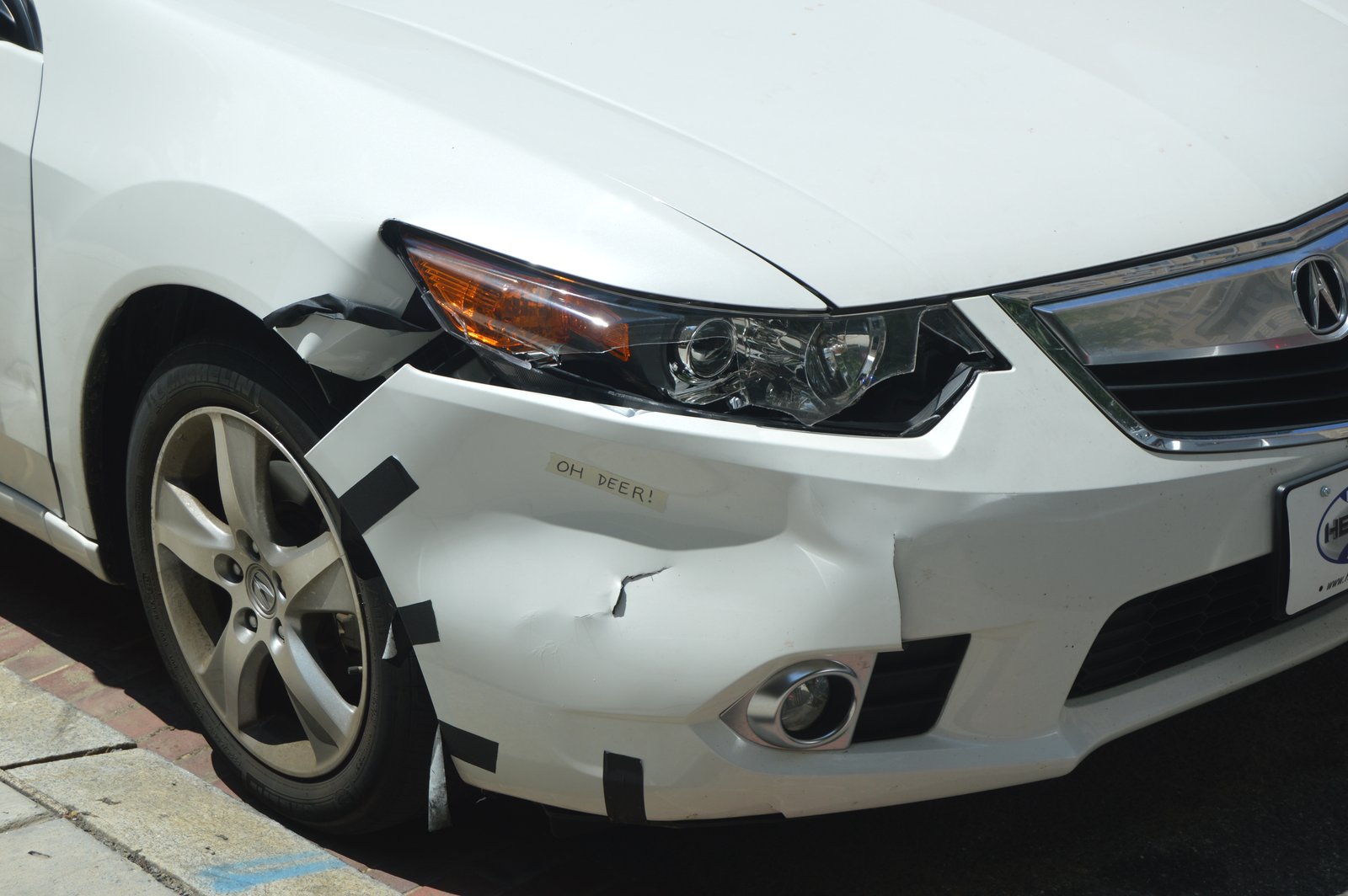
- Yes, dealers take damaged trades daily — the real question is price: deductions are wholesale repair cost plus an uncertainty margin, not the retail bill you would pay.
- Fixing first usually loses money: in the illustrative example, $2,000 of retail repairs wins back at most the $1,150 the dealer was deducting at wholesale cost.
- Fix only the cheap fear-removers — a dead battery, a simple warning-light cause, a thorough detail — and bring records that shrink the appraiser's margin.
- A reported accident drops the car a value band even if repaired perfectly, and concealment rarely survives the history report, paint gauge and scan tool.
Can you trade in a car with damage? This guide answers it in full, in plain English. Yes — dealers take damaged trade-ins every day, including cars with accident histories, tired engines and, occasionally, cars that arrive on a tow truck. The real question is never whether a dealer will take it. It is what the damage does to the number, and whether spending money on repairs beforehand wins any of that number back. Dealers answer that question with cold arithmetic: they price your damage at what it costs them to fix — wholesale, at internal shop rates — and then subtract a margin for everything they cannot see. Once you understand that formula, the fix-first decision mostly makes itself.
Can You Trade in a Car With Damage at a Glance
| Damage type | How the dealer prices it | Fix it first? |
|---|---|---|
| Cosmetic: dents, scratches, curb rash, cracked windshield | Wholesale repair cost deducted from the offer | Rarely beyond a wash and a cheap touch-up |
| Mechanical faults: brakes, tires, suspension wear | Repair cost plus an uncertainty margin | Only cheap, diagnosable items with receipts |
| Accident history on the vehicle-history report | The car drops a value band even if repaired perfectly | Cannot be undone — disclose and document instead |
| Warning lights, failed inspection, drivability issues | Priced as a wholesale or auction risk | Fix only simple, verifiable causes |
| Frame, flood or structural damage | Auction-bound pricing, steep deductions | No — sell the car as what it is |
How an Appraiser Grades Your Damage
The appraisal is a short, practiced routine. The used-car manager walks the car with a paint-thickness gauge, which betrays panels that have been repaired or repainted even when the work was good. They run the vehicle-history report — accidents, airbag deployments, structural annotations, title brands — and they start the car, listen to it idle, check every warning light and often plug in a scan tool. Then they drive it, because transmissions, steering and brakes confess things a parking lot cannot reveal.
What they are building is not a repair bill but a risk price. A scuffed bumper is a known cost. A check-engine light is an unknown one, and unknowns get priced at the bad end of their range: the appraiser assumes the worst plausible repair, adds the cost of reconditioning the car to lot standard, and keeps a margin for the possibility that the car ends up at auction instead. This is why two cars with the same dent can receive very different numbers — the deductions are wholesale costs plus a fear discount, and the fear discount grows with every unanswered question the car raises. Anything you can do to remove questions cheaply — service records, a receipt showing the light was a gas cap, a recall letter — attacks the margin rather than the repair bill.
The Fix-First Math, With an Illustrative Example
Here is the arithmetic on a clearly labeled illustrative example — round numbers invented for this guide, not a valuation of any real car. Say a clean example of your sedan would appraise at $14,000. Yours has a cracked, scuffed bumper cover, two worn tires and front brakes near the wear limit. A retail customer — you — would pay about $1,100 for the bumper work at a body shop, $420 for the tires and $480 for the brakes: $2,000 all in. The dealer's internal costs are lower: roughly $650, $260 and $240 respectively, $1,150 in total. Add a $550 reconditioning-and-uncertainty margin and the offer lands at $14,000 − $1,150 − $550 = $12,300.
Now run the fix-first alternative. You spend the $2,000 at retail and return with a repaired car. The most you can recover is the $1,150 the dealer was deducting at wholesale cost — the margin shrinks but rarely vanishes, because an appraiser can still see fresh paint. You spent $2,000 to win back at most $1,150: a guaranteed loss of $850, plus your Saturdays. That asymmetry — your repairs are bought at retail, the dealer's deductions are priced at wholesale — is the entire economics of trading in a damaged car, and it is why the standard advice is to sell the car as it sits.
The exceptions are real but narrow. Fixing pays when the repair is far cheaper than the fear it removes: a $40 gas cap that clears a check-engine light, a battery that ends a no-start appraisal, a professional detail and dent-less paint touch-up that move the car from "rough" to "average" in the appraiser's notes. It can also pay for safety items a dealer would otherwise use to justify auction pricing — if $300 in brake work keeps the car retail-able, the value band it stays in can be worth more than $300. The test is always the same: will this specific spend remove more from the deduction than it costs at retail? If the answer needs optimism, skip it. Our guide to preparing a car for trade-in covers the cosmetic prep that does pay on a sound car — the damaged-car calculus here is its harder-edged companion.
Accident History and Disclosure
A reported accident follows the car, not the repair. Once a crash lands on the vehicle-history report, the car sits in a lower value band even if a master repaired it invisibly — dealers know the next buyer will see the same report and discount accordingly. You cannot fix this by fixing the car, which is another reason not to pour retail money into pre-trade repairs on a car with history.
What you can and must do is be straight about it. Appraisers will ask directly about accidents, flood exposure and known mechanical faults, and many states put those questions on trade-in or odometer paperwork. Answer truthfully: the history report, the paint gauge and the scan tool will surface most concealment anyway, and a material lie about a car's condition can unwind a deal or create legal liability after it. The honest version of your car, documented with whatever records you have, appraises better than the same car wrapped in evasions, because it shrinks the uncertainty margin described above. If the car still carries a loan, the payoff side of the transaction has its own mechanics — our walkthrough of how trade-in payoff works covers the dealer's check, the per-diem interest and the title, and if the damage has pushed the car underwater, read what negative equity does to a trade before you sign anything that rolls a balance forward.
Frequently Asked Questions
Can you trade in a car that needs mechanical repairs?
Yes. Dealers accept cars with worn brakes, tired suspensions, warning lights and worse; the faults are priced into the offer at wholesale repair cost plus a risk margin rather than treated as a barrier. Even a non-running car can usually be traded — it will be priced as a wholesale or auction unit, so expect the number to reflect a tow-in, worst-case-repair assumption.
Should I fix the damage before trading in?
Usually no. Your repairs cost retail prices while the dealer's deduction is calculated at wholesale cost, so pre-trade bodywork and mechanical repairs typically return less than they cost. Fix only items that are cheap relative to the fear they remove — a dead battery, a simple warning-light cause, a thorough detail — and keep receipts so the appraiser can price the car as documented rather than unknown.
Do I have to tell the dealer about damage or accidents?
Answer every question truthfully and complete any state disclosure paperwork honestly; misrepresenting a known major fault can void the deal or create liability. In practice, concealment rarely works: the vehicle-history report, paint-thickness readings and a diagnostic scan reveal most significant damage during the appraisal itself.
Will a dealer take a trade-in with frame damage or a branded title?
Most will, at auction-level pricing — structural damage, flood history and branded titles push a car out of retail inventory and into the wholesale lane, where deductions are steep and non-negotiable. For a car like that, also compare a disclosed as-is private sale and quotes from online buying services; the dealer's number is a floor, not a verdict.
The Bottom Line on Can You Trade in a Car With Damage
Can you trade in a car with damage? Yes — but the damage costs you the dealer's wholesale repair bill plus an uncertainty margin — not the retail figure you would pay — and that gap is exactly why fixing first usually loses money. Present the car clean, documented and honestly described, fix only the cheap fear-removers, and collect more than one appraisal so the deduction itself has competition. Then put the surviving number to work on a replacement you have priced properly. Can I trade in a car with damage? By now you have the full answer — use it to judge every offer on the same terms. Start at MyCarDiscount.com.


Get the number dealers start from.
Invoice, estimated true cost, out-the-door — before any dealer hears your name.