
Towing Capacity Explained: Tow Ratings, Payload, Real Math
Towing capacity, plainly: the brochure tow number assumes a driver, no passengers and no cargo — this explainer shows the real math with payload, tongue weight and the margin experienced towers keep.
Key Takeaways
- The advertised tow rating belongs to one specific configuration; the figure that governs your truck is the one for its build in the manufacturer's towing guide.
- Payload usually runs out first: tongue weight at 10 to 15% of trailer weight, plus passengers and cargo, can nearly exhaust a 1,650-lb payload on a 7,000-lb trailer.
- Your exact payload is printed on the door-jamb label — the combined weight of occupants and cargo — and it overrides every brochure figure.
- Treat ratings as ceilings, not targets: experienced towers keep about a 20% margin for grades and weather, and weigh the loaded rig once at a truck scale.
One subject runs through this whole guide: towing capacity explained. What follows explains it in plain English, with the numbers attached. Every truck advertisement leads with one number — the maximum tow rating — and almost no buyer can use it as printed. That figure belongs to one specific configuration of the truck, tested under a standard protocol with almost nothing aboard. The truck in your driveway has a different, smaller set of numbers, and the one that decides what you can actually tow is usually not the tow rating at all. It is payload. This towing capacity guide defines each rating in the system, shows how they constrain each other, and works one complete example so you can run the same math on any truck and trailer pairing — the numbers behind comparisons like our F-150 vs Silverado head-to-head.
Towing Capacity Explained at a Glance
| Number | What it means | Where yours is printed |
|---|---|---|
| Tow rating | Heaviest trailer the vehicle is rated to pull | Brochure and towing guide — by configuration |
| Payload | Heaviest total load the vehicle may carry: people, cargo and tongue weight | Door-jamb label ("combined weight of occupants and cargo") |
| Tongue weight | The share of the trailer's weight pressing down on the hitch | Not printed — you calculate or weigh it |
| GVWR | Maximum weight of the vehicle itself, loaded | Door-jamb label |
| GCWR | Maximum weight of vehicle + trailer, combined | Manufacturer towing guide |
The Five Numbers, Defined
Tow rating is the ceiling on the trailer: the heaviest loaded trailer this configuration may pull. Payload is the ceiling on the truck: everything it carries — driver, passengers, cargo, accessories and the trailer's tongue weight — summed. Tongue weight is the downward force the trailer puts on the hitch, and for a stable tow it should run 10 to 15 percent of the trailer's loaded weight on a conventional hitch (gooseneck and fifth-wheel pin weight runs higher, roughly 15 to 25 percent). GVWR is the vehicle's own maximum loaded weight; payload is simply GVWR minus the truck's curb weight. GCWR caps the whole combination. A legal, safe tow respects every ceiling at once — and in practice, one of them gives out long before the others.
What the Headline Number Really Is
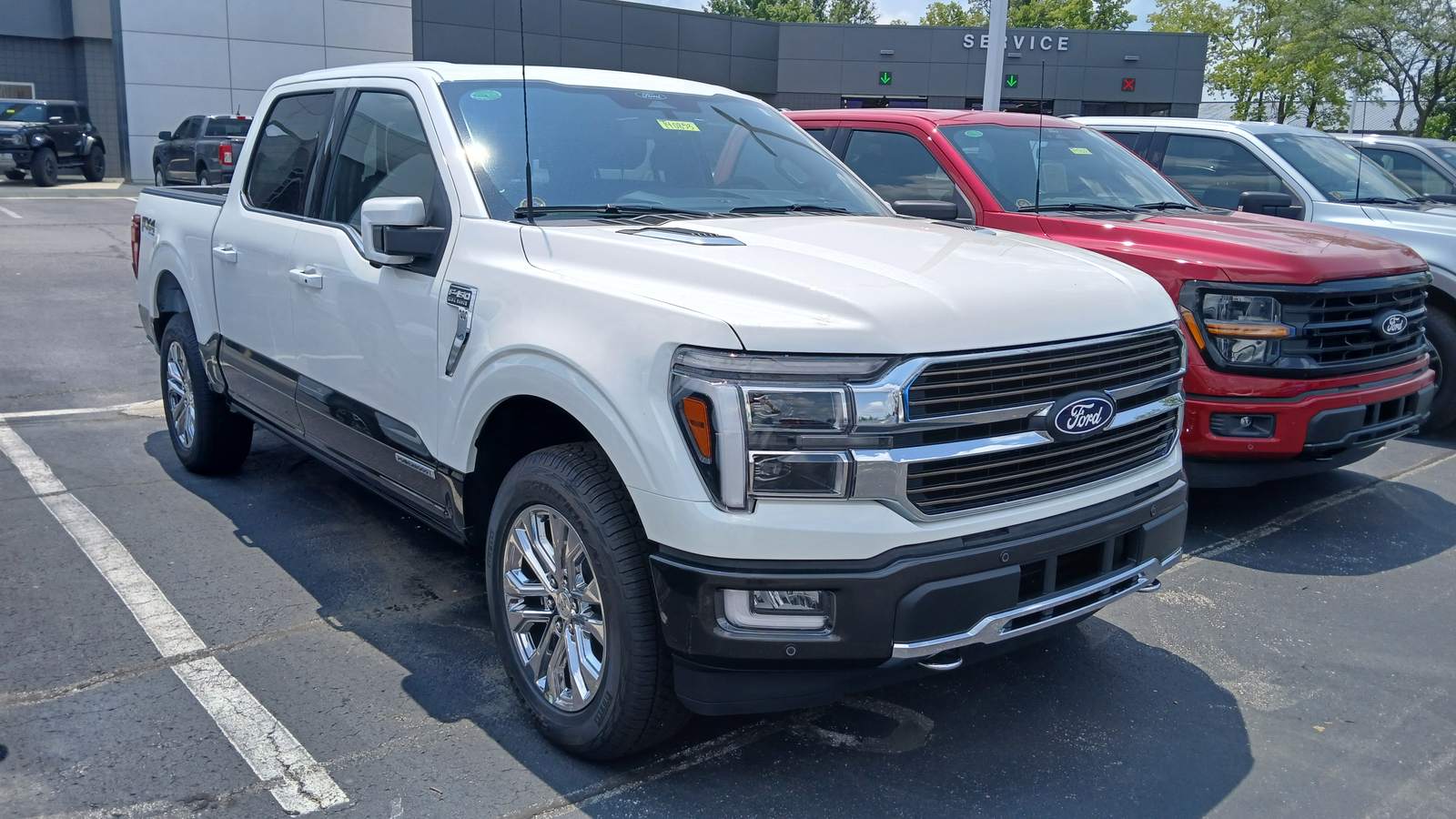
How towing capacity works starts with the test: published tow ratings are measured under SAE J2807, the standard test protocol every major manufacturer now uses: the truck must accelerate, climb the Davis Dam grade in desert heat, brake and stay stable, all at the claimed weight. That standardization is genuinely useful — it ended the era of incomparable in-house claims. But the rating still describes a configuration, not a nameplate. Ford's 2026 F-150 headline of 13,500 pounds belongs to a SuperCrew 4x4 with the 3.5L EcoBoost, the Tow/Haul Package and the Max Tow Axle; other engines, cabs and axle ratios rate thousands of pounds lower, and the maximum payload of 2,440 pounds belongs to a different build again. The rating math also assumes a nearly empty truck — a driver and one passenger, with the hitch itself. Your family, your gear and your options were not in it. This is why midsize trucks (rated and compared in our midsize truck buying guide) and half-tons alike must be judged by the specific truck's labels, not the model's advertising.
Payload Is the Number That Bites
Watch the constraint move in a worked example — a labeled illustration, using a typical crew-cab 4x4 whose door sticker allows 1,650 pounds of payload, hitched to a travel trailer that weighs 7,000 pounds loaded:
- Tongue weight at 12 percent of 7,000 lb = 840 lb. That single line consumes over half the payload before anyone climbs in.
- Four occupants at 500 lb total brings the running total to 1,340 lb.
- Cargo in the bed and cab, 200 lb, brings it to 1,540 lb.
- The weight-distributing hitch itself, 60 lb, brings it to 1,600 lb.
Margin remaining: 50 pounds — on a truck whose brochure tow rating might read 11,000 pounds or more, towing a 7,000-pound trailer. A cooler, a generator or a taller passenger puts it over. This is the arithmetic experienced towers do first, and it explains the pattern in our best pickup trucks guide: for trailer work, the payload figure on the door sticker of the exact truck matters more than any number in the brochure. If the math fails, the honest fixes are a lighter trailer, a truck with a higher payload rating (often a less optioned one — every luxury feature is curb weight subtracted from payload), or shifting cargo into the trailer over its axles, where it counts against the trailer's rating instead of the truck's payload — while keeping tongue weight at or above 10 percent for stability.
The Margin Experienced Towers Keep
Ratings are ceilings, not targets. A widely used rule of thumb is to shop for a trailer whose loaded weight keeps the combination at or below about 80 percent of the tow rating, leaving reserve for grades, wind and altitude — naturally aspirated engines lose power as air thins, and long descents test brakes regardless of what the ascent allowed. Weigh the rig once, loaded as you travel, at a truck scale: tongue weight especially is guessed wrong in both directions, and too little tongue weight is a sway hazard, not a kindness to the truck. Finally, remember that ratings assume a trailer brake controller and working trailer brakes above state thresholds — the truck's numbers were earned with the whole system working.
Frequently Asked Questions
Why is my truck's real tow capacity lower than the advertised maximum?
Because the maximum belongs to one configuration — a specific engine, cab, bed, axle ratio and equipment package — and is the highest figure any build of that model achieves. Your truck's rating is the one for its configuration in the manufacturer's towing guide, and your usable limit is usually set earlier by payload once tongue weight, passengers and cargo are counted.
What runs out first, towing capacity or payload?
For most half-ton trucks towing travel trailers, payload — by a wide margin. A 7,000-pound trailer puts roughly 700 to 1,050 pounds of tongue weight on the truck, and crew-cab payloads commonly run 1,400 to 1,800 pounds. Add a family and gear, and payload is exhausted while the tow rating still shows thousands of pounds of headroom.
How do I find my truck's actual payload?
Read the door-jamb label: "The combined weight of occupants and cargo should never exceed" a printed figure. That number is specific to your truck as built, including its options, and it overrides every brochure figure. Payload is GVWR minus curb weight; the label is the manufacturer's own subtraction, so use it rather than estimating.
Is it safe to tow exactly at the rated limit?
It is within the manufacturer's rating if every ceiling — tow rating, payload, GVWR, GCWR and axle ratings — is respected simultaneously, and J2807 testing includes braking and stability at that weight. Most experienced towers still keep a margin of around 20 percent for hills, weather and wear. At the limit, nothing can be added: no extra passenger, no fuller tanks, no heavier trailer than planned.
The Bottom Line on Towing Capacity Explained
Read towing specs as a system: the tow rating caps the trailer, payload caps the truck, tongue weight couples the two, and GCWR caps the combination — and the honest limit is whichever you reach first, which is usually payload. Run the worked example with your door-sticker payload and your trailer's true loaded weight before you buy either one. That is the complete picture on towing capacity explained — know it before you negotiate, and the rest of the deal gets easier. Start at MyCarDiscount.com.
Get the number dealers start from.
Invoice, estimated true cost, out-the-door — before any dealer hears your name.