
Ford F-150 Invoice Price by Trim: XL to Raptor Breakdown
The F-150 invoice price is really nine or ten different numbers wearing one nameplate — and on a loaded Platinum or Raptor, the sticker-to-invoice gap can exceed the entire price of a small car.
Key Takeaways
- The F-150 invoice price is a different number at every trim, from the steel-wheeled XL to the Raptor.
- Cab size, bed length and option load swing the F-150's price — and its markup — enormously.
- Ford holdback on the F-150 is 3% of total MSRP.
- Plan pricing and incentives can matter as much as the invoice gap on a truck deal.
The Ford F-150 invoice price is really nine or ten different numbers wearing one nameplate, because the F-150 is not one truck — it is a range that runs from a steel-wheeled regular-cab work truck to a desert-racing Raptor, with cab sizes, bed lengths and option loads that swing the price enormously. The invoice price is what the dealer paid Ford for that exact truck, and it sits below the MSRP on the window sticker at every trim. What makes the F-150 worth its own guide is the scale of the range: the dollar gap between sticker and invoice on a loaded Platinum or Raptor can be larger than the entire price of a small car a decade ago. This breakdown shows how the Ford F-150 invoice price is built, trim by trim, and where the markup concentrates.
Start with our broader Ford invoice prices guide for the rest of the range, then pull the exact figure for your build on the invoice pricing page.
Ford F-150 Invoice Price at a Glance
| Item | What F-150 buyers should know |
|---|---|
| Invoice price | What the dealer paid Ford for the truck as configured, including destination |
| Holdback | 3% of total MSRP — the highest-confidence figure in published holdback charts |
| Where the gap widens | Upper trims, SuperCrew cabs, 4x4, and factory option packages |
| Destination charge | Set by Ford, identical at every dealer on the same truck, included in both MSRP and invoice |
| Incentive pattern | Among the strongest in the industry — truck-month cash, finance offers and trim-specific bonuses |
| Best first step | Fix the exact trim, cab, bed and drivetrain, then pull that truck's invoice and build the out-the-door total |
Start with the F-150 invoice price for your trim on the invoice pricing page, then work through the trims below.
Ford F-150 Invoice Price by Trim: What Changes From XL to Raptor
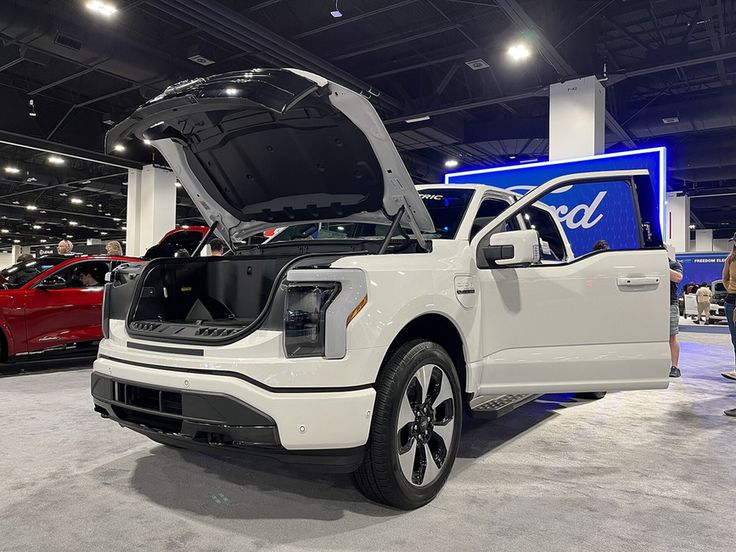
The trim ladder is where the invoice spread is decided, because both the base price and the option content climb together:
- XL — the work truck. Regular Cab, SuperCab and SuperCrew versions exist, but most XLs are simply specified, so the dollar gap between MSRP and invoice is the smallest in the range. Fleet and commercial buyers dominate here, and volume pricing shapes deals.
- STX — an appearance-and-equipment step over the XL, sold mainly on SuperCab and SuperCrew trucks. Modest spread, high availability.
- XLT — the volume heart of the range and the trim most private buyers land on. This is where the invoice spread becomes serious money, and where option packages start layering margin on top of margin.
- Lariat — the luxury threshold: leather, more standard equipment, higher base price. The dollar gap widens again, and Lariat buyers should never negotiate from a percentage rule of thumb — get the exact invoice.
- King Ranch and Platinum — the premium trims, where high base prices and dense option loads produce some of the largest MSRP-to-invoice dollar spreads of any vehicle sold in America.
- Tremor — the off-road trim, positioned on capability rather than luxury; availability, not margin, usually decides its deals.
- Raptor — the halo truck. Historically the F-150 with the least discounting and, at times, dealer markups above MSRP. Knowing its invoice tells you exactly what a markup is worth, which is the strongest reason to look the number up rather than guess.
Two configuration choices move the invoice independently of trim. Cab size — Regular Cab, SuperCab or the four-full-door SuperCrew — changes both base price and resale demand, and 4x4 adds cost across every trim. Bed length (5.5 ft, 6.5 ft and 8 ft, depending on cab) changes the price less than buyers expect, but it changes availability a great deal, and scarce configurations discount less.
Cabs, Beds and Options: Where the Markup Hides
Factory options and packages are invoiced individually, and each carries its own margin between its invoice cost and its MSRP. On the F-150 the packages matter more than the single options: tow packages, off-road packages, technology bundles and appearance packages stack thousands of dollars of retail price onto a truck, and the invoice spread grows with every one. Powertrain choices do the same — the hybrid PowerBoost and the high-output engines in the upper trims are priced as premium content. The practical rule: the more a truck's sticker is made of packages rather than base price, the more total margin sits between its MSRP and its invoice, and the more a from-invoice negotiation can win. Run the exact build in the calculator so the out-the-door maths includes your taxes and fees.
Ford Holdback on the F-150: 3% of Total MSRP
Holdback is the amount Ford returns to the dealer after the truck sells, and it is the reason a dealer can sell at invoice and still make money on the vehicle. Published holdback charts put Ford holdback at 3% of total MSRP — "total" meaning the percentage is calculated on the full sticker including options, not just the base price. This is the best-corroborated figure in our holdback research: the current AutoCheatSheet chart, Edmunds' historical chart, LegalClarity's dealer-pricing explainer and a recent dealer-group guide all agree, with no conflict on record.
Illustrative example — not a live price: take a hypothetical F-150 with a total MSRP of $60,000. Holdback at 3% of total MSRP returns $1,800 to the dealer after the sale. That $1,800 is invisible on the invoice, and it is a large part of why "selling at invoice" is a sustainable deal for a Ford dealer on a mainstream trim — and why, on slow-moving stock with factory money behind it, deals below invoice happen.
Plan Pricing and Incentives
Ford adds two layers most brands lack. First, plan pricing: Ford's A-Plan (employees), Z-Plan (retirees), X-Plan (partner companies and organisations) and D-Plan (dealer employees) set formula prices tied to the invoice for eligible buyers. If your employer is a Ford partner company, an X-Plan price may already sit near invoice with capped fees — check eligibility on Ford's official site before negotiating the hard way. Second, incentives: F-150 support is famously cyclical, with truck-month promotions, financing offers and trim-specific cash that change monthly and vary by region. The incentive layer routinely matters more than another few hundred dollars of negotiation, so confirm what is live on your exact trim before you set your target. Our method guide on how to find invoice price on a car shows how to combine the two.
Negotiating an F-150 With the Invoice in Hand
F-150 negotiation rewards precision on spec. Two dealers quoting "an XLT" may be quoting trucks thousands of dollars apart in content, so compare out-the-door quotes only on the identical trim, cab, bed, drivetrain and package list — our guide to negotiating from invoice price covers the offer maths. Cross-shopping works too: Ram is the F-150's closest rival and carries the same 3% holdback pattern, so our Ram invoice prices guide gives you a genuine second anchor. And if you are comparing the F-150 against the electric end of the market, our guide to how Tesla prices are explained shows why no invoice exists on that side of the fence at all.
Once you have a ford truck invoice price agreed, run it through the out-the-door calculator so fees and taxes cannot quietly hand the discount back.
Frequently Asked Questions
How do I find the Ford F-150 invoice price for my exact truck?
Invoice is calculated per trim, cab, drivetrain and option load, so look it up for the exact build on our invoice pricing page rather than relying on a model-level average. A regular-cab XL and a SuperCrew Platinum share a nameplate and almost nothing else in pricing.
Is the F-150 invoice price the dealer's real cost?
No. Ford holdback of 3% of total MSRP and any factory-to-dealer incentives sit below the printed invoice, so true cost is lower — the breakdown is in is invoice price the dealer cost.
Which F-150 trim has the biggest gap between MSRP and invoice?
In dollars, the upper trims — King Ranch, Platinum and the heavily optioned Lariats — because both the base price and the package content carry margin. In percentage terms the range is far more even than buyers expect, which is why per-build figures beat rules of thumb.
Do F-150 invoice prices include destination?
Yes. Ford sets the destination charge, it is identical at every dealer for the same truck, and it appears in both the MSRP and the invoice totals. It is not dealer margin; negotiate the selling price and dealer-added items instead.
The Bottom Line on the Ford F-150 Invoice Price
The Ford F-150 invoice price is the anchor for the biggest negotiation in the US car market: a range so wide that trim, cab and packages decide everything, backed by 3%-of-total-MSRP holdback and the industry's most aggressive incentive calendar. Pull the live invoice for your exact build on MyCarDiscount, build the out-the-door total, and let dealers compete on a truck specified down to the last package. Start at MyCarDiscount.com.
Get the number dealers start from.
Invoice, estimated true cost, out-the-door — before any dealer hears your name.