
Jeep Wrangler vs Ford Bronco: Price, Trims, Off-Road Value
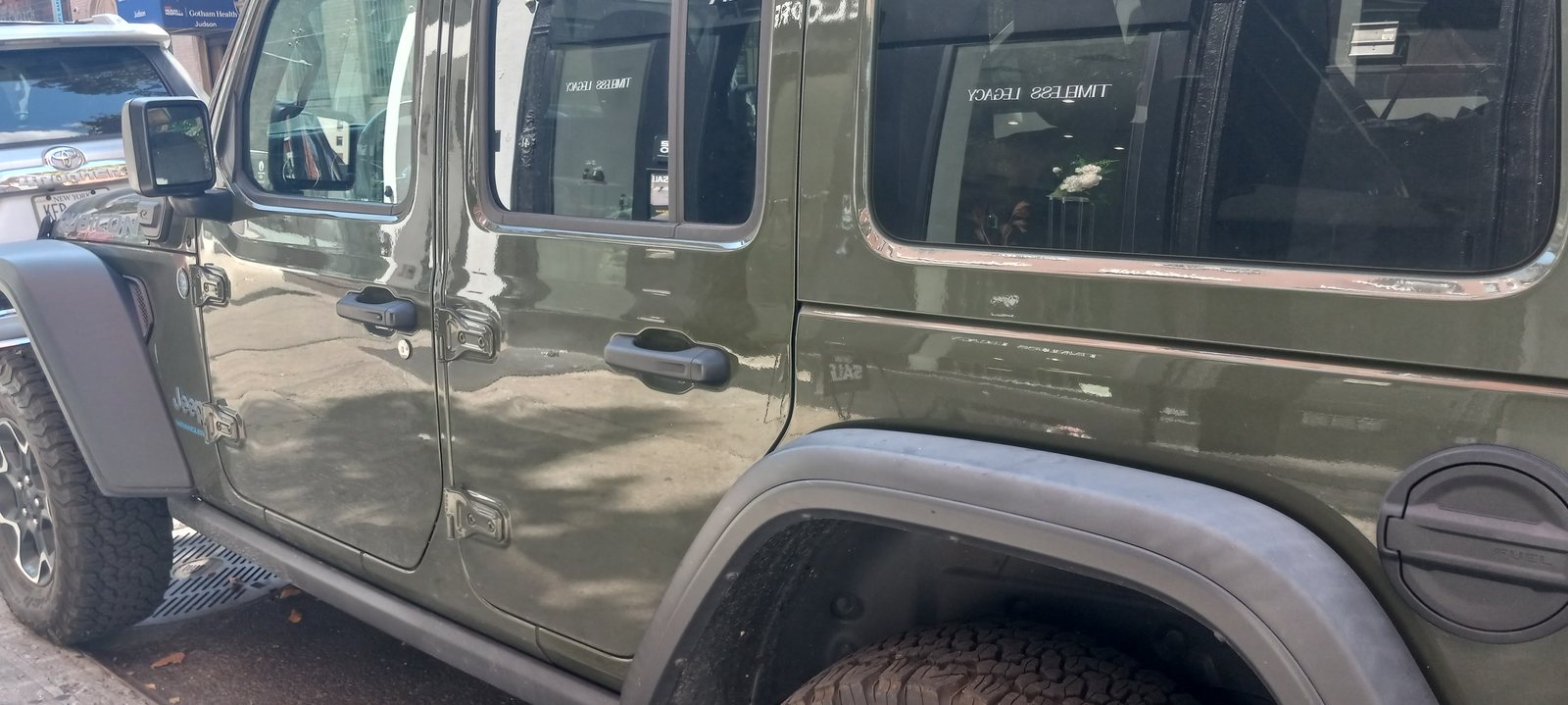
Jeep Wrangler compared to Ford Bronco, on buyer's terms: the rematch fifty years in the making, judged on what each costs by trim, what the hardware differences are worth, and which holds value.
Key Takeaways
- The Wrangler starts lower: $34,895 for a two-door Sport vs $40,495 for a Bronco Base, with both adding the same $1,995 destination charge.
- Towing has a clean winner — 5,000 lb for a properly equipped four-door Wrangler vs 3,500 lb for the Bronco (4,500 lb Raptor); fording is effectively tied at ~33.5 in.
- The Rubicon bundles lockers, sway-bar disconnect, 4:1 low range and up to a 100:1 crawl ratio standard; the Sasquatch package lets a Base Bronco be optioned into a serious off-roader.
- The 4xe (375 hp) is the only electrified entry, but the federal clean-vehicle credit ended for vehicles acquired after September 30, 2025 — judge its deal without it.
This Jeep Wrangler vs Ford Bronco comparison is decided on the numbers and the ownership costs, not the badge — here is how the two stack up. Ford built the original Bronco in 1966 to take sales from the Jeep CJ, and Jeep's descendant — the Wrangler — spent five decades as the only answer to a question Ford had stopped asking. The Bronco's 2021 return restarted the argument, and for 2026 the two are priced within a few thousand dollars of each other at almost every rung, with the same removable doors, the same removable roof, and genuinely different engineering underneath. This comparison judges the rematch on buyer's terms: the trim ladders and what each rung costs, the hardware differences that matter on a trail, and the ownership value each one keeps after the sticker is forgotten.
On the pricing side of either truck, our Jeep Wrangler invoice price guide prices the Wrangler from the dealer's side of the desk, and the brand-level Jeep invoice prices and Ford invoice prices guides frame what negotiation room looks like across each line.
Jeep Wrangler vs Ford Bronco at a Glance
| Item | Jeep Wrangler | Ford Bronco |
|---|---|---|
| Starting MSRP (before destination) | $34,895 (2-door Sport) | $40,495 (Base) |
| Destination charge | $1,995 | $1,995 |
| Four-door starts at | $38,100 (Sport) | $40,495 (Base) |
| Rock-crawl trim starts at | $50,475 (Rubicon 4-door) | $48,890 (Badlands) |
| Engines | 2.0L turbo 270 hp · 3.6L V6 285 hp · 4xe PHEV 375 hp · V8 470 hp | 2.3L turbo 300 hp · 2.7L V6 330 hp · Raptor 3.0L V6 418 hp |
| Manual transmission | Yes, with the V6 | Yes, with the 2.3L |
| Maximum ground clearance | 12.9 in (Rubicon on 35-inch tires) | 13.1 in (Raptor) |
| Water fording | Up to 33.6 in | Up to 33.5 in (37 in Raptor) |
| Maximum towing | 5,000 lb (4-door, properly equipped) | 3,500 lb (4,500 lb Raptor) |
| Plug-in hybrid offered | Yes — the 4xe | No |
The Price Ladders, Rung by Rung
The Wrangler opens lower, and it is not close at the bottom. A two-door Wrangler Sport starts at $34,895 before destination — the cheapest way into either nameplate by more than $5,000 — and the four-door Sport starts at $38,100. The Bronco's Base trim starts at $40,495 in either body style, and the Big Bend, the trim most Bronco buyers actually take home, starts at $40,995 as a four-door only. Both trucks add the same $1,995 destination charge, so the gap survives to the out-the-door figure. What the Bronco's higher floor buys is standard equipment: every Bronco is a turbocharged 300-horsepower truck with a 12-inch touchscreen, while the base Wrangler is a deliberately spartan machine whose option sheet does the upselling.
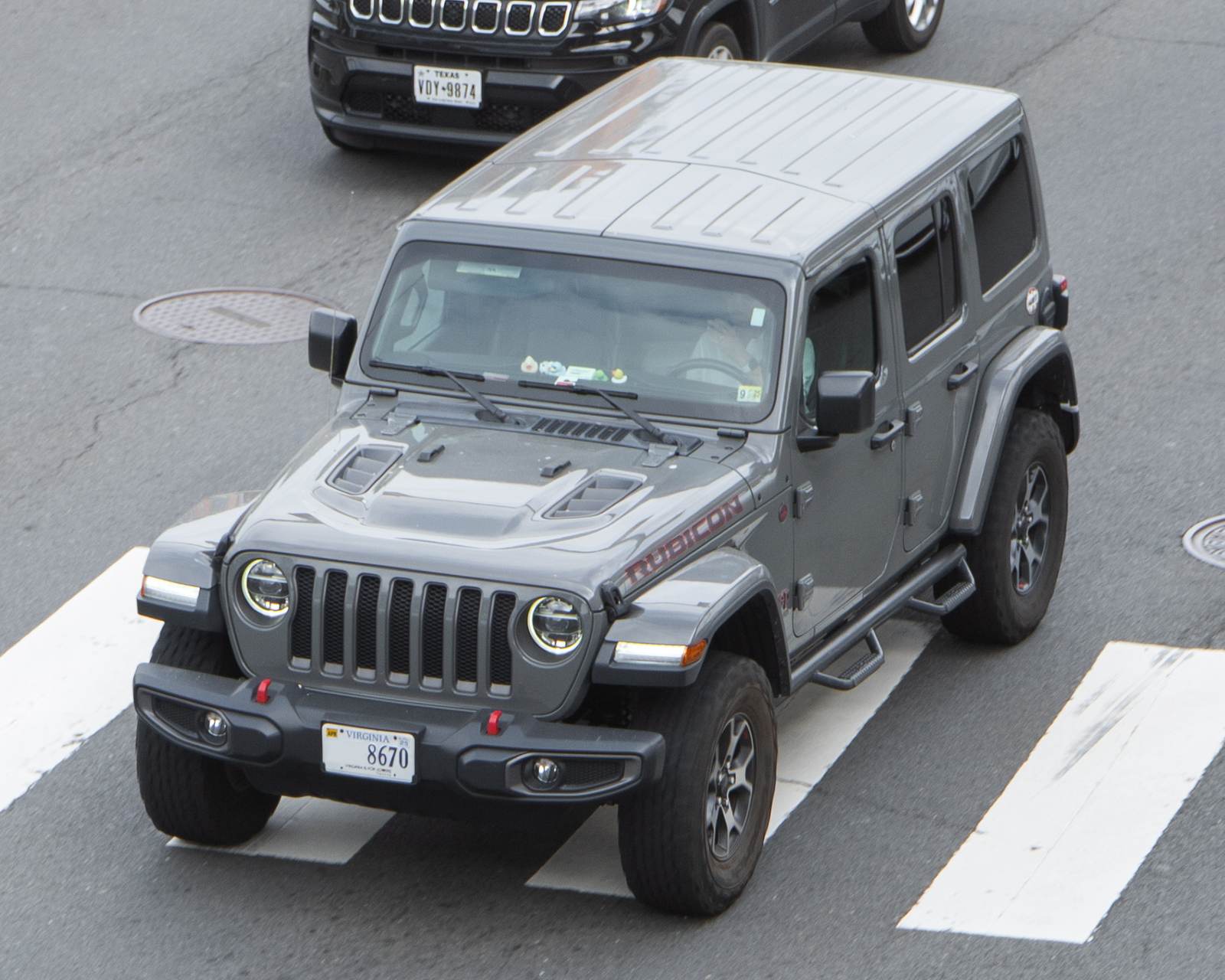
The ladders converge where the hardware gets serious. Jeep's Rubicon — locking differentials front and rear, a disconnecting front sway bar, the Rock-Trac transfer case — starts at $50,475 as a four-door. Ford's Badlands, which carries the equivalent locker-and-disconnect package on the Bronco's HOSS 2.0 suspension, starts at $48,890. At the top the two diverge in philosophy: Jeep sells you a 470-horsepower V8 (the Moab 392, at $81,990 with destination) and a plug-in hybrid Rubicon, while Ford sells the wide-body Raptor at $79,995 before destination, a desert-speed machine with 37-inch tires that has no direct Jeep counterpart. Optioned hard, either truck crosses $70,000 without effort, which is exactly why the invoice guides matter more here than the stickers do.
Hardware: The Difference That Actually Matters
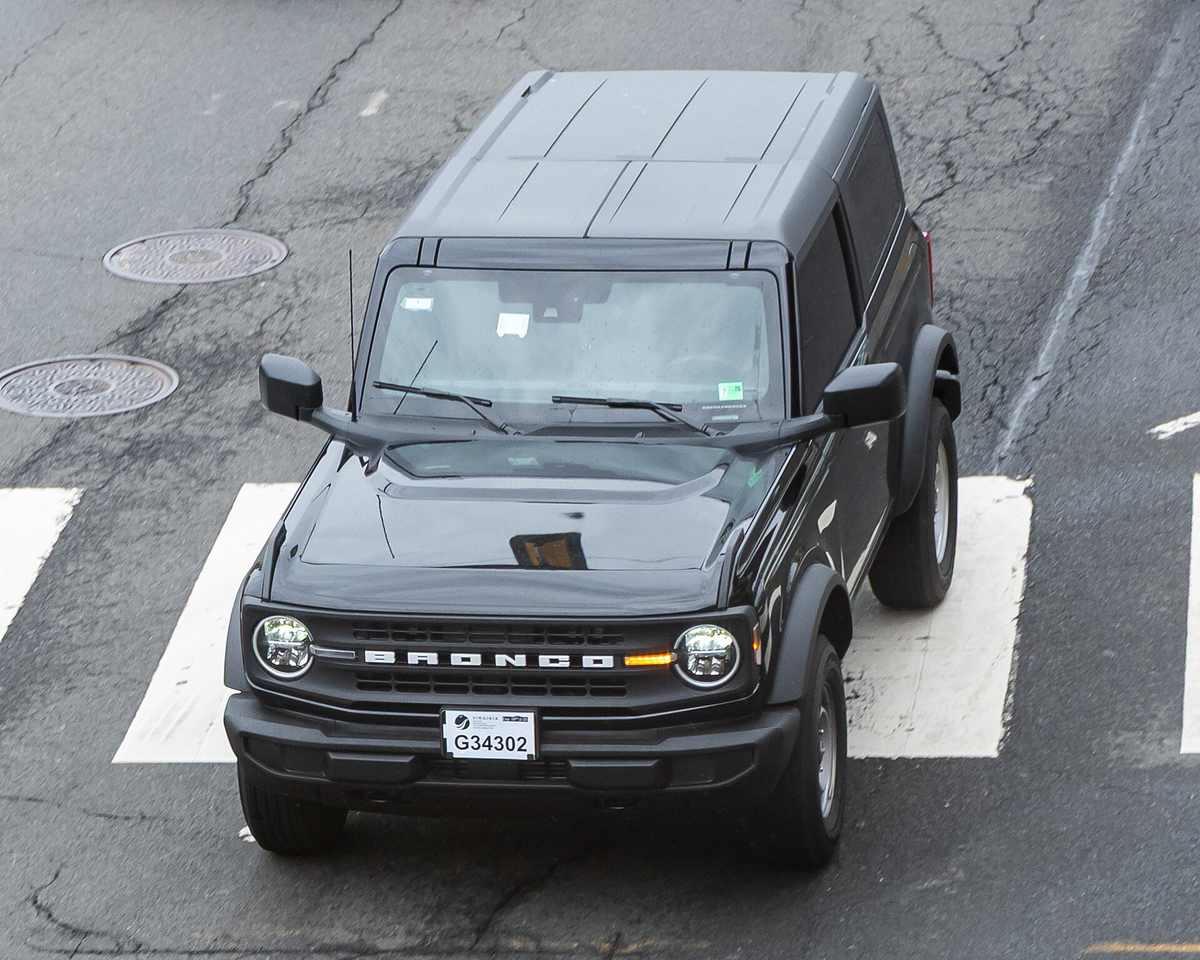
Underneath, these are different answers to the same problem. The Wrangler rides on solid axles front and rear — the traditional rock-crawling layout — which articulates dramatically over obstacles and has fifty years of aftermarket geometry knowledge behind it. The Bronco uses an independent front suspension, which gives it noticeably better steering, ride and high-speed stability both on pavement and on fast dirt, at the cost of some slow-speed flex. Neither is a defect; they are the two schools of off-road design, and your trails pick your school.
The Rubicon's party trick is completeness at one price: front and rear electronic lockers, the sway-bar disconnect, a 4:1 low range and a crawl ratio that reaches 100:1, all standard on the trim. Ford spreads the same capability differently — lockers and the disconnect are Badlands standard equipment too, but the Sasquatch package (35-inch tires, lockers, lifted suspension) is the Bronco's great equalizer, available across the range including the Base, so a cheap Bronco can be optioned into a serious one without climbing to Badlands money. Jeep has no equivalent shortcut on a Sport.
The Trail Numbers
On clearance, the score depends on trim. A standard Rubicon clears 10.8 inches and reaches 12.9 inches on its 35-inch tire package, with an approach angle around 47 degrees — the best geometry here. A Badlands clears 11.6 inches with a 43.2-degree approach angle, and only the Raptor, at 13.1 inches, beats the Rubicon's best number. Water fording is effectively tied: 33.6 inches for the Wrangler at its best, 33.5 for most Broncos, and 37 inches for the Raptor. Towing is the one category with a clean winner — the four-door Wrangler is rated to 5,000 pounds properly equipped, against 3,500 for the Bronco and 4,500 for the Raptor — so a buyer towing a real camping trailer has the decision made for them.
Engines, and the 4xe Question
Ford's range is simpler and, at the base, stronger: the 2.3-liter EcoBoost's 300 horsepower and 325 lb-ft beat Jeep's standard V6 on torque, the 2.7-liter V6's 330 horsepower covers the middle, and both brands will still sell you a manual gearbox, which is worth celebrating while it lasts. Jeep counters with variety. The 2.0-liter turbo is the efficient pick, the V6 is the traditional one, the V8 is the loud one — and the 4xe plug-in hybrid, at 375 horsepower and 470 lb-ft, is quietly the quickest sensible Wrangler and the only electrified entry in this fight. One caution on 4xe math: the federal clean-vehicle credit that once took thousands off 4xe leases ended for vehicles acquired after September 30, 2025, so a 4xe deal today has to stand on its negotiated price and fuel savings, not on a credit that no longer exists. Judge it that way and it can still win; judge it on last year's arithmetic and you will overpay.
Value After the Sticker
Both of these hold value the way few vehicles do — specialist demand, low fleet sales and an enthusiast buyer pool keep used prices firm for each — and both sit on enormous aftermarket ecosystems that let a base truck grow instead of being replaced. The Wrangler's edge is depth: more years, more parts, more of everything, and a two-door entry price the Bronco cannot match. The Bronco's edge is breadth of appeal: it is the easier truck to live with daily, which widens its future buyer pool. Neither is a depreciation trap; the financial mistake in this segment is not picking the wrong one, it is paying a markup or a padded deal on either — the discipline in how to negotiate from invoice price applies to both badges identically.
Frequently Asked Questions
Which is cheaper, the Wrangler or the Bronco, comparably equipped?
The Wrangler, at most rungs. It starts $5,600 lower in two-door form and about $2,400 lower as a four-door, and the Rubicon-versus-Badlands gap narrows to roughly $1,600 in the Bronco's favor at the rock-crawl trims. Optioned identically, the two usually land within a couple of thousand dollars of each other — close enough that the negotiated discount, not the sticker, decides which deal was cheaper.
Which one is better for serious rock crawling?
The Wrangler Rubicon, on hardware. Solid axles, a 4:1 low range, a crawl ratio up to 100:1 and the best approach angle in the pair make it the technical-trail specialist. The Bronco Badlands is close behind and easier for a newer driver to use well, thanks to its trail cameras and one-pedal trail driving features — but for slow, precise work over ledges, the Jeep's geometry is the point of the vehicle.
Can a Wrangler or Bronco tow a camping trailer?
The Wrangler can, within limits: a properly equipped four-door is rated to 5,000 pounds, enough for a small travel trailer. The Bronco is rated to 3,500 pounds (4,500 for the Raptor), which covers teardrops and small utility trailers but not much more. In both cases the tow rating assumes the right equipment — confirm the specific truck's rating on its door sticker before you count on it.
Is the Wrangler 4xe still worth it now that the federal credit has ended?
It can be, but the case changed. The clean-vehicle credit ended for vehicles acquired after September 30, 2025, so the 4xe no longer gets a multi-thousand-dollar head start; what remains is the strongest sensible powertrain in the Wrangler line (375 horsepower, 470 lb-ft) plus electric running for short trips. If the negotiated price is close to a comparable gas Rubicon, the 4xe earns it; if a dealer prices it as though the credit still exists, walk.
The Bottom Line on Jeep Wrangler vs Ford Bronco
Fifty years on, the Jeep Wrangler vs Ford Bronco rematch is real: the Bronco is the better everyday truck and the Wrangler is the better rock crawler, and the price ladders are close enough that the badge should follow your trails, not your nostalgia. Buy the Jeep for the two-door entry price, the towing rating and the Rubicon's hardware; buy the Ford for its road manners, its standard power and the Sasquatch shortcut. Either way, price the Jeep Wrangler or Ford Bronco from invoice in our calculator before you visit either showroom. That settles the Ford Bronco vs Jeep Wrangler question on the evidence: pick the one that fits your life, then negotiate as if the other one were still on the table. Start at MyCarDiscount.com.
Get the number dealers start from.
Invoice, estimated true cost, out-the-door — before any dealer hears your name.