
What Is GAP Insurance on a Car? When a Buyer Needs It
Gap insurance for a car, in short: one definition decides it — GAP pays what you still owe minus what the car is worth if it is written off, nothing more, nothing less, and not everyone needs it.

If you are at the finance desk wondering what is gap insurance on a car and whether to pay for it, start with one clear definition. GAP insurance pays the difference between what you still OWE on your loan or lease and what your car is actually WORTH (its actual cash value) if the car is written off — nothing more, nothing less.
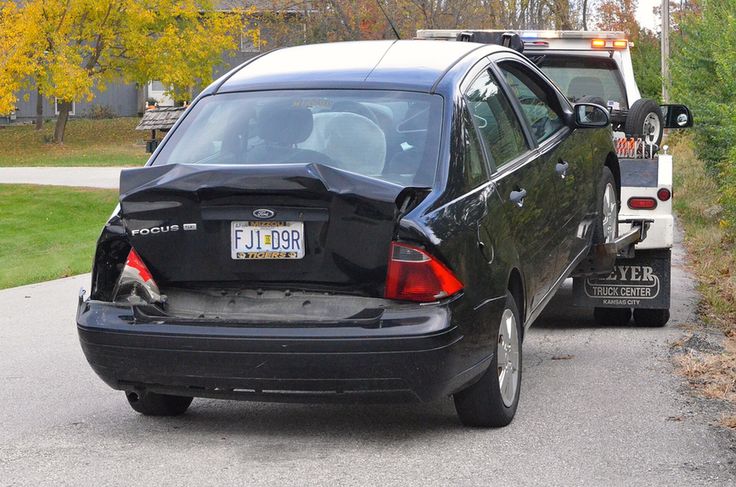
That matters because a total loss does not cancel a loan. If the car is written off, you still owe the remaining balance. Your regular insurance settles based on value, not on what you borrowed. Whether the distance between those two numbers is large, small, or nonexistent in your case is the whole decision.
What is GAP insurance on a car? The exact definition
In a total loss, your collision or comprehensive insurer pays the car's actual cash value — its market value just before the loss — minus your deductible where it applies. That payment is not calculated from your loan balance. If the balance is higher, a shortfall remains, and you must pay it even though you no longer have the car. GAP pays the defined difference between the settlement and the remaining balance, subject to the policy's limits.
Two misunderstandings are worth rejecting plainly. First, GAP does not pay for a replacement car. It is not new-car replacement cover, and it does not hand you money to shop for an equivalent new vehicle. Second, GAP does not pay off the whole loan no matter what the car was worth as a standalone promise. It pays the defined gap between the balance and the insurance settlement — if there is no gap, there is nothing for it to pay.
Details vary, so read the policy's limits. Some products also cover the deductible, but that is a feature that varies, not a universal promise. Most policies also have exclusions and caps — for example around late fees or rolled-over negative equity beyond a limit.
An illustrative shortfall. You owe $28,000. The car is written off, and the insurer values it at $22,000 and pays that amount, less any deductible where applicable. Without GAP, you would still owe the lender approximately $6,000 for a car you no longer have. That is the gap GAP exists to pay in this illustrative scenario. If your own two numbers are close, the shortfall — and the value of the cover — is much smaller.
What is GAP insurance on a car buyers should weigh? Who actually needs it
The gap exists when the loan balance falls slower than the car's value. A new car loses value quickly, while a loan balance falls gradually — slowly at first, when more of each payment goes to interest. If those lines diverge for long, you are exposed.
Several profiles create a deep, long gap. A small or zero down payment leaves no cushion — see how much down payment on a car. Long terms do the same: stretching payments slows how fast the balance falls, as our guide to the best car loan term explains. Rolling in negative equity from a trade starts you underwater. Financing taxes and fees adds balance without adding value. And a model that depreciates steeply widens the gap faster.
The opposite profiles keep the gap small or absent: a large down payment, a shorter term, a slow-depreciating car, or a loan well into its life. Working through how much car can I afford can also stop a gap being built in from the start.
| Profile | Why the gap looks that way | Verdict |
|---|---|---|
| Small or no down payment, long term, or negative equity rolled in | Balance starts high and falls slowly while value falls quickly | Strongly consider |
| Moderate down payment and a mid-length term | A gap may exist early, then close as payments build equity | Optional |
| Large down payment, short term, or loan well underway | Balance is likely at or below the car's value already | Safely skip |
| Car bought for cash, with no loan or lease balance | No balance means no gap by definition | Safely skip |
| Lease where the agreement already includes GAP or a waiver | The cover is already built into the contract | Safely skip extra cover |
Crucially, the need expires. Once the balance drops below the car's value — typically partway through the loan — GAP can pay nothing, because there is no shortfall left. Monthly cover you can cancel then fits the risk better than a flat fee financed for the whole term. Once you know how GAP insurance on a car works for a balance like yours, check where you stand with our calculator.
Dealer versus insurer: where to buy it
Dealers commonly sell GAP at the finance desk as a flat charge, often rolled into the loan — so you also pay interest on it, and may keep paying long after the gap has closed.
Your own insurer commonly offers equivalent cover as an inexpensive add-on, billed with the premium. The honest generalisation is that the insurer route is typically much cheaper for comparable cover. It can also usually be cancelled when the gap closes. Buying it later is usually possible too, if the car and loan still qualify — check rather than assuming you must decide at the dealership. Either way, the cover supplements the full coverage your lender already requires — GAP insurance on a car never replaces that baseline.
Dealer GAP is optional. The Federal Trade Commission lists gap policies among dealer add-ons in its guidance on financing or leasing a car — products with a price you can refuse. The Consumer Financial Protection Bureau likewise treats add-ons as negotiable when shopping for a car or auto loan. Ask for the price in writing and what it excludes.
GAP and leases: check before you buy twice
GAP is commonly built into leases by the lessor. Many lease agreements include it, or an equivalent waiver covering the shortfall if a leased car is written off — check yours, as wording varies.
Double cover pays nothing extra: a second policy does not create a second gap. Look in your lease before buying more, using our guides to how car leasing works and full coverage car insurance requirements for the insurance standards leasing companies typically set. If cover is already included, decline the duplicate.
When you can skip it safely
Skipping GAP is not careless when the gap is absent or manageable. Skip it if your balance is already below the car's value and staying there — from a healthy down payment, a short term, or being well into the loan. Skip it if you bought for cash: no loan means no gap by definition. And a buyer who could absorb the worst-case shortfall from savings without hardship may consciously self-insure it.
Self-test: compare today's balance with a realistic value for the car — not what you paid, but a sober current estimate. If the balance is below the value with margin, skip or cancel. If it is above by an amount that would hurt at the worst moment, that is the case for keeping it.
Cancelling GAP and getting a refund
Insurer GAP generally cancels with a policy change or when you remove the add-on. Dealer-bought GAP financed upfront often carries refund terms if cancelled early or the loan ends early — if you pay it off, sell the car, or refinance. Do not assume that money is gone: check your contract's refund provisions and follow its cancellation steps. Rules vary by product and provider.
Frequently asked questions
Does GAP insurance buy me a replacement car after a total loss?
No. GAP pays the defined difference between your remaining balance and the car's actual cash value settlement. It is not replacement cover and does not provide money to buy a new car.
Is GAP insurance required by law or by my lender?
Not by law, in the way liability insurance is required. But a lender or lessor may set insurance standards in the contract, and some agreements require or include gap protection — read your specific terms.
Can I buy GAP later instead of at the dealership?
Usually, yes. Your insurer can often add it after purchase if the car and loan still qualify, though eligibility may depend on the car's age or the loan's stage. Ask promptly rather than assuming the dealership was your only chance.
When should I cancel GAP insurance?
When your balance has dropped below the car's value with a margin and is staying there — from that point there is no shortfall to pay. Recheck both numbers, then follow your policy's steps for cancelling and any refund.
Conclusion
So, what is gap insurance on a car worth to you? Only as much as the gap it covers. With a small down payment, a long term, or negative equity rolled in, it protects against owing money on a car that no longer exists. If your balance is already below the car's value, it protects against a shortfall that is not there. Decide from your balance, a realistic value, and the cheaper, cancellable insurer route — not from finance-desk pressure — and revisit it as the loan ages.




Get the number dealers start from.
Invoice, estimated true cost, out-the-door — before any dealer hears your name.