
How Car Leasing Works: Money Factor, Residual and Mileage
How leasing a car works, in short: three numbers build every lease payment — the capitalised cost you negotiate, the residual you cannot, and the money factor that prices the borrowing.
A lease payment looks simple, but it is built from unfamiliar words that hide ordinary ideas. Understanding how car leasing works means decoding three numbers: the capitalised cost you negotiate, the residual value you cannot negotiate, and the money factor that prices the financing. Read those three, plus the mileage limit, and you can check any offer line by line instead of judging it by the payment alone. The Federal Trade Commission's guidance on financing or leasing a car describes the same structure: you pay for the car's expected depreciation, plus a rent charge, taxes and fees.
How Car Leasing Works: Start With the Capitalised Cost
The capitalised cost, usually shortened to cap cost, is the negotiated price the lease is built on — functionally, the selling price. Negotiate it as hard as you would when buying outright, because every amount you keep off it is depreciation you do not pay for over the term.
The paperwork builds it in stages. Add any rolled-in fees or products to that negotiated price and you have the gross capitalised cost. Money you put down, or trade-in equity applied to the deal, is then shown as a capitalised cost reduction. Subtract it and you get the adjusted capitalised cost, or net cap cost, which starts the payment calculation.
A dealer can make a payment look attractive by stretching the term or asking for more at signing, while leaving the price untouched. Read the price before the payment, the habit we recommend in our guide to the out-the-door price explained. Dealers must disclose the capitalised cost in the lease paperwork, so check which fees were rolled in and that any reduction is shown separately.
How Car Leasing Works: Residual Value Sets the Depreciation
The residual value is the leasing company's prediction of what the car will be worth at lease end. Crucially, it is expressed as a percentage of MSRP, not of the price you negotiated. Negotiate the cap cost down well and that gap works in your favour, because the depreciation you pay for is the distance between the adjusted cap cost and a residual anchored to the higher MSRP.
That percentage is set by the leasing company through its programme for that model, term and mileage allowance. You cannot negotiate the residual percentage — it is fixed for a given combination, and the dealer does not control it. What you can choose is the model, term and allowance, each with its own programme residual.
All else equal, a higher residual percentage means a lower payment: less value is expected to disappear during your term, so there is less depreciation to divide across your payments. At lease end, the residual has a second job: it is also the preset purchase price if you buy the car rather than hand it back.
The Money Factor: The Rent Charge in Disguise
Every lease carries a financing charge, rarely labelled as an interest rate. Instead it appears as the money factor, a small decimal such as 0.00210. The Federal Trade Commission calls this part of the payment a rent charge, and the money factor prices it.
The conversion is the most useful formula here: money factor × 2400 = equivalent APR. So 0.00210 × 2400 ≈ 5.04% APR. Multiply by 2400 and you have a yearly rate comparable with loan rates. Our explainer on car loan rates explained shows how to judge that APR.
Dealers sometimes quote the money factor reluctantly, or present the small decimal in a way that makes the charge look trivial. It is not trivial once converted. Ask for it in writing and ask whether it includes any mark-up over the leasing company's base rate. The Consumer Financial Protection Bureau's Ask CFPB page on what things you can negotiate when shopping for a car or auto loan reminds drivers that more elements of a deal can be questioned than many assume.
Qualitatively, the monthly rent charge component is computed from (adjusted cap cost + residual) × money factor — based on the average amount of the car's value tied up during the lease, not simply on the depreciation slice. The worked example below shows it with numbers.
The Worked Example: Building One Payment Step by Step
Illustrative example — round, invented numbers chosen for clarity, not a real offer. Assumptions: MSRP $40,000; negotiated cap cost $37,000, with no down payment and no rolled-in extras, so the adjusted cap cost is also $37,000; residual 55% of MSRP, which is $22,000; term 36 months; money factor 0.00210, which is 0.00210 × 2400 ≈ 5.04% APR by the conversion above.
| Component | Calculation | Amount |
|---|---|---|
| MSRP | Given | $40,000 |
| Adjusted capitalised cost | Negotiated cap cost, no reduction | $37,000 |
| Residual value | 55% of $40,000 MSRP | $22,000 |
| Depreciation portion | ($37,000 − $22,000) / 36 = $15,000 / 36 | ≈ $416.67/mo |
| Rent charge | ($37,000 + $22,000) × 0.00210 = $59,000 × 0.00210 | $123.90/mo |
| Base monthly payment | $416.67 + $123.90, before tax | ≈ $540.57/mo |
Read the two payment rows together. The depreciation portion, about $416.67 a month, is the larger slice: the $15,000 of value the car is expected to lose, spread over 36 months. The rent charge, $123.90 a month, is the financing cost from applying the money factor to the combined cap cost and residual. Together: about $540.57 a month before tax.
Sales tax is added on top, and its treatment varies by state: many states tax the monthly payment, while some tax more up front, so this example deliberately stops before tax. Run your own version in our how car leasing works calculator, changing one input at a time.
Mileage: The Allowance You Actually Buy
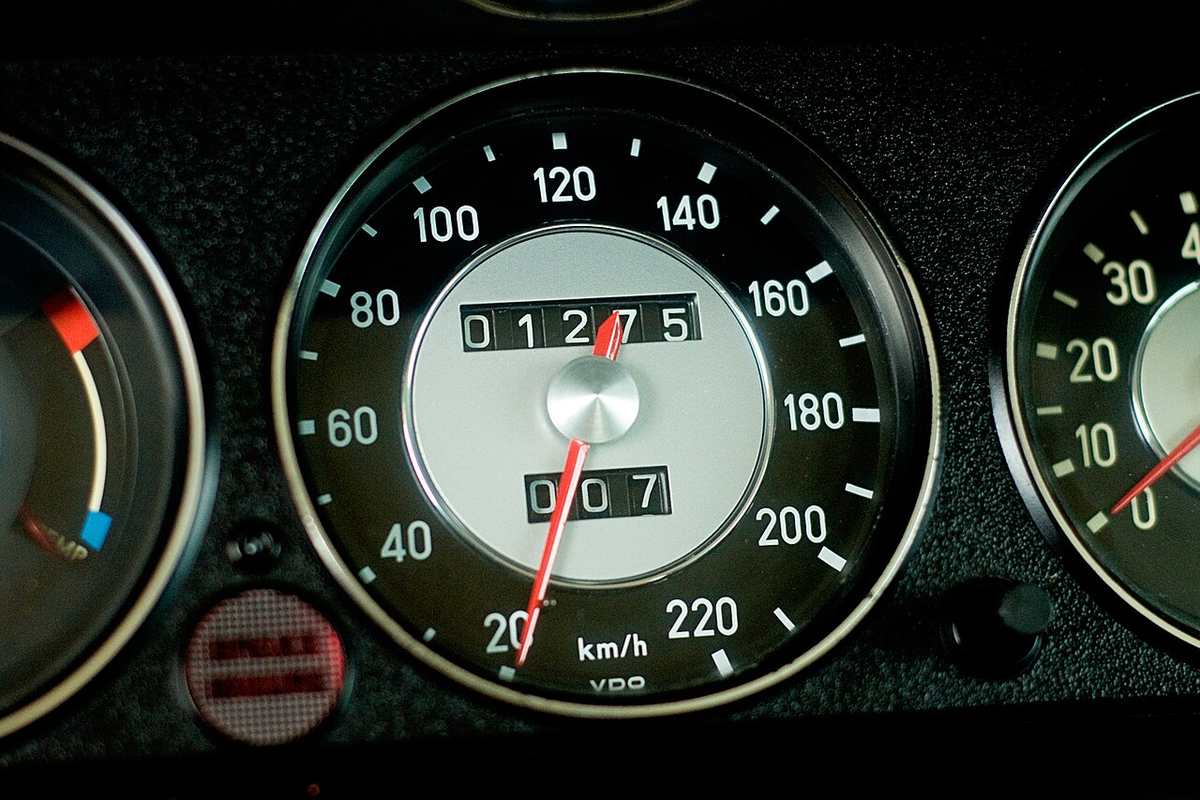
A lease grants a total mileage allowance, worked out as the annual allowance multiplied by the term. Standard leases commonly sit at or below 15,000 miles a year in the Federal Trade Commission's framing, and many allow fewer. A three-year lease at 10,000 miles a year is a 30,000-mile allowance in total, however those miles are spread.
Miles beyond the allowance are charged per mile at return, at the rate written in your contract. Find that exact rate in your lease documents before you sign, not when the bill arrives. Choose the allowance honestly, based on how you really drive. As general guidance, a higher allowance bought at signing is generally cheaper than excess miles at return, so understating your mileage for a lower payment is usually a false saving.
The Rest of the Money: Fees, Signing Costs and Endings
Beyond the payment, expect a few more lines. An acquisition fee is the leasing company's charge for setting up the lease, sometimes rolled into the cap cost and sometimes due at signing. A disposition fee is typically charged at return if you neither buy the car nor start a new lease with the same company. Both belong in the paperwork, not just a headline advert.
The amount due at signing usually combines the first payment, applicable fees, and any capitalised cost reduction. Treat a large reduction with caution: it lowers the payment, but it is money at risk if the car is written off early, because you may not recover what you prepaid. Excess wear charges can apply at return for damage beyond normal use, and ending a lease early can be substantial in cost, as the Federal Trade Commission warns.
Standard consumer leases are closed-end leases: return the car within your mileage and wear limits and you owe only what the contract specifies, while the risk that the car is worth less than its residual sits with the lessor, not you. To judge a complete offer, use our guide to what is a good lease deal, and for the own-or-lease decision, read leasing vs buying a car.
Conclusion: How Car Leasing Works, in One Payment
Strip away the vocabulary and how car leasing works is straightforward. You negotiate a capitalised cost, the leasing company fixes a residual value as a percentage of MSRP, and you pay the difference, spread over the term, plus a rent charge priced by the money factor. Mileage, fees and tax shape the real total around that core.
So read every offer in that order. Negotiate the cap cost first. Convert the money factor by multiplying it by 2400 and compare the resulting APR with loan rates. Check the residual, count your miles honestly, and add up everything due at signing and at return. A lease judged that way can be checked and challenged — which is what a payment quoted on its own is designed to prevent — check the negotiated price itself with our how leasing a car works invoice pricing guide.
Frequently Asked Questions
Can I negotiate the residual value on a lease?
No. The residual percentage is set by the leasing company for that model, term and mileage allowance, as a percentage of MSRP. You can choose a different model, term or allowance, but you cannot negotiate the percentage itself.
How do I turn a money factor into an APR I recognise?
Use the conversion money factor × 2400 = equivalent APR. A money factor of 0.00210 therefore works out at 0.00210 × 2400 ≈ 5.04% APR. Once converted, you can compare the lease's financing charge directly with the APR on a car loan.
What happens if I go over my mileage allowance?
That is how a car lease works on mileage: you are charged per mile for the excess at return, at the rate in your contract. Check it before signing and choose an allowance that matches how you really drive, since buying more miles at signing is generally cheaper than excess miles at return.
Is a large amount due at signing a good way to cut the payment?
It cuts the payment, but not the car's underlying cost, and it puts cash at risk if the car is written off early. A capitalised cost reduction lowers what is financed, yet that prepaid money may not come back to you, so weigh the saving against the risk. How car leasing works? By now you have the full answer — use it to judge every offer on the same terms.



Get the number dealers start from.
Invoice, estimated true cost, out-the-door — before any dealer hears your name.